47 of 250 stories
When the Typhoon Came
18 reads
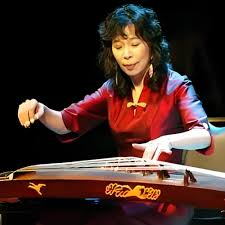
My name is Wang Changyuan, and I began playing the guzheng when I was nine years old.
My first teacher was really my father.
He was a music professor and a guzheng master, so music was always present in our home. As a child, I would listen while he taught. I was fascinated by the sound of the instrument—the way a single string could contain delicacy, sadness, strength, even something almost like a human voice.
But I never believed the guzheng should only sound beautiful and gentle.
I wanted it to have power.
I wanted it to roar.
Perhaps that desire eventually became Zhantai Feng—Typhoon at the Wharf.
Learning From My Father
My father was demanding.
Practice meant repetition, discipline, and sometimes pain. My fingers developed calluses. Sometimes the skin broke. There were days when practicing the guzheng competed with schoolwork and everything else a child might have wanted to do.
But I loved the instrument.
My father also taught me something more important than technique.
He did not want me simply to imitate him.
Traditional Chinese music gives a performer room. You inherit a framework, but within that framework, you must find your own expression.
That idea stayed with me.
If every generation plays exactly as the previous generation played, then perhaps the music remains preserved, but it stops growing.
Creating a Typhoon
When I began composing Zhantai Feng, I wanted to create something different.
The inspiration came from dock workers struggling against a typhoon.
I could imagine the scene: a busy wharf, people working, cargo being moved. Then the weather changes. The wind rises. The storm arrives.
Suddenly, human beings are fighting against a force much larger than themselves.
How could the guzheng tell that story?
The traditional techniques were not enough for everything I wanted to express.
So I experimented.
I explored new finger techniques and different uses of the left hand. The guzheng itself was evolving, expanding from the older sixteen-string instrument toward twenty-one strings and a wider expressive range.
I wanted listeners not merely to hear notes.
I wanted them to feel wind.
Rain.
Urgency.
The violence of the storm.
The workers fighting to protect the wharf.
And finally, after the typhoon passes, the feeling of standing again with pride.
That was the emotional journey of the piece.
The guzheng could be graceful.
But I wanted to prove that it could also be fierce.
Then Another Storm Arrived
Years later, a very different kind of storm entered our lives.
The Cultural Revolution began.
For musicians and artists, it was an extraordinarily difficult period. Traditional culture became politically dangerous. Instruments could not simply be played freely. Performances disappeared. Families were investigated and punished.
My own family suffered deeply.
Because of my father's past political affiliations, he was persecuted and imprisoned.
Later, I lost him.
It is difficult to describe what that period meant for someone whose entire life had been built around music.
How do you remain a musician when music itself can become dangerous?
I practiced secretly.
Sometimes the instrument had to be covered or surrounded with quilts so the sound would not travel.
Imagine that.
An instrument is created to make sound, and yet in order to preserve the music, you have to prevent anyone from hearing it.
But I continued.
Quietly.
Keeping My Hands Ready
Why practice when you don't know whether you will ever be allowed to perform again?
Because if you stop, something disappears.
Technique is physical memory. Your hands have to remember.
But there was something else too.
Music gave me a place that circumstances could not completely take away.
The world outside could tell me what was permitted.
It could decide where I went and what I could perform.
But when my hands touched the strings, some part of me remained mine.
In that sense, music became more than a profession.
It became a refuge.
Zhantai Feng itself eventually survived political scrutiny in part because its story—workers heroically battling a typhoon—could be interpreted in an acceptable way.
History is full of such strange ironies.
A piece I had written to expand the emotional possibilities of an ancient instrument found a way to survive because its story could pass through the politics of the time.
And so the music continued.
Forty Years With the Same Piece
People sometimes imagine that once you master a composition, you simply know how to play it forever.
That is not true.
I have performed Zhantai Feng for decades.
I still have to practice.
Your body changes.
Your understanding changes.
The audience changes.
And the piece changes because you change.
A composition is not a museum object.
If I play it today exactly as I played it when I was young, something would be wrong.
When I first created the piece, I understood the typhoon through imagination and observation.
Later, after experiencing political upheaval, loss, migration, and decades of life, perhaps I understood storms differently.
Technique gives you control over an instrument.
Life gives you something to say through it.
Carrying the Guzheng Across an Ocean
Eventually, my life brought me to the United States.
Once again, the guzheng entered a different environment.
Here, many listeners had never seen the instrument before.
Some knew very little about Chinese music.
That presented both a challenge and an opportunity.
I began performing, teaching, arranging ensemble works, and exploring ways for the guzheng to interact with Western orchestras and other musical traditions.
But cultural exchange is not simply making Chinese music sound Western.
The question is always: What must change, and what must remain?
I want the guzheng to speak to new audiences.
But I also want people to hear its own character.
Innovation matters only when there is something underneath it worth preserving.
Teaching What Cannot Be Written Down
As I grew older, teaching became increasingly important to me.
A teacher can demonstrate finger position, rhythm, posture, and technique.
But some things are harder to teach.
How do you teach someone to love an instrument enough to practice when nobody is watching?
How do you teach patience?
How do you teach a student to respect tradition without becoming afraid to interpret it?
Students come to me at different ages and with different ambitions. Some are children. Some are adults. Some simply want the joy of making music.
Not everyone needs to become a professional.
But everyone needs a good foundation.
Bad habits learned at the beginning can follow a musician for years.
A teacher therefore has a great responsibility.
You are not only correcting someone's fingers.
You may be shaping that person's relationship with music for the rest of their life.
Tradition Belongs to Everyone
The world of the guzheng has changed greatly during my lifetime.
There was a period when many prominent players were men. Today, many students and performers are women.
To me, the important question is not whether the musician is male or female, young or old.
Music does not ask for your age before it moves you.
And culture survives because people continue choosing to participate in it.
What My Father Passed to Me
When I think about my life now, I often return to my father. He gave me the guzheng. But what he really gave me was much more than an instrument. He gave me discipline. He taught me to listen. He taught me not simply to copy. He gave me a tradition and, at the same time, permission to change it. I carried those lessons through years when music had to be hidden. I carried them onto concert stages. I carried them across the ocean.
And now, when I teach another student, perhaps a small part of what my father gave me continues through that person's hands. That is how tradition survives.Not by remaining frozen. By being passed from one human being to another.
After the Storm
People sometimes hear the word “typhoon” and think only of destruction. But my piece does not end inside the storm. The storm passes. People stand up again. Work continues. Life continues. Perhaps, after all these years, that is also how I understand my own life. There were times when history seemed determined to silence the music. There was loss. There was fear. There were years when the future was impossible to see. But I kept playing. I have often said that despite everything, I consider myself fortunate. Music accompanied me through the hardest periods of my life. It gave me joy when circumstances offered very little. It took me around the world and connected me with people who did not share my language but could still understand something through sound. I began as a nine-year-old child listening to my father teach. I could never have known where those strings would take me.
Today, after a lifetime with the guzheng, I still believe what he taught me: Learn the tradition. Respect it. Master it. And then find your own voice. Because every generation will face its own typhoon. Our responsibility is to make sure that when the storm has passed, the music can still be heard.