46 of 250 stories
The Song Motherhood Taught Me
14 reads
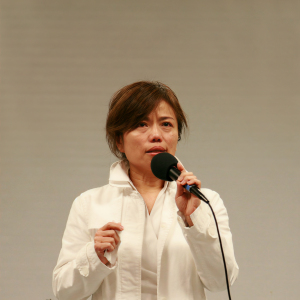
My name is Yang Fangyi.
For many people, my name brings back a song.
Qiucan—Autumn Residue.
I first sang it nearly three decades ago. For a long time, I did not understand why people always wanted me to sing the same song. A singer wants to move forward. You want people to hear something new.
But as I grew older, I began to understand.
A song changes with the person who sings it.
The words may remain the same, but after you have experienced marriage, children, fear, illness, disappointment, and love, you no longer sing them with the same heart.
Perhaps that is why I have finally made peace with Qiucan.
I changed.
And the song changed with me.
When Music Was Young
I came of age during Taiwan's campus folk-song era.
There was something very pure about that period. Many of us were young people who simply loved music. We sang together, performed together, and formed friendships that lasted much longer than anyone expected.
We were not always thinking about competition or becoming stars.
We loved the songs.
Even decades later, when we came together again for concerts, that feeling remained. We could return to the stage as old friends and rediscover something of who we had been when we were young.
But my own life eventually moved in another direction.
I became a mother.
And motherhood became a much larger part of my life than being a professional singer.
Choosing Family
I have three children, including twins.
For years, I was essentially a full-time mother.
There was no glamorous stage behind that job. There was breakfast, laundry, school, meals, illnesses, arguments, schedules, and endless household responsibilities.
Twenty-four hours a day.
I was a wife, a daughter-in-law, and a mother, trying to fulfill all the roles expected within a traditional Taiwanese family.
And I was happy to do it.
I never believed children had to become number one in their class.
Of course education matters. But I wanted something more fundamental for my children.
I wanted them to be healthy.
I wanted them to be happy.
I wanted them to develop strong personalities and good habits.
I wanted them to know how to think and eventually how to live independently.
Children are not identical products coming from the same factory. Even siblings raised in the same household are completely different people.
So I tried not to compare them.
The Moment Everything Changed
Then my youngest daughter became ill.
She was seven.
At first, the signs did not seem dramatic. She was tired. There were changes in her behavior and physical condition. We searched for explanations, and at first we did not receive the right answer.
Eventually, she was diagnosed with systemic lupus erythematosus.
I don't think any mother is prepared to hear that her seven-year-old child has a serious chronic illness.
Suddenly, all the ordinary worries of parenting became very small.
Grades?
Activities?
All the things parents compare?
None of that mattered.
I wanted my daughter to be well.
That was all.
Being Strong Because She Was Watching
Treatment was difficult.
There were medications, hospital visits, uncertainty, and chemotherapy. I watched my child endure things that I wished I could endure for her.
But a mother cannot always take her child's suffering away.
That was one of the hardest lessons for me.
My instinct was to protect her.
I wanted to find every possible treatment. I searched beyond conventional medicine and considered complementary approaches as well. Not everyone agreed with me. My husband and I sometimes had different views. Doctors could be skeptical. Family members had opinions.
But when your child is sick, you keep asking:
Is there anything else I can do?
Sometimes that determination is useful.
Sometimes it can exhaust you.
I had to learn the difference.
I Thought a Mother Should Never Fall Apart
At first, I believed my responsibility was to be strong all the time.
If I showed fear, perhaps my children would become afraid.
If I cried, perhaps they would think something terrible was happening.
So I put on the face of a strong mother.
But strength is more complicated than that.
There were moments when I was angry.
Moments when I was frustrated.
Moments when I felt helpless.
Eventually, I understood that hiding every emotion does not necessarily protect a family.
Sometimes admitting that you are afraid allows other people to admit that they are afraid too.
Sometimes saying, “This is difficult for me,” brings people closer.
I learned to forgive myself for not being endlessly strong.
One Sick Child, Three Children to Love
There was another challenge I became very conscious of.
When one child has a serious illness, the entire family can begin revolving around that child.
It is understandable.
But the other children still need their mother.
They have fears and disappointments too.
They may understand why their sibling requires more attention, but understanding does not mean they stop needing love.
I had to remind myself that I was the mother of three children, not only the mother of a sick child.
That balancing act was not always easy.
Motherhood rarely gives you one problem at a time.
Learning to Let Go
I used to think that being a good mother meant doing more.
More protection.
More effort.
More worrying.
More searching for solutions.
Life taught me that sometimes being a good mother also means letting go.
You cannot control everything that happens to your child.
You cannot guarantee health.
You cannot remove every disappointment.
You cannot make every decision for them forever.
At some point, love has to include trust.
My children needed room to become themselves.
And I needed to learn that taking care of myself was not selfish.
If I became physically and emotionally exhausted, how could I continue taking care of my family?
Becoming Stronger Changed My Voice
I began exercising more seriously because I wanted to remain strong for my daughter.
Something unexpected happened.
My own body became healthier.
My breathing improved.
And my singing improved.
I found that I could perform differently.
That connection fascinates me.
Something I began because of motherhood eventually returned to music.
But the deeper change was emotional.
Technique can teach you how to sing a note.
Life teaches you what that note means.
After raising children and walking beside a sick child, I could return to old songs and discover emotions inside them that I had never understood when I was young.
Perhaps that is why some singers become more interesting with age.
The voice may change.
But the person behind the voice has more to say.
What Matters More Than Perfect Grades
My experiences also reinforced what I had always believed about education.
I do not want children to grow up believing their value is determined by a report card.
I want them to be curious.
Capable.
Kind.
Emotionally healthy.
Able to face difficulty.
A child who always receives perfect grades but cannot cope with disappointment may struggle greatly later in life.
Life will not always give you an A.
There will be illness.
Failure.
Heartbreak.
Things that cannot be fixed by studying harder.
So perhaps one of the greatest things parents can give children is not a perfect path.
It is the confidence to continue when the path becomes imperfect.
The Role I Treasure Most
People still know me as a singer.
I am grateful for that.
Music gave me extraordinary friendships and experiences. It allowed me to connect with people I might never have met otherwise.
But if you ask me which role changed me most deeply, my answer is motherhood.
Motherhood showed me strengths I did not know I had.
It also showed me my weaknesses.
It taught me that love can make you brave and frightened at the same time.
It taught me that protecting someone does not mean you can prevent every painful thing from happening.
And it taught me that sometimes the person being cared for becomes the teacher.
I thought I was teaching my daughter how to be strong.
In many ways, she taught me.
Singing the Same Song Differently
Today, when I stand onstage and sing the songs I sang when I was young, I am not the same woman.
The young singer knew the melody.
The woman I am today knows something more about the words.
I know what it means to worry through the night.
I know what it means to want to take another person's pain into your own body.
I know what it means to lose patience, forgive yourself, get up the next morning, and continue.
And I know that happiness is not a life without difficulty.
Sometimes happiness is simply having the people you love beside you and understanding how precious an ordinary day really is.
Perhaps that is the greatest gift motherhood has given me.
It taught me how to listen differently.
How to love differently.
And, after all these years, how to sing the same song with a completely different heart.