48 of 250 stories
Becoming Comfortable in My Own Skin
6 reads
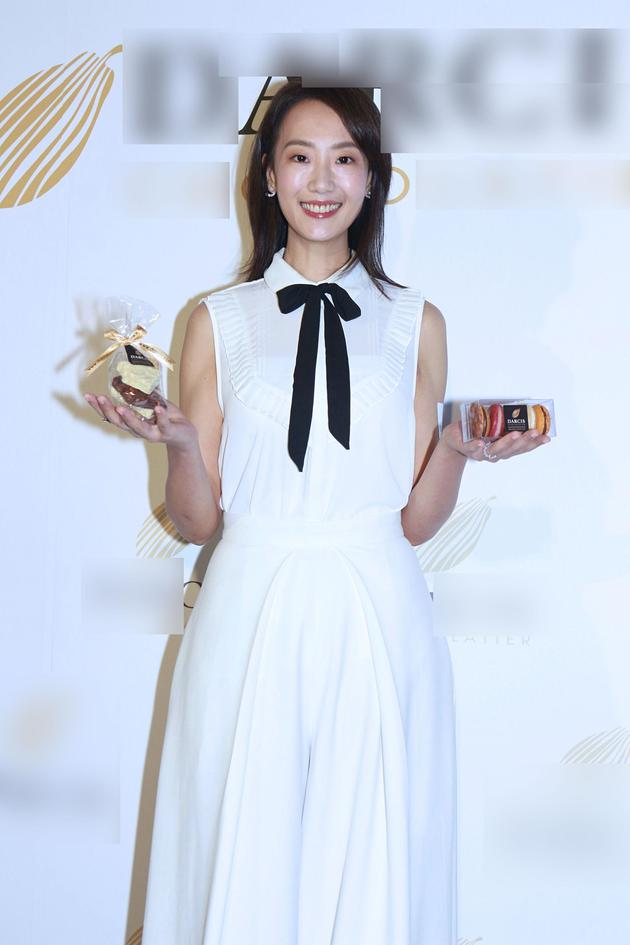
I never planned to become a model, and I certainly never imagined that acting would one day become something I loved.
My entrance into the entertainment world was almost accidental. I had accompanied a friend to a variety show when someone noticed me. At the time, a more distinctly Eastern look was becoming fashionable, and somehow my height, single eyelids, and the way I carried myself fit what people were looking for. Before I quite understood what was happening, I was modeling.
I stayed in that world for about four years. Modeling taught me a great deal about appearance—how clothes change the way a person is perceived, how the body communicates before a word is spoken, and how much attention this industry pays to surfaces. It also introduced me to competition. There were always people comparing opportunities, appearances, popularity, and status, and sometimes there were small manipulations behind the scenes.
I never had much interest in playing those games. It seemed pointless to spend my energy trying to push someone else down. Another woman's failure would not make me more talented or more prepared. I would rather use that time to study art, look at fashion, understand new trends, or improve myself in some other way. I gradually came to believe that opportunity is often beyond our control, but preparedness is not. When an opportunity arrives, the only question that matters is whether you have made yourself ready for it.
That was more or less how acting found me too. A director thought I might be suitable for the role of Furong in Rose of Love. I entered acting without much experience and quickly discovered how much I did not know. I had to learn how to speak differently, how to understand a character, how to use my body and voice, and how to express emotions in front of other people without becoming self-conscious.
Strangely, acting also revealed something about my own personality.
People who meet me sometimes assume that I am cold. Perhaps it is because I am tall, or because my voice is relatively low, or because I tend to appear calm and reserved. The person inside is actually much more passionate than the exterior suggests. In everyday life, however, I have always preferred reason to emotional outbursts. Even when I am angry or believe I have been treated unfairly, my instinct is to contain the emotion first and understand it before reacting.
Acting gave all those carefully managed emotions somewhere else to go. A character could scream, cry, fall apart, become irrationally jealous, or love someone with complete abandon. I could enter an emotional world that I would rarely permit myself to inhabit in ordinary life. Modeling had taught me how to present an exterior; acting invited me to explore what was hidden underneath it. That difference was one of the reasons I fell in love with the work.
Of course, loving acting did not make it easy. There were performances that made me nervous, criticism that hurt, and moments when I wondered whether I was good enough. Early in my career, I could lose my sense of direction more easily. With experience, I learned to treat each production almost like another class. A director, a difficult scene, a mistake, even an unpleasant colleague could teach me something. Once I began thinking this way, setbacks stopped feeling like verdicts on who I was. They became part of the education.
I also learned how important it was to know when to withdraw from the noise. Entertainment is a very social profession. There are always crews, cameras, events, interviews, and people around you, but I need quiet in order to remain balanced. I listen to music, watch films, or simply spend time alone. Those private moments allow me to return to myself.
My family has always been an important part of that inner stability. My mother gave me a rich artistic education when I was young. I studied dance, piano, calligraphy, painting—things that seemed unrelated at the time but later became part of the way I understood beauty, movement, and expression. My family did not originally imagine that I would make a life in entertainment. Like many parents, they understood the security of a conventional profession better than the uncertainties of this one. They had also heard all the stereotypes about the entertainment industry and naturally worried about what kind of environment I was entering.
Over time, however, they learned to trust not the industry, but me. We could talk openly, and they knew the values with which they had raised me. Their trust became more important than their approval of any particular job. It gave me a stable place from which I could enter a very unstable profession.
That stability also helped me keep fame in perspective. Being recognized in public is part of the work, but I have never wanted to construct a glamorous public personality and then spend the rest of my life maintaining it. There is already enough performance in acting. I do not want my entire life to become another role. The person who appears on television is part of me, but she is not all of me.
As I grew older, the same desire for authenticity began changing the way I understood relationships. I had once been more perfectionistic about love. Like many people, I carried an image of how a relationship should work and what another person should provide. Experience gradually softened those expectations. I began to understand that intimacy needs room to breathe. Two people cannot grow together if they are constantly trying to reshape each other.
Forgiveness became more important to me, as did the ability to let certain things go. That does not mean accepting everything or abandoning your boundaries. It means recognizing that another person has an independent life and that love cannot flourish entirely through expectation. I came to want something simpler: two people who care for one another, respect each other's space, and are willing to grow alongside each other.
That realization brought me back to a relationship even more fundamental than romantic love—the relationship I have with myself. If I constantly judge myself, dislike myself, or depend on another person to prove my worth, then whatever love I offer will carry that insecurity with it. Learning to care for myself was not vanity. It was a necessary foundation for caring for other people.
Then my body gave me a much more serious reason to examine everything I believed about life. Cancer was already part of my family's history, but knowing that an illness exists somewhere in your family and hearing a diagnosis concerning your own body are very different experiences. I was still young. I could have spent months asking why this had happened to me, but I sensed that the question would lead nowhere. Illness does not always arrive with an explanation that satisfies us.
So I tried to approach it the way I had learned to approach other difficulties: understand the situation, deal with what could be dealt with, and avoid wasting too much energy fighting the existence of something that had already happened. Early detection mattered. Treatment mattered. So did food, sleep, exercise, and emotional health. I became more attentive to my body, not because I suddenly believed I could control everything, but because I understood more clearly that health deserves care while we still have it.
The experience also changed my relationship with mortality. I do not say that I want to die; of course I want to live, and there are still many things I hope to experience. But death itself does not frighten me in the way people might expect. My grandparents and other people I have loved remain very present in my memories, and there is something comforting in knowing that a life continues to exist in the people who remember it.
Family conversations, meals, work I enjoy, people I love—these things can look small until something reminds you that none of them is guaranteed. I became less interested in asking why hardship had chosen me and more interested in what I could still do with the life in front of me.
That is also what gratitude has come to mean. Gratitude is easy when everything is going well. The more difficult practice is learning how to receive something from experiences we never would have chosen. Criticism can make us more aware. Disappointment can expose expectations we need to reconsider. Pain can clarify what matters. I would never tell someone to be grateful that they are suffering. Pain is pain, and we do not need to pretend otherwise. But after the pain arrives, we still have some freedom in deciding what it will become inside us.
Perhaps that is the greatest difference between the woman I was when I first entered modeling and the woman I am now.
At the beginning, so much of my profession was about being seen. Someone noticed my eyes, my height, my face, and suddenly I was standing in front of cameras. For years, people looked at me and formed impressions: cool, glamorous, confident, distant. That is the nature of a visual profession. People see the surface first.
I no longer resent that. Beauty is something I enjoy, and I believe women should appreciate the gifts they have been given. But I also know how incomplete an image can be.
Behind the image is a woman who gets nervous, needs solitude, makes mistakes, loves her family, has been disappointed in relationships, has faced illness, and is still learning how to live. I don't feel a need to hide those contradictions anymore. They are not evidence that I have failed to become the person I should be. They are the person I am.
After spending so many years allowing cameras and strangers to look at me, I have discovered that the more difficult gaze is my own.
Growing older has taught me to meet that gaze with greater kindness. I can see the imperfections without immediately trying to erase them. I can appreciate what I have without believing I must hold on to it forever. I can continue improving myself without beginning from the assumption that I am not enough.
For me, that is what self-love has gradually come to mean.
It is not standing in front of a mirror and telling yourself that you are perfect.
It is being able to see yourself clearly, with everything life has added and taken away, and still feel at home in your own skin.