45 of 250 stories
Literature Has Always Been Home
5 reads
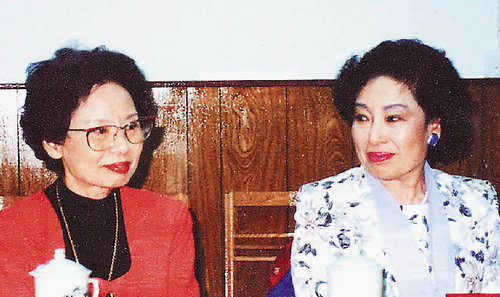
I was born in Beiping, the city we now call Beijing, into a family with both Han and Manchu roots.
My father was a traditional Northeast Chinese man—strict, protective, and serious about how his children should behave. My mother brought a very different presence into our home. She came from a Manchu family and loved music, painting, and paper cutting. She had an artist's hands and an artist's sensitivity.
Perhaps we children grew up somewhere between those two worlds: discipline on one side, imagination on the other.
Outside our home, the world was often unsettled. We lived through war and displacement, but inside the family there were always books.
My sister and I read constantly.
We made little puppet shows from paper cutouts. We invented characters and stories without realizing that these childhood games were teaching us something about narrative.
Long before either of us called herself a writer, stories had already become our refuge.
Becoming Writers
Writing entered our lives early.
One of us began publishing while still in high school. The other traveled through broadcasting, scriptwriting, and other literary work before devoting herself more fully to writing.
Our paths were never exactly the same, but literature remained the thread connecting them.
Over the decades, there were interruptions.
We moved.
We worked.
We raised families.
We lived abroad.
Manuscripts were lost. Health sometimes interferes. There were years when circumstances did not allow writing to occupy the place, we wanted it to have.
But we always returned.
That is something people sometimes misunderstand about a writing life.
They imagine inspiration.
They imagine awards.
They imagine a writer sitting peacefully at a desk, waiting for beautiful sentences to arrive.
In reality, writing requires endurance.
You lose something and begin again.
Your body becomes tired and you continue.
You write something you love and discover that nobody notices it.
Then you sit down and write the next thing.
Language Is Something You Carry
Living away from the place where you were born changes your relationship with language.
Chinese became more than simply the language we used.
It became a place we could return to.
We have always cared about precision in writing. A sentence should be clear, but clarity does not mean simplicity of thought. Modern Chinese can still carry the rhythm, elegance, and richness of classical language.
The old and the new do not have to fight each other.
They can live inside the same sentence.
The same is true of history and modern life.
Our fiction has often returned to history, love, memory, and the complicated emotions between people. But historical writing cannot simply decorate the past with beautiful costumes.
The people must still feel alive.
Their desires must be believable.
Their contradictions must be real.
Otherwise, history becomes scenery rather than literature.
A Writer Must Be Sincere
After so many years in literary circles, I have become wary of empty praise.
Writers praise one another very easily.
But praise without sincerity does not help literature.
A writer needs readers who can feel something deeply, but a writer also needs honesty.
Is the work good?
Does the language have substance?
Does the story reveal something about human beings?
Literature should give us more than entertainment.
There is nothing wrong with enjoying a story. But the books that remain with us usually do something else as well. They make us recognize an emotion we could not name. They show us another person's life. They allow us to encounter history through human experience.
A good book changes the reader slightly.
That is what I continue to hope for when I write.
The Solitude of Writing
Writing is also a lonely occupation.
No matter how many people surround you, eventually there is only the writer and the page.
Over the years, I learned not to fear that solitude.
Perhaps that is also why the relationship between sisters has mattered so much.
We understand each other's world.
We can talk about books, manuscripts, memories, and people we have known. We can disagree. We can criticize each other's work. And after so many decades, we do not need to explain everything.
There is comfort in having someone who remembers the beginning of your story.
As we have grown older, people sometimes ask about companionship and whether one needs marriage or romance in later life.
I don't believe there is one answer for everyone.
For us, independence has value.
At this age, peace has value.
Friendship has value.
The freedom to arrange one's own life has value.
Being alone and being lonely are not the same thing.
If you have books to read, something to write, people you care about, and curiosity about the world, life does not necessarily feel empty.
Growing Older Without Becoming Finished
Age changes the body.
That is unavoidable.
There are things we once did easily that now require more effort. Health interrupts plans. Energy becomes something we have to manage more carefully.
But becoming older does not mean becoming finished.
We are still writing.
We are still preparing books.
One of our current projects brings our work together as sisters. Another returns deeply to history through the life of Nalan Xingde, the great Qing dynasty poet whose Manchu world also touches our own family heritage.
Writing historical fiction at this stage of life feels particularly meaningful.
When you are young, history seems very far away.
When you become old enough to have witnessed history yourself, you understand time differently.
You realize how quickly the present becomes memory.
What We Leave Behind
Over a lifetime, a writer accumulates more than published books.
There are drafts.
Letters.
Corrections.
Notes.
Abandoned beginnings.
Pages written by hand.
These materials contain another history—the history of how a writer thought.
That is why preserving manuscripts matters to us.
We have donated the manuscripts accumulated across our literary lives so that they can remain available to future readers and researchers.
A manuscript is only paper.
But what is written on that paper can travel much farther than the person who wrote it.
Perhaps that is one reason writers keep writing as they grow older.
We know our time is limited, but language can continue traveling after us.
My Sister and I
When I look back now, I do not see a perfectly planned literary career.
I see two girls surrounded by books.
I see our mother's paper cuttings and hear the discipline in our father's voice.
I see war and migration.
I see manuscripts written, lost, rewritten, and published.
I see different cities and different countries.
And through all of it, I see my sister.
We have lived separate lives, but we have also traveled beside each other for an extraordinary length of time.
Perhaps that companionship is itself a kind of literature.
Two people begin with the same family and the same childhood world. Then life sends them along different roads. Each accumulates her own experiences, disappointments, loves, and ideas.
Years later, they sit together again and discover how much they still share.
We were born into a world that no longer exists.
Beiping changed.
Our family changed.
We moved across oceans.
People we loved disappeared.
Even the Chinese language changed around us.
But we kept reading.
And we kept writing.
That has been one of the great continuities of our lives.
People often ask writers why they write.
After so many decades, my answer has become very simple.
Because there are still things worth remembering.
Because there are still stories worth telling.