52 of 250 stories
The Road Back to My Mother
13 reads
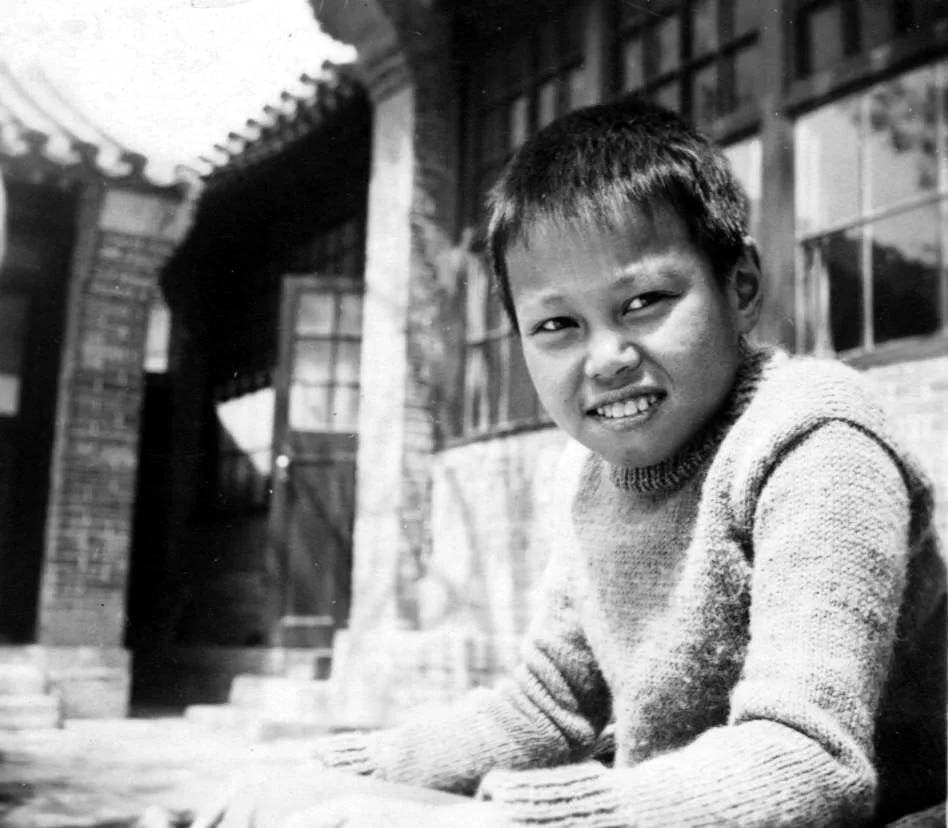
I was eleven years old when I joined a guerrilla unit.
At that age, a child should probably have been worrying about school lessons, but I grew up in Shandong during the Japanese occupation, when ordinary childhood had become a luxury. War moved people from one place to another, schools opened and disappeared, and families learned to live with uncertainty. By thirteen, I was traveling with other refugee students toward China's interior, carrying very little and not knowing where I would sleep the next night.
Sometimes we slept outside. I remember graveyards, hunger, endless walking, and the feeling that wherever we arrived might only be temporary. Yet through all of it, I wanted to study.
Perhaps that sounds strange. When people are struggling simply to survive, education can seem like something to worry about later. But to me, studying represented a future beyond the war. Schools closed, reopened, and moved; lessons were interrupted again and again, but whenever there was an opportunity to learn, I took it. Eventually, through an accelerated examination system, I completed my schooling earlier than expected.
After the war, I entered the Nationalist Air Force, and for the first time I encountered equipment that seemed to belong to another world. There were electronics, communications systems, and radar technology unlike anything I had known growing up. I became fascinated. My English was poor and my formal education had been irregular, but curiosity made up for some of what I lacked. I stayed after hours, studied the machines, and kept asking how things worked.
That curiosity eventually carried me much farther than I had imagined. I had opportunities to study in the United States and later returned to Taiwan, where I married, started a family, and continued working with electronics and communications. We had four children, and from the outside it might have seemed that my life had finally become settled.
But one thing was not settled.
My mother was still on the other side of the Taiwan Strait.
For years, the separation weighed on me. I had survived war and displacement, built a career, married and become a father, yet I could not accept the possibility that I might spend the rest of my life unable to care for the woman who had raised me.
That was one of the reasons I eventually made a decision that must have seemed unreasonable to many people: I left the life I knew and went to United States.
I arrived in Sante Fe in the mid-1960s with about one hundred dollars. I knew almost no one, and had entered a citywhere the Chinese community was still very small. Whatever professional experience I had accumulated did not protect me from the reality of beginning again as an immigrant.
There were years when life was extremely difficult. I sold things on the street to survive. Pride had to adjust to circumstance, although there were limits to what I would accept. Even when other Chinese offered financial help, I often refused. Poverty was something I could endure; losing my sense of dignity was harder.
Through those years, the thought of my mother remained with me.
I kept trying to find a way to reach her. I returned to China repeatedly—nine trips in all—not for business or sightseeing, but because I wanted to see her. Travel was complicated, the political circumstances were difficult, and each visit carried uncertainty, but she was my mother. There are some obligations a person does not calculate according to convenience.
Eventually, after years of effort, I was able to bring her to the States.
Of all the things that happened later in my life, that remains among the most important.
By then, the States had begun to change for me as well. It gradually became the place where I built the longest chapter of my professional life. My background in electronics and engineering eventually brought me into university teaching, and I became a professor at the University of New Mexico.
I stayed for thirty years. I never wanted to pretend to students that I knew everything. If I did not know something, I said so. Then I went back and studied it.
Teaching suited me because I believed effort mattered more than display. I had never considered myself unusually gifted. Everything I knew had been accumulated slowly—from interrupted classrooms during wartime, from military equipment I stayed late to understand, from studying languages I did not speak well, and from years of having to begin again.
The students seemed to understand that. During my thirty years at the university, I was voted best professor twenty-eight times.
That recognition meant a great deal to me. The country that had once felt completely foreign eventually gave me students, colleagues, respect, and a home.
I continued experimenting and inventing as well. In 1996, I received a patent related to an early mobile-phone technology. I was never much of a businessman, so inventions did not turn me into a wealthy man. That did not trouble me very much. Money had never been the measure I used for my life.
At home, my wife and I raised our four children much as we ourselves had been raised: with discipline, frugality, and the belief that time should not be wasted. We did not tell them that success depended on being born brilliant. I had seen too much of life to believe that. I believed in beginning early, working steadily, and learning not to retreat simply because something was difficult.
All four eventually became doctors or earned doctorates of their own.
People sometimes look at that result and ask what special method we use. I am not sure there was one. Much of what I taught my children came from what my mother had taught me, and much of what she taught me had less to do with books than with character. Work when there is work to be done. Do not waste what you have. Do not expect life to arrange itself for your convenience.
When I look back now, my life seems to have been a series of departures. I left home because of war. I moved through China searching for a place to study. I went into the military, crossed the ocean to America, built a family in Taiwan, and then left again.
At the time, none of it felt like an inspiring story. It simply felt like life demanding the next decision.
Perhaps the strangest part is that the frightened refugee boy from Shandong eventually spent thirty years standing in front of university students in the United States. I could never have imagined that future while sleeping outdoors or wondering where my next meal would come from.
But if there is one thread connecting all those places, it is probably not ambition. I was never especially interested in becoming famous or wealthy.
I wanted to learn. I wanted to take care of my family.
In the end, those simple desires carried me across most of the world.