51 of 250 stories
Playing My Part
12 reads
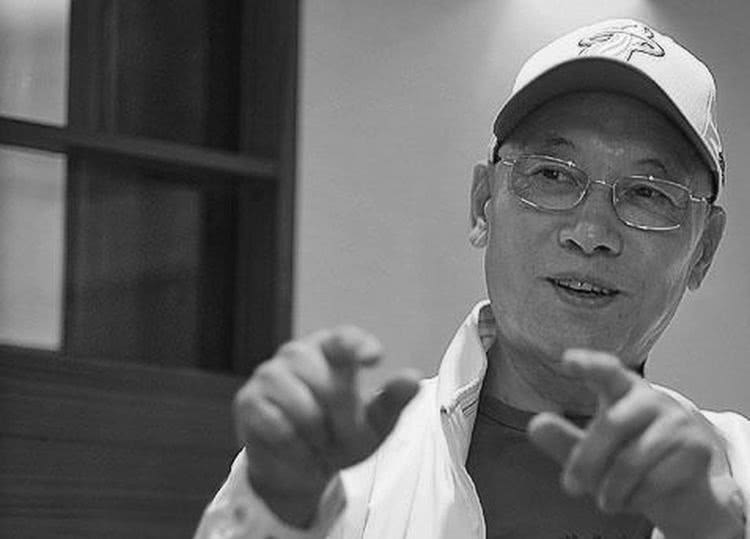
People still remember me as the Great Drunken Hero. It is strange to think that a role I played more than forty years ago could follow me for so much of my life, especially because when I was first chosen for it, I was hardly the obvious choice.
I did not have the rough, worldly quality the director wanted, and I could not even drink very well. On set, they had me drinking real alcohol so that I could find the feeling of the character. Somehow it worked. The film became a success, and almost before I understood what was happening, I was known throughout Hong Kong and Taiwan. Later came Journey to the West, the Monkey King, and eventually more than a hundred films and many television dramas.
Fame arrived quickly, but I don't remember ever feeling that I had become someone especially important. Perhaps that had something to do with the family I came from.
I grew up in Shanghai as the eldest of seven children. My father was a quiet, hardworking man, and my mother was extraordinarily kind. From them I learned that when you are the eldest, responsibility comes before comfort. By the time I left Shanghai for Hong Kong at nineteen, I already understood that I was not living only for myself. I wanted to establish myself so that I could help take care of the family.
Hong Kong opened an entirely new world to me. I began performing in Mandarin theater, joined a professional troupe, and eventually found my way into movies. I was fortunate, perhaps much more fortunate than I deserved, but I never developed a strong hunger for money or status. I enjoyed acting and took the work seriously, yet even after a hundred films, I could always look at a performance and find something I wished I had done better.
That dissatisfaction with my work never made me dissatisfied with my life. The two were different.
Then, in 1989, when my career and social circle in Hong Kong were already well established, our family moved to Vancouver.
Immigration sounds very simple when reduced to one sentence. You pack your belongings, board an airplane, and begin again somewhere else. But when I arrived in Canada, I discovered how much of one's identity is tied to familiar streets, familiar voices, and the feeling that you know where you belong.
I remember the cold, the unfamiliar nights, and the loneliness of those early days. I worried about my daughter's health, and there were moments when the life I had left behind in Hong Kong seemed very far away. Sometimes hearing Chinese voices on the radio was enough to make the distance feel smaller.
Perhaps that was why I gradually became involved in the Chinese community. At first it was something quite practical: helping make a video explaining local customs to new immigrants. Then came radio, newspaper writing, volunteer work, and one community activity after another. My wife was not always delighted by how much time I gave away, but I found myself increasingly drawn to it.
I had spent much of my life performing for audiences. In Canada, I began discovering the satisfaction of simply being useful.
I also came to believe that immigration carried a responsibility. If I had chosen Canada as my home, then I could not treat it like a hotel where I enjoyed the benefits without taking part in the life of the country. I should vote, pay taxes, understand the society, and contribute where I could. Becoming part of a new country did not require me to stop being Chinese; it required me to take seriously the place where my family and I had chosen to build our lives.
As I grew older, I began to see that acting had quietly given me a useful way of understanding life. On screen, every person has a role. Off screen, perhaps it is not so different. I have been a son, an elder brother, a husband, a father, an actor, an immigrant, and a member of a community. I cannot control how long any of those roles lasts, but while it belongs to me, I can try to play it well.
That way of thinking has made it easier for me to let things go.
The entertainment world can make people very sensitive to recognition—who receives the better role, who earns more, whose name appears first, who is still remembered. I never wanted to carry those calculations around with me. If someone offended me, I preferred to forget it. If another actor became more successful, that was his good fortune. I had enough of my own.
Perhaps that is also why aging has never frightened me very much. I still exercise, read, write, and enjoy talking with younger people. For seventeen years I wrote a newspaper column, not because I imagined myself to be a great writer, but because there were things I had seen and learned that I wanted to put down on paper. I have always believed that as long as a person remains interested in the world, age does not have to make the spirit old.
I have had reminders that life can end suddenly. More than thirty years ago, I suffered severe internal bleeding from a duodenal condition, one of those moments when you realize how little control you actually have over the body you depend on every day. Yet even after experiences like that, I have never felt particularly afraid of death. I have attended funerals and participated in rituals that some people avoid because they find them unlucky, but death has never seemed to me something that becomes less real simply because we refuse to look at it.
What matters more to me now is what remains while we are alive.
It is not the number of films I made or how much money I accumulated. When I imagine happiness, I think about much smaller things: family, old friends, sitting with my daughter, and someday perhaps holding the hand of a grandchild. These things do not look impressive from the outside, but as I have grown older, they have become more precious to me.
My life has taken me farther than the nineteen-year-old boy leaving Shanghai could have imagined. I became an actor almost by accident, found fame without really pursuing it, left an established career to become an immigrant, and then discovered another life in a new country where being useful to a community became as meaningful as standing in front of a camera.
I have been lucky.
Not because everything went according to plan—it certainly did not—but because life gave me many roles, and enough time to understand that none of them belonged to me forever.