55 of 250 stories
The Body Learns to Dance
6 reads
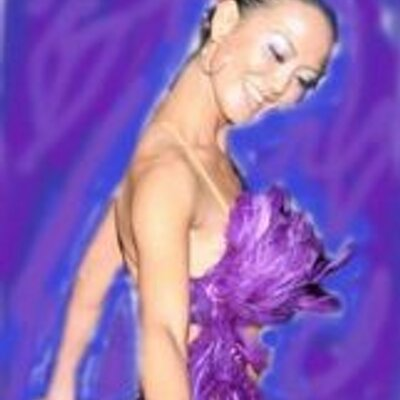
I was not the little girl anyone would have looked at and immediately said, “She was born to be a dancer.”
I was chubby, my balance was not particularly good, and I did not have the natural physical proportions people associated with dance. But I loved performing.
Fortunately, my mother noticed the love before she worried about the body.
I grew up in Guangxi in a large arts community where musicians and dancers were simply part of everyday life. My parents were artists, and music seemed to come through the walls. There were rehearsals, performances, costumes, people practicing instruments and bodies learning movement. To me, art did not belong to some distant stage. It was the environment in which I grew up.
When I was about five, my mother created a dance for me using a doll. She understood that I needed something suited to the child I actually was, rather than the dancer someone thought I should already be. I can still remember performing with that doll.
It was a small beginning, but an important one.
My mother never pretended that talent did not matter. She knew the dance world well enough to understand the importance of the body, flexibility, musicality and natural ability. But she also believed that what a child wanted badly enough to do could sometimes matter more than what seemed effortless at the beginning.
As I grew older, wanting to dance meant learning what dance actually demanded.
Training was hard. Traditional Chinese dance required flexibility, control and endless repetition. Stretching hurt. Muscles had to be taught positions they resisted. Movements that eventually looked effortless onstage were built from hours when nothing felt effortless at all.
There is a strange contradiction in dance: the audience is supposed to see freedom, but the dancer reaches that freedom through discipline.
I learned that very early.
Growing up in Guangxi also meant growing up around the dances and music of many ethnic traditions. I loved their openness and energy. Later, when I encountered Latin dance, something in it felt immediately familiar to me—not the steps themselves, but the freedom.
Latin dance allowed the body to speak differently.
I eventually moved toward Latin and International Standard dance, and the further I went, the more serious the demands became. There were competitions, partners, travel, training expenses, injuries, and the constant knowledge that a dancer's body is both her instrument and something she can never completely control.
I competed in China and abroad. Preparing seriously meant sacrificing time and money and sometimes going overseas to train when doing so was financially difficult. Every new level showed me how much further there was to go.
Winning mattered to me. I would be dishonest if I said otherwise.
I remember preparing for an important competition and eventually winning the gold medal. There is satisfaction in standing there after all those hours of work and knowing that, on that day, the work came together.
But the medal was only a moment.
The next morning, I was still a dancer, and there was still something that needed improvement.
There were injuries too. Once I performed with a broken hand. My mother remembers that episode perhaps more vividly than I do. Parents see the pain their children learn to hide.
A professional dancer becomes very skilled at hiding pain.
The audience sees the dress, the posture, the smile, the connection between two people moving across the floor. They do not see the injured joint or exhausted muscle. They do not see the hours of repetition that came before the music started.
And they certainly do not see the questions dancers sometimes ask themselves privately: How long can my body continue doing this? What happens when I can no longer dance at this level? Who am I when the thing I have done for most of my life begins to change?
Partnership brought another kind of education.
Latin dance can appear intensely intimate. Two people have to create attraction, tension and emotion together, and the audience has to believe what it sees. But a dancer also has to understand the boundary between what happens in a performance and what happens in private life.
I learned to separate those things.
Emotion is part of the art, but professionalism gives the emotion structure. You cannot dance well with another person if every feeling on the floor becomes a complication off it. The chemistry has to be real enough for the audience to feel and disciplined enough for the dancers to control.
As I matured, I also began thinking differently about femininity.
People sometimes describe Latin dance as sexy, but I do not think sensuality can simply be put on like a costume. It comes from knowing your own body. When you are young, you may try to imitate what you think confidence looks like. Later, after years of dancing, the movement begins to belong to you.
That transformation interested me because I had not begun as a child who felt physically perfect.
Dance taught me my body slowly.
It taught me where my weight was, how I occupied space, how to be strong without becoming rigid, and how to let movement travel through me rather than simply arranging my arms and legs into the correct positions.
Eventually, what I once had to manufacture became natural.
But becoming experienced creates another danger: the body remembers too well.
After thousands of repetitions, movement can become automatic. Technique becomes habit, and habit can quietly become limitation. So I kept forcing myself into unfamiliar territory. I studied ballet. I worked with flamenco. I practiced yoga. Each discipline asked my body different questions.
Sometimes learning something new meant undoing what years of training had made comfortable.
That was frustrating, but necessary. I never wanted experience to become an excuse for repeating myself.
Over time, teaching became a larger part of my life. I began working with dancers of very different ages and abilities, including students connected with Columbia University's competitive dance team as well as children and adults at my own school.
Teaching brought me back, unexpectedly, to my mother.
When I was five, she had looked at a little girl who wanted to dance and found a way to make dance possible for her. Years later, I found myself doing something similar with my students.
Not every child needs the same correction. Not every adult learns through the same explanation. Some students need discipline; others first need confidence. A teacher has to see the person before deciding how to teach the dancer.
I have students who want to compete seriously, and others who simply want to move to music. I have taught children and older adults. Their bodies are different, their ambitions are different, and the joy they find in dance is different.
I no longer believe that everyone needs to become an excellent dancer for dance to change them.
Sometimes learning to stand differently changes how a person feels about herself. Sometimes an adult who has spent years believing she cannot dance discovers that her body is capable of much more than she imagined. Sometimes a child simply finds a place where she feels beautiful.
I understand that child.
Dance has given me medals, performances, travel, applause and a profession. It has also given me injuries, uncertainty, exhaustion and years of demanding things from my body that it did not always want to give.
But after all of that, the reason I dance is surprisingly close to the reason I danced when I was five.
I still love it.
I have never wanted that feeling to disappear beneath competition, money, teaching schedules or professional expectations. A career can accumulate many things around the activity you once loved so simply. Sometimes you have to work to find your way back to the beginning.
When I think of that beginning, I see a little girl holding a doll.
She did not know whether she had the right body for dance. She knew nothing about competitions, medals, partners, injuries or teaching. She certainly did not know that one day she would make a life out of movement.
After all these years, I think protecting that desire may have been the hardest discipline of all.