54 of 250 stories
Learning to Stay
11 reads
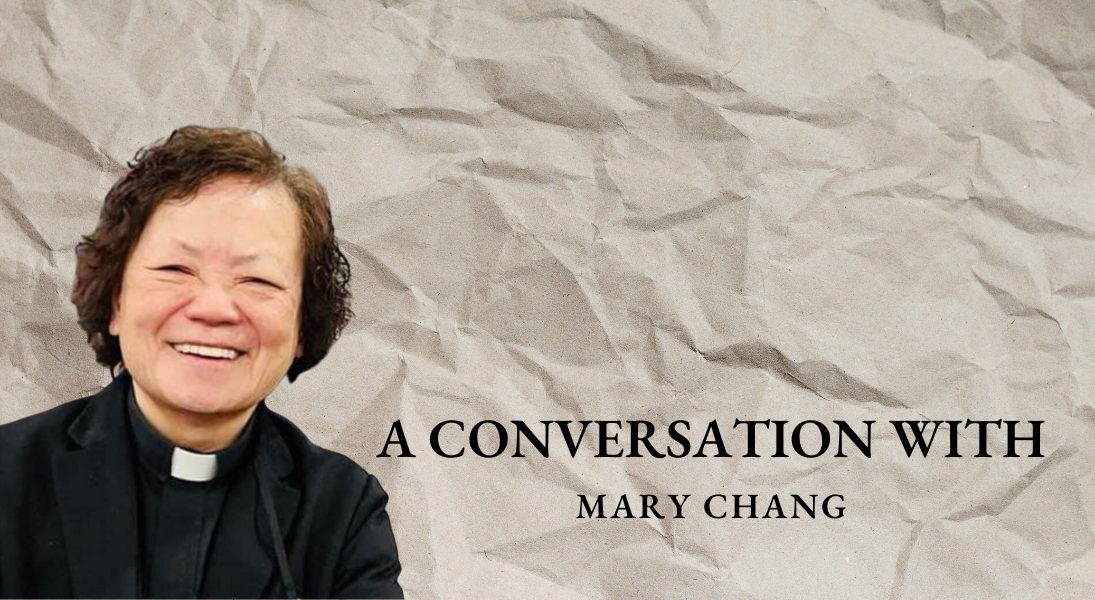
My first understanding of faith came from my mother.
I grew up between Guangdong and Hong Kong, in a family where Christianity was not something discussed only on Sundays. My mother had come to faith through difficulties of her own, and I watched how it became part of the way she lived. Between the ages of eight and eleven, I began making that faith my own, although at the time I could not have understood where it would eventually take me.
Some of my happiest early memories are very simple ones. I remember Christmas with my siblings and neighbors—not an elaborate celebration, but people gathering together, singing, sharing what we had. Looking back, perhaps that was my first experience of what ministry would later mean to me: not standing above people and telling them what to believe, but being among them.
When I began thinking seriously about theological study, becoming a female pastor was not an obvious path. There were people who questioned whether a woman should choose such a life. My mother, however, did not close the door. An uncle helped me with a scholarship, and I went forward.
I thought I was going to learn theology.
What I did not yet understand was that knowing about faith and knowing how to live through suffering were two different things.
My own life was not always easy. There were difficulties in marriage and family, periods of doubt, and wounds that I had learned to carry quietly. Like many people who spend their lives helping others, I discovered that it was possible to become very good at speaking about hope while still having places inside myself that I did not want to visit.
During my theological studies, I was asked to write about some of those experiences.
At first, putting suffering into words seemed almost unnecessary. The past was the past. Why return to it? But as I wrote, memories I had pushed aside began to take shape. I had to look at what had hurt me rather than simply cover it with religious language.
Something changed through that process.
The painful things did not disappear. They became part of my understanding of other people. I began to realize that perhaps the difficulties I had experienced were not interruptions to my ministry. In some ways, they were preparing me for it.
That realization changed the kind of pastor I wanted to be.
I did not want my work to remain behind a pulpit. I found myself drawn toward hospitals, nursing homes, immigrants, people who were ill, frightened, lonely, or approaching the end of life. Some of the people I met had AIDS, at a time when the disease still carried tremendous fear and stigma, particularly in parts of the Chinese community. Sometimes people were afraid even to get close.
But a sick person does not stop needing companionship because other people are frightened.
So I went.
There were situations in which I could do very little medically. I was not there to cure the disease. Sometimes I sang. Sometimes I listened. Sometimes I simply sat beside someone.
Once, something as ordinary as sharing an orange became an act of care.
That experience stayed with me because it reminded me how easily we misunderstand what it means to help another person. We imagine that meaningful service must be large enough for other people to notice. But when someone is frightened or alone, a song can matter. An orange can matter. Having another human being remain in the room can matter.
Over time, I became less interested in how many people I could reach and more interested in whether I was truly present with the person in front of me.
Perhaps that came partly from being an immigrant myself. When I came to America, I had to adjust to another culture and another way of speaking. I already knew several Chinese dialects, which later became enormously useful in working with immigrant families, but English brought its own challenges. I worried about my accent. There were moments when I wondered whether people would understand me or take me seriously.
Eventually I learned to laugh at some of those difficulties.
Language mattered, of course, but I discovered that it was only a bridge. People often understood kindness before they understood every word.
My different interests gradually found their way into the same work. Music became a way of reaching patients when conversation was difficult. Psychology helped me listen more carefully. Languages allowed me to enter communities that might otherwise have remained closed to me. Theology gave me a framework for hope.
For a long time I had thought of these as separate parts of myself. Eventually they became one ministry.
Hospital work also changed the way I understood death.
When you accompany people near the end of life, death stops being an abstract theological subject. You see families frightened to let go. You see people searching for meaning in the last days or hours. You see grief arrive before death and continue long afterward.
I never believed that being a pastor required me to stand beside a grieving family without emotion. There were times when I cried with people.
I did not think those tears made my faith weaker. Sometimes they were the most truthful thing I could offer.
My Christian faith gives me hope that physical death is not the end, but I also learned not to use that belief to hurry people through grief. A person who has lost someone does not always need an explanation. Sometimes they need permission to mourn. Sometimes they simply need someone who is willing to stay.
That became increasingly important to me: staying.
Staying when someone is sick.
Staying when another person is difficult.
Staying when there is no solution to offer.
Staying long enough for a frightened immigrant to feel less alone, or for a patient to tell the story that no one else has had time to hear.
My own suffering had once made me wonder why certain things had happened to me. Years later, sitting beside people in hospitals and nursing homes, I began to see those experiences differently. Because I had known disappointment, I was less afraid of another person's disappointment. Because I had carried wounds of my own, I did not need someone else's pain to disappear quickly.
Faith had not protected me from difficulty.
It had taught me what to do when difficulty came.
When I think about my mother's influence now, I understand it differently than I did as a child. She did not give me a life without hardship. What she gave me was a way to keep walking through it.
That is also what I have tried to give other people.
I have preached sermons and studied theology. I have worked in churches, hospitals, nursing homes, and immigrant communities. I have sung to patients, counseled families, and sat beside people when there was nothing left to say.
But when I look back, I do not measure those years by the size of a congregation or the number of people who heard me speak.
I remember individuals.
A patient.
A family.
A song.
An orange shared with someone who needed to know that another person cared.
My life began with a mother who showed me faith through the way she lived. It passed through my own struggles before bringing me into the struggles of other people. Perhaps that is why I no longer think healing always means making pain disappear.
And sometimes the most important thing one human being can do for another is simply to stay.