44 of 250 stories
Cooking My Way Home
5 reads
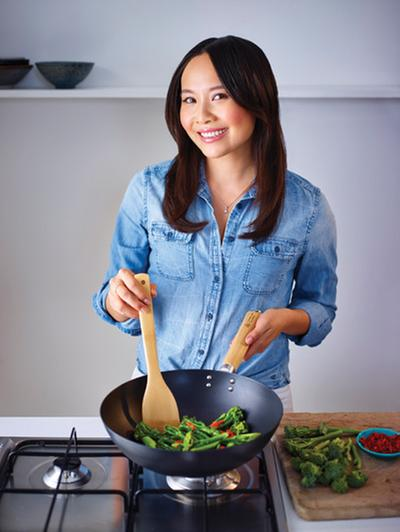
My name is Huang Jingyi.
Food has been part of my life for as long as I can remember, but I did not always think of it as a career.
I was five years old when my family moved to South Africa because of my father’s business. Later, we moved again, this time to the United States for better educational opportunities.
As a child, I did not fully understand how difficult those decisions must have been for my parents.
I only knew that everything around me was different.
I was one of very few Chinese children in my environment, and I became aware early of culture, difference, and belonging. Growing up abroad made me curious about the world, but it also made me sensitive to what my parents had given up in order to create a future for us.
Looking back, I think that awareness shaped me deeply.
Learning Responsibility Through Food
I began cooking when I was around eleven.
My mother traveled frequently for business, and cooking became something practical. Someone had to prepare food.
At that age, I was not thinking about cuisine as art or culture. I was simply learning how to take care of myself and contribute to the family.
But those early experiences stayed with me.
My grandmother used to say something that I have never forgotten:
“If you don’t know how to cook, how can you be a responsible human being?”
For her, cooking was not about showing off.
It was about care.
You cook because people need to eat. You cook because health matters. You cook because feeding someone is one of the most direct ways to look after them.
That idea became part of my own philosophy much later.
Seeing an Opportunity
After university, where I studied economics, I could have taken a conventional professional path.
Instead, I joined the family food business.
At the time, I began noticing something in New York: many ready-to-eat Asian foods were not very good.
There was a gap between the quality and variety of Asian food I knew and what many Western consumers were actually encountering.
That gap looked like an opportunity.
One of the products I became interested in was Taiwanese-style cold noodles.
The idea sounded simple.
Making it into a real business was not.
I had no real experience building a food company. Suddenly I had to understand food-safety regulations, licenses, packaging, production, refrigeration, transportation, delivery schedules, and customer expectations.
Every day introduced a new problem.
Building Something From Almost Nothing
We started in a rented kitchen.
There were periods when I worked from nine in the morning until midnight.
For years, I essentially worked without a salary.
Orders were unpredictable. One day you might have too little business. Another day, suddenly too much.
And making a good product was only the beginning.
You also had to teach customers how to use it.
A dish familiar to Asian consumers might be completely unfamiliar to someone walking into a New York sandwich shop.
So we adapted.
We adjusted flavors.
We redesigned packaging.
We thought about convenience and presentation.
How could someone open the package and immediately understand what to do?
How could the food remain authentic enough to represent where it came from, while also being approachable for someone tasting it for the first time?
That became one of the most important lessons of my career.
Cross-cultural communication happens in food too.
You cannot simply demand that people understand you.
Sometimes you have to meet them halfway.
The People Who Helped Me
I also learned that nobody succeeds completely alone.
At different stages, people appeared who helped me—mentors, friends, business contacts, people willing to give advice or open a door.
I think of them as benefactors in my life.
Hard work is essential, but opportunity often arrives through relationships.
You need the humility to recognize when someone is helping you.
You also need the courage to take advantage of that opportunity when it comes.
Gradually, the business grew.
We developed more products, expanded production, and eventually acquired our own factory and cold-storage facilities.
What had begun as an experiment in a rented kitchen became something real.
From Factory Floor to Television
Television entered my life almost by accident.
A friend suggested that appearing on TV might help with publicity for the noodle business.
My first appearance was on Sky TV.
I could demonstrate cooking, although I could not simply turn the program into an advertisement for my product.
At first, it was simply another opportunity.
Then I discovered that I loved it.
Television gave me a way to communicate not only recipes, but the feeling behind food.
I could show people that Chinese cooking did not have to be complicated or intimidating.
It could be fresh.
Healthy.
Colorful.
Joyful.
And accessible.
My natural style has always been energetic and informal. I want people watching me to feel that cooking is something they can actually do.
Seventy Percent Ingredients, Thirty Percent Skill
People sometimes focus too much on technique.
Of course technique matters.
But I believe cooking begins with ingredients.
I often think of it as seventy percent freshness and quality, thirty percent skill.
If the ingredients are poor, there is only so much a cook can do.
That is why I care so much about fresh produce, nutritious ingredients, and healthier ways of preparing food.
Taste and health should not be enemies.
Chinese cuisine has an extraordinary tradition of balance—texture, temperature, seasonality, nourishment, and flavor.
Sometimes Western audiences see only a narrow version of Chinese food.
I want to change that.
Defending Chinese Cuisine
There were times when people underestimated Chinese cooking.
Sometimes Western chefs or audiences treated it as though it were less refined than other cuisines.
I never accepted that.
Chinese cuisine has thousands of years of history and enormous regional diversity.
It can be simple or sophisticated.
Rustic or elegant.
Traditional or innovative.
I believe it deserves to stand confidently alongside any cuisine in the world.
That confidence does not mean refusing to evolve.
Quite the opposite.
To keep a cuisine alive, we have to continue creating with it.
My recipes often draw inspiration from different cultures, new ingredients, and modern nutritional ideas.
Adaptation does not have to mean losing identity.
Food as Cultural Translation
My television work gradually expanded.
Over the years, I developed hundreds of recipes and published several cookbooks.
What began as a way to support a food business became another kind of mission.
I realized that every time I cooked on television, I was introducing people to something about Chinese culture.
Not through a lecture.
Through taste.
Food is one of the easiest ways for people from different backgrounds to meet.
Someone may know nothing about Chinese history or philosophy, but they can sit at a table, taste something delicious, and become curious.
That curiosity matters.
Failure Is Part of the Recipe
My life has not been a straight path from one success to another.
There were failures.
There were moments when I was afraid.
There were times when I questioned whether the business would survive or whether a new opportunity would work.
But difficulty teaches us something success cannot.
If everything is easy, you do not fully understand happiness.
Setbacks teach you gratitude.
They also teach flexibility.
You may have a dream, but the road toward it rarely looks exactly the way you imagined.
So I believe in persistence, but not stubbornness.
Keep the dream.
Change the method when necessary.
What I Want People to Feel
Today, when I think about food, I think about much more than cooking.
I think about my parents leaving one country and starting again somewhere unfamiliar.
I think about being eleven years old and learning how to prepare meals.
I think about long days in rented kitchens.
I think about factories, packaging, delivery vans, television studios, cookbooks, and strangers who eventually became audiences.
All of those experiences are connected.
Food gave me a way to take care of family.
Then it became a business.
Then a creative outlet.
And eventually, a bridge between cultures.
My philosophy today is quite simple:
Be happy.
Live fully.
Eat well.
And be responsible.
Take care of your body.
Take care of the people you love.
Do not be afraid of failure.
And if you have a dream, give yourself the chance to follow it.
I began cooking because someone needed dinner.
I never imagined that one day cooking would carry me into television studios and allow me to share Chinese food with people around the world.
But perhaps that is how life works.
Sometimes the thing you begin out of responsibility becomes the thing that reveals who you are.