59 of 250 stories
Learning My Own Steps
13 reads
I grew up believing that a man should know what he was supposed to do.
My father came from a military background, and our home reflected that discipline. There were rules, expectations and a certain way of carrying yourself. Feelings were not necessarily the first thing we talked about.
I was an introverted boy and not particularly confident. My mother was different from my father. She was the warmth in our family, the person I felt closest to, and perhaps because our home could be strict, that closeness meant even more to me.
Then, when I was just over twenty, she became ill with oral cancer.
She was only forty-six when she died.
That was the first great loss of my life. At that age, you believe your parents will remain somewhere behind you for many years. Suddenly one of the people who had made the world feel secure was gone.
My mother's death also left me with a sense of unfinished responsibility. There were things she had wanted for me, including the hope that I would marry and establish a family.
So when I entered my first marriage, part of me believed I was fulfilling her wish.
At the time, that seemed like a good enough reason.
Only much later did I understand that duty can bring two people together, but it cannot by itself teach them how to live together.
Our marriage was difficult. We had different personalities and many misunderstandings, but we also had two children, a son and a daughter. Once I became a father, responsibility became even more important to me.
Whatever difficulties existed between husband and wife, I wanted to protect my children.
The marriage lasted about twenty years.
Then cancer entered my life again.
My first wife became ill and died.
Losing a spouse is different from losing a parent, but the two experiences became connected in my mind. Once again, illness had taken someone who belonged to the structure of my life. And once again, after grief came the question I knew so well:
What am I supposed to do now?
This time, my answer centered on the children.
I wanted them to have stability. I wanted a family around them. Eventually, I married again, this time to a close friend of my late wife.
There were understandable reasons behind that decision. She knew our family. She knew the children. There was familiarity and trust.
But building a new family out of the remains of an old one is complicated.
We brought different expectations into the marriage, especially around children and parenting. What one person saw as care, another could experience as interference. Small disagreements accumulated into larger ones.
We tried for seven years.
Eventually, the arguments and emotional exhaustion became too much. The marriage ended, and the divorce itself brought another kind of struggle.
By then, I had spent much of my adult life moving from one responsibility into another.
First I had married partly because of my mother's wish.
Then I had married partly because I wanted to create stability for my children.
Both decisions had been connected to people I loved.
But somewhere along the way, I had almost forgotten to ask a much simpler question:
What kind of life did I want for myself?
Around that period, dance entered my life.
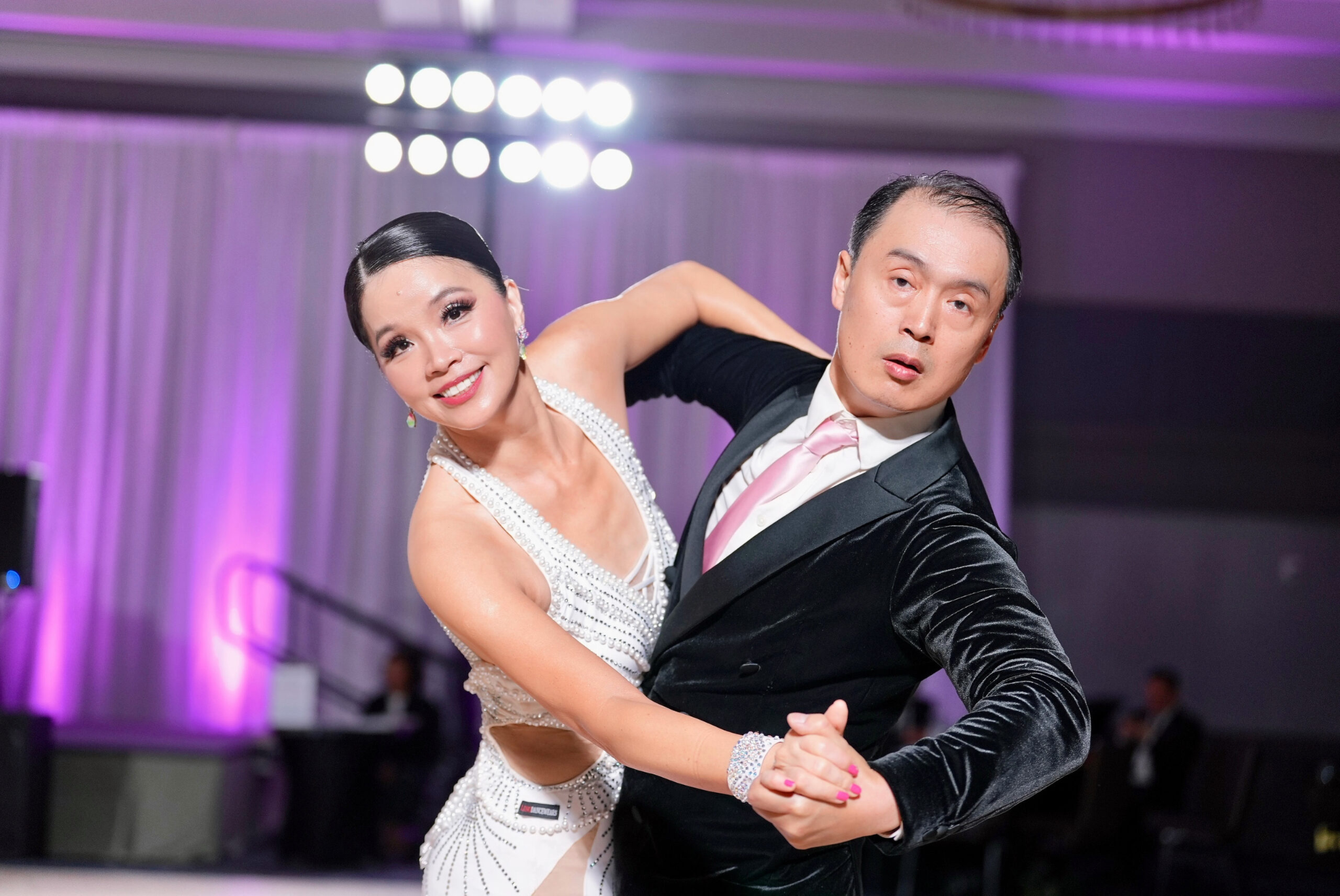
I began ballroom dancing about thirteen years ago. At first, I was attracted to it as exercise and recreation. It kept me moving, introduced me to people and gave me something to look forward to.
But dancing gradually became much more important than that.
There is discipline in ballroom dance, which suited the part of me formed by my upbringing. You have to learn the steps. You have to understand timing, posture and technique.
But knowing the steps is not enough.
You are moving with another person.
That requires something I had found much more difficult in life: balance.
If you think only about yourself, the partnership fails. If you surrender your entire movement to the other person, it also fails. You have to feel where your partner is while still knowing where your own body stands.
I sometimes thought that finding a dance partner was remarkably similar to finding a life partner.
Technical ability matters, but compatibility matters more.
Two excellent dancers do not necessarily dance beautifully together.
Two people have to listen through movement. There has to be trust. There has to be enough closeness to move together and enough space for each person to remain herself or himself.
Through dancing, I gradually recovered something I had lost over the years.
Confidence.
I felt younger—not because my age had changed, but because I was once again curious about what life might contain.
And then, through dance, I met a Japanese woman.
She was considerably younger than I was, young enough that people could easily notice the age difference. We also came from different cultures and did not share language perfectly.
From the outside, there were many reasons to question the relationship.
Inside it, there was companionship.
Perhaps because language was limited, we sometimes had to communicate differently. We learned to give each other space. We shared dancing, ordinary days and a kind of happiness that I had not expected to find at that stage of my life.
For seven years, we lived together and shared a beautiful period.
I knew, however, that love did not erase time.
As I grew older, I became increasingly aware of the distance between our stages of life. I had already lived through marriage, children, loss and divorce. She still had years ahead of her that I could not experience in the same way.
Eventually, I chose to let the relationship go.
That decision was painful precisely because the relationship had not failed.
Sometimes we imagine that love ends only when two people stop loving each other, or when someone has done something wrong.
Life taught me otherwise.
There are times when caring for another person means acknowledging a future that you cannot reasonably ask them to give up.
When I was younger, I might have tried harder to hold on.
By then, I understood that holding on and loving are not always the same thing.
Looking back at my relationships, I can see how much my understanding of love changed.
When I was young, love was mixed with duty.
Later, it became mixed with responsibility.
Only much later did I allow love to include joy.
I don't regret responsibility. My children mattered enormously to me, and they still do. I don't regret trying to preserve a family when I believed it was the right thing to do.
But I learned that a person cannot live an entire life only according to what he owes everyone else.
Men of my generation were not always encouraged to speak this way.
We were supposed to be strong. We were expected to handle problems, support families and keep difficult emotions under control.
But men grieve.
Men become lonely.
Men lose confidence.
Men want to be loved.
It took me many years to become comfortable admitting those things.
Perhaps that was another gift dancing gave me. On a dance floor, emotion is not weakness. Music asks you to express something. The body cannot hide completely behind the explanations the mind has learned to give.
You simply move.
As I grew older, I also stopped fighting so hard against age itself.
There is no negotiation with time. The body changes. Relationships change. Children grow up. Careers move into different phases. Someone we thought would remain beside us leaves, and sometimes another person appears when we had stopped expecting anyone.
I cannot control most of that.
What I can do is respect the life I have while I have it.
That is why I often say: enjoy the moment.
I don't mean living irresponsibly or pretending tomorrow does not matter. I spent too many years taking responsibility seriously to believe that.
I mean not sacrificing every present moment to anxiety about a future we cannot predict.
My mother died at forty-six.
My first wife died of cancer.
Those losses taught me earlier than I would have wished that there is no guarantee about how much time anyone receives.
So if there is music, I dance.
If there is someone I care about, I try to appreciate the time we actually have rather than demanding guarantees about how long it will last.
And when life changes, I try to change with it.
I still teach ballroom dancing, and sometimes when I watch beginners, I recognize something familiar. They are concentrating so hard on getting every step right that their bodies become stiff.
I tell them the steps matter.
But eventually, you have to hear the music.
Perhaps I spent the first half of my life concentrating on the steps.
Be a good son.
Be a husband.
Be a father.
Protect the children.
Keep the family together.
Be strong.
Do what needs to be done.
Those steps carried me through many years, and I do not dismiss them. Responsibility gave structure to my life.
But somewhere along the way, I began hearing the music too.
I learned that love cannot survive entirely on obligation. That companionship does not require possession. That letting someone go does not erase what two people shared. And that growing older does not mean the part of us capable of joy has to grow old at the same speed.
I began as a shy boy in a military household, uncertain of himself and trying very hard to do what was expected.
It took losses, marriages, children, divorce, love and thousands of hours on a dance floor before I understood something much simpler.
Life gives us certain steps.