60 of 250 stories
Betty Ann Ong — The Voice From Flight 11
10 reads
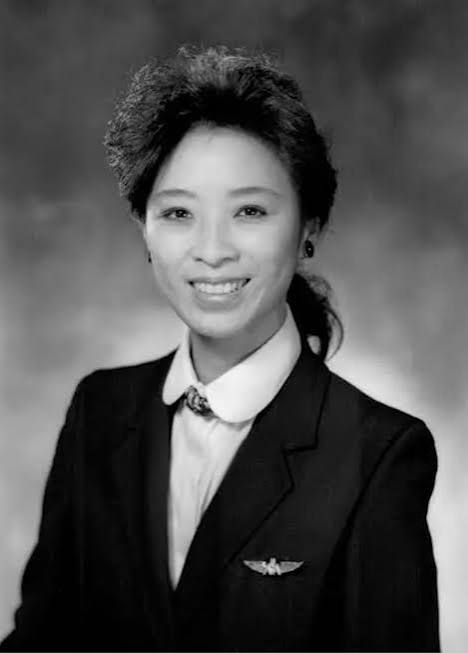
At 8:20 on the morning of September 11, 2001, a telephone rang at an American Airlines reservations office.
The woman on the other end introduced herself simply.
“My name is Betty Ong.”
She was a flight attendant aboard American Airlines Flight 11, a Boeing 767 that had left Boston that morning bound for Los Angeles. Something was terribly wrong.
The cockpit was not answering.
A passenger had been stabbed.
There appeared to be mace in the cabin, and people were having difficulty breathing.
Betty told the people on the ground that she thought the airplane was being hijacked.
Her voice, preserved in recordings and later played before the 9/11 Commission, is striking not because it sounds dramatic, but because it does not. In circumstances almost impossible to imagine, she continued to report what she knew: where she was sitting, what was happening in the cabin, which crew members had been injured, and what information other flight attendants were able to gather. American Airlines officials later described her demeanor as calm, professional, and poised.
For approximately twenty-three minutes, Betty remained connected to the people on the ground.
Much of America would eventually learn what happened to Flight 11.
Far fewer people would learn who Betty Ann Ong had been before she made that call.
She had been born on February 5, 1956, in San Francisco and grew up in the city's Chinatown. She was the youngest of four children. To her family and friends, she was “Bee.” They remembered her humor, her warmth, and a laugh so distinctive that one museum account recalls her slapping her knees when something truly amused her.
There was nothing in her childhood that suggested she would one day become part of one of the most consequential mornings in American history.
She was simply growing up in a Chinese American family in San Francisco, surrounded by relatives, neighborhood life, and the routines of an immigrant community that had learned over generations how to build a place for itself in America.
Betty would eventually find her own place in the sky.
She became an American Airlines flight attendant and remained with the airline for fourteen years. Over time, she rose to the position of head flight attendant. Her work took her far beyond the streets where she had grown up, allowing her to see places that had once seemed distant. But those who knew her remembered something more important than where she traveled.
They remembered how she treated people.
Betty loved children and senior citizens. When children were aboard one of her flights, she paid attention to them. When elderly passengers needed extra care, she noticed. According to her family, she sometimes drove into Boston simply to have lunch with senior citizens and take walks with them. She returned from her travels with stories and small gifts for neighborhood children.
Her colleagues remembered the same instinct.
She sometimes gave up her own breaks so she could continue helping passengers. On overnight flights, she walked through the cabin offering blankets. The National September 11 Memorial & Museum describes her as someone who loved her work and had earned a senior role during her years with American Airlines.
These are small details.
A blanket.
A lunch.
A walk.
A gift brought home for a child.
None seems heroic.
And perhaps that is exactly why they matter.
Heroism is often remembered as one extraordinary act. But sometimes the act that later appears extraordinary is built out of habits practiced quietly for years: noticing another person, remaining composed, taking responsibility, doing one's job carefully, staying when it would be easier to turn away.
On the morning of September 11, Betty was not in her usual position.
Although she often worked in a senior supervisory role toward the front of an aircraft, she was working an extra flight that day and was stationed toward the rear of Flight 11. That accident of scheduling placed her in a position from which she was able to make the call that would become one of the earliest warnings from inside the hijacked planes.
Flight 11 had taken off from Boston's Logan International Airport shortly before 8 a.m. Eastern time.
Not long afterward, the hijacking began.
Flight attendants Amy Sweeney and Betty Ong were among the crew members attempting to understand what was happening and communicate with the ground.
At approximately 8:20, Betty reached American Airlines.
She reported that crew members had been stabbed. She reported that the pilots were not responding. She passed along information from the cabin. With the help of the other flight attendants, she gave the airline details that would later prove important to investigators.
The people receiving the call could hear the seriousness of what was happening.
Betty could not see the larger picture.
She could not know that other airplanes would soon be hijacked.
She could not know that the country itself was about to change.
She only knew what was happening inside the aircraft around her.
And she kept reporting it.
There is something deeply moving about that fact.
In historical accounts, we often know the ending before the people inside the story do. We know where the airplane was headed. We know what happened at 8:46 that morning. We know the images that would soon appear on television screens around the world.
Betty knew none of that.
She was working with the information available to her, moment by moment.
The 9/11 Commission later emphasized that much of what investigators came to know about events aboard the hijacked aircraft came from crew members and passengers who managed to communicate with the ground. Betty Ong and Amy Sweeney were specifically recognized for relaying critical information from Flight 11.
In that sense, Betty became not only a witness to history.
She became one of its first reporters.
At 8:46 a.m., American Airlines Flight 11 struck the North Tower of the World Trade Center.
Betty Ann Ong was forty-five years old.
For many years afterward, September 11 would be remembered through enormous images: towers, smoke, firefighters, collapsing buildings, crowds running through Manhattan streets.
Betty's story is quieter.
It is a woman's voice over a telephone line.
A voice trying to make itself heard.
A voice describing what others could not see.
A voice remaining steady while the world around her was becoming unrecognizable.
Her family made sure that voice did not disappear.
The Betty Ann Ong Foundation was established after her death, carrying forward her particular concern for children and senior citizens. Its work has focused on youth, wellness, community, and older adults—the same groups that had mattered to Betty during her life.
In San Francisco, her name remains connected to the Chinese American community from which she came. The Betty Ann Ong Chinese Recreation Center bears her name, a public place where generations of children and families continue to gather.
And at the National September 11 Memorial & Museum, among the objects that preserve the lives behind the numbers, are Betty's American Airlines flight-attendant wings.
They are small.
Just a pin.
The kind of object that, on an ordinary morning, might barely attract attention.
But perhaps that is an appropriate way to remember her.
Betty Ann Ong did not begin September 11 expecting to become a symbol of courage. She was a flight attendant going to work.
She had spent fourteen years doing a job centered on other people: welcoming them, watching over them, making them comfortable, helping them reach somewhere safely.
And when the ordinary responsibilities of that job suddenly became something unimaginably greater, she continued to do what she had always done.
She paid attention.
She cared for the people around her.
She remained at her post.
And she tried to help.
History often remembers presidents, generals, inventors, and people whose names were already known before the defining moment arrived.
But the story of America is also carried by people whose names become known because of what they chose to do when no one expected history to ask anything of them.
Betty Ann Ong was one of those people.
A daughter of San Francisco's Chinatown.
A sister.
An aunt.
A friend.
A flight attendant.
And on one September morning, one of the first voices from inside a tragedy that the rest of the country had not yet begun to understand.
Her life should not be remembered only because of the way it ended.
It should be remembered because of the way she lived before that morning—and because, in her final minutes, the qualities that had defined that life remained unmistakably present.
Calm.
Responsibility.
Compassion.
Service.
Her name was Betty Ann Ong.