6 of 250 stories
Insights from a Veteran Asian Counselor: Wu Di
1,192 reads
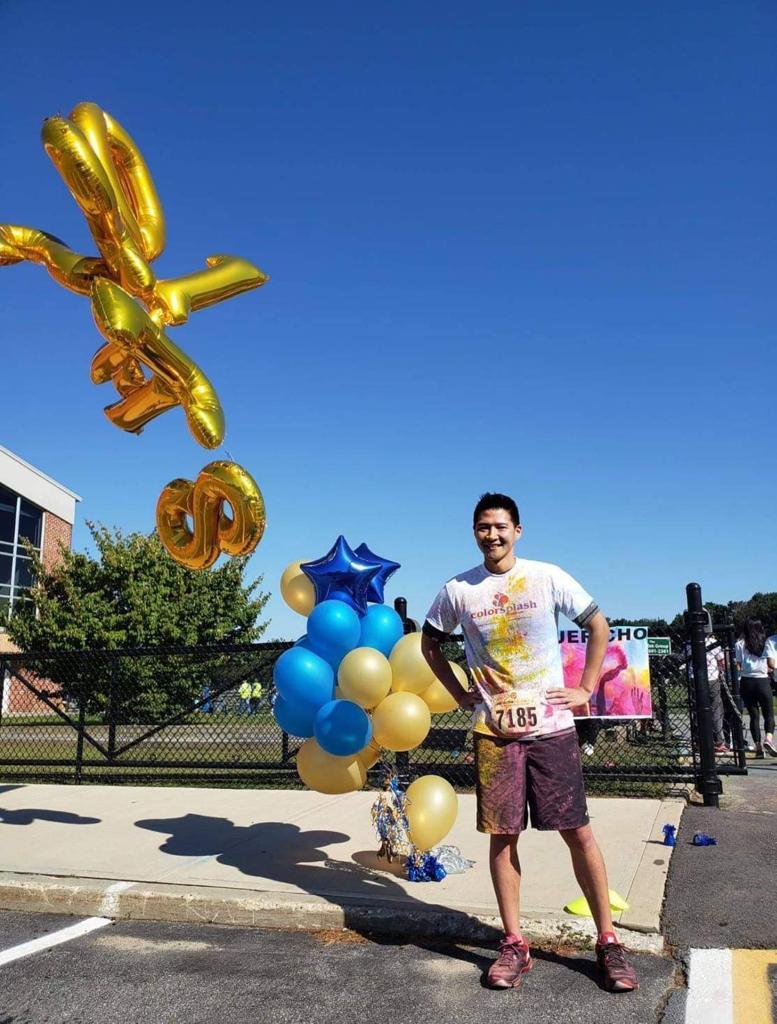
I arrived in the United States in eighth grade, and like most kids who land mid-adolescence in a country whose language they're still learning, my academic path had real ups and downs before it found its footing. I don't think I fully understood, back then, how much that experience would end up shaping the rest of my life. It took years — and one conversation — for that to become clear.
The Interview That Redirected Me
I studied psychology as an undergraduate, without a fixed plan for what I'd do with it. The turning point came during my senior year, when I interviewed a high school counselor as part of a school project. Something about that conversation stayed with me. I started thinking about my own immigrant experience — the disorientation, the slow climb, the moments when I didn't know if I'd catch up — and realized I might be able to use that experience to help kids going through the same thing.
I was drawn first to school counseling in the traditional sense. Once I got into the field, though, I discovered the practical reality was different from what I'd imagined — schools place real constraints on how much psychological counseling a school counselor can provide. I adjusted my expectations and started working at an elementary school in Flushing, Queens, a neighborhood with one of the highest concentrations of Asian immigrant families in the city. My bilingual ability and my own background as an immigrant turned out to matter more there than almost anything else on my resume.
A Rare Kind of Teacher
Male teachers are uncommon in elementary education generally, and even more so in school counseling — a lot of young men who enter the field don't stay in it long. I've now been doing this for over twenty years. What's kept me here isn't the pay, which is modest, and it isn't external recognition. It's the students themselves — their gratitude, their smiles, the small moments of genuine connection that don't show up on any spreadsheet but that I feel every single day I show up to work.
Becoming the Bridge
Over the two decades I worked in Flushing, the neighborhood's demographics shifted until my school's population was overwhelmingly Asian. My bilingual license and cultural fluency made me a natural bridge for families with limited English, and colleagues increasingly leaned on me not just as a counselor but as an informal translator and cultural liaison. I don't regret that role — it mattered, and I was often the only person who could really talk to certain families. But I'll be honest that it added real weight on top of my primary counseling responsibilities, and finding the right balance between the two has been an ongoing challenge, not something I solved once and moved past.
What Families Are Actually Navigating
A lot of what I see at the elementary level comes down to two forces working against each other: parents who are working long hours and genuinely can't be as present for schoolwork as they'd like to be, and schools that don't always account for that reality. Schools try to close the gap with evening events aimed at boosting parental engagement, but even simple written communications — a letter home, a permission slip — can get lost in translation, literally, and that creates frustration on both sides before anyone's had a real conversation.
What I've found is that once a teacher takes the time to understand a family's circumstances — not just assume disengagement, but ask why — parents do become more involved, even with everything else pulling at their time. It just takes patience and genuine curiosity on the school's side first.
The Expectation Gap
One of the most consistent tensions I see in my counseling work is between immigrant parents' high, often rigid academic expectations and their children's own emerging interests and passions. It's rarely malicious on the parents' side — it usually comes from love, and from their own understanding of what security looks like. But it creates real friction.
My approach is to encourage students to research whatever interests them thoroughly enough that they can present an informed, credible plan to their parents — not just "I want to do this," but a real case for why. That shift, from a vague wish to a researched plan, tends to change how parents receive it. It doesn't resolve every conflict, but it eases quite a lot of them overtime.
What I Tell the New Kids
Because I was once the new immigrant student myself, I feel a particular closeness to kids going through that same disorientation now. I tell them it takes time — that language skills improve gradually, and that the awkwardness fades. But I also push them, gently, not to get too comfortable inside immigrant-heavy communities like the one I work in. It's easy to stay inside a linguistic and cultural bubble where everything feels familiar. I've seen what happens when students stay in that comfort zone too long, and I try to nudge them out of it early — toward stronger English, toward broader experiences — because I know firsthand what it costs to catch up later instead.
That's part of why I push students toward a wide range of clubs and activities — academic competitions, sports, debate, Model UN — not just the paths that are already comfortable and familiar. Asian students I work with are often intensely competitive academically already; what benefits them more, long-term, is diversifying their social world and building the kind of emotional intelligence and adaptability that doesn't come from a transcript.
Moving to the High School Level
Later in my career, I moved to Stevenson, a prestigious specialized high school with an intensely competitive, largely Asian student body. The pressure there is different in kind, not just degree — students are surrounded by other high achievers at every turn, and the emotional toll of that constant comparison is real. My job shifted accordingly, toward building resilience and self-acceptance alongside academic guidance. It means a lot to me when graduates come back years later just to tell me that the guidance I gave them helped them stay balanced through college, not just get in somewhere.
Elementary and high school counseling reward me in different ways. Elementary school gives you those immediate, heartfelt moments — a hug, a card, a kid who lights up when they see you. High school lets you watch the long arc play out, students moving into college and careers, and you get to see, years later, whether the groundwork held. I've had former students recognize me on the street more than a decade after I taught them. Those moments are why I've stayed in this work as long as I have.
The Choice, and Who Supported It
Nobody pushed me into this career — it was entirely my own decision, and while the pay has never matched what I could have earned elsewhere, my parents ultimately respected the choice once they saw my commitment to it. I made a kind of internal pact with myself early on to stick with this work, even through discouraging stretches, and my wife has been a steady source of emotional support through all of it. On the harder days, I go back through old graduation cards and notes from former students — small, tangible reminders of why I started this in the first place.
What College Counseling Actually Requires
In more recent years, my focus has shifted heavily toward college admissions counseling, and that work runs on a much longer timeline than people expect. Serious planning usually begins in the second half of tenth grade, with full engagement by eleventh, though I get inquiries from anxious parents as early as ninth grade. Some students walk in with a clear sense of what they want to study; others are still genuinely uncertain, even as late as senior year — and both are completely normal starting points. I lean on aptitude tests, career interest assessments, course selection guidance, and summer programs to help students test their interests against real experience rather than guesswork.
The Ivy League Misconception
One of the most persistent misconceptions I address, especially with Chinese American families, is the assumption that a "successful" outcome means Harvard or Yale or nothing. I do encourage students to aim high. But a real part of my job is helping families assess honestly where a student's actual academic profile sits and helping them find peace with outcomes that reflect sincere effort rather than an unrealistic, fixed target. That psychological shift — from a specific school as the only acceptable outcome, to effort and fit as the real measures of success — takes real pressure off both the student and the family.
What Actually Distinguishes an Application
Transcripts remain the foundation of any admissions decision, but at the most selective schools, essays, recommendation letters, and extracurricular depth get scrutinized closely. I've noticed that a huge number of Asian American students present classical piano or violin as a core achievement — and while that's genuinely admirable, it's become common enough that it rarely distinguishes an application on its own anymore.
What I push students toward instead is a real, specific, authentic niche. I had a student admitted to Cornell for entomology — the study of insects — because his enthusiasm for the subject was so genuine it came through vividly in his personal statement. Admissions officers can tell the difference between manufactured passion and the real thing. Specificity and authenticity beat generalized excellence almost every time.
That authenticity matters just as much in the essay-writing process itself. I support students through drafts and revisions, and schools typically provide English teachers to help as well, but I'm careful to keep the student's actual voice at the center of it. Overly polished, clearly outsourced essays tend to lose credibility with admissions readers rather than gain it.
Staying Current, Staying Grounded
This work demands constant research — hundreds of colleges, evolving admissions policies that have shifted even more since the pandemic, differences across four-year public, private, community, and technical schools. I stay in direct contact with college admissions offices to make sure my guidance reflects current reality, not outdated assumptions. It's a genuinely demanding, ongoing commitment, but it's the only way to serve students honestly.
On the sensitive question of shifting Asian American admission rates at elite schools, I'm honest that I don't have certainty about the underlying causes. What I focus on instead is what's controllable: doing the best possible job on the application itself, and protecting a family's mental health through the process. I tell families to stay in their own lane rather than getting consumed by rumors or comparisons to other families. I'm especially direct about the harm that comes from comparing siblings to each other — it's one of the most psychologically damaging patterns I see, and I actively work against it, reinforcing each child's individual worth and effort instead.
Timing, Offers, and the Long View
I generally recommend early applications to lock in safety-school acceptances by December, which meaningfully eases anxiety for the rest of senior year — though early decision isn't right for every student, since it's binding and some students genuinely need more time to decide. Senior year performance, especially first-semester grades, matters more than families sometimes realize, since updated transcripts go directly to colleges and late improvement can still shift outcomes.
When offers start coming in during the spring, families often need real guidance choosing between multiple acceptances — not just which school is most prestigious, but which is the better fit. I keep a classroom tradition I use to remind families that college admission is one moment in a much longer life, not the whole story.
Boundaries, and What Actually Matters to Me
Chinese culture carries strong expectations around reciprocity and gift-giving, and I understand where that comes from. But I maintain clear professional boundaries around it — I decline anything beyond small tokens. What means something to me are heartfelt cards and simple, sincere gestures, not expensive gifts. I think holding that line has mattered for the trust families place in me.
I've had chances to move into administrative roles over the years, and I've turned them down every time. I want to stay a frontline counselor, working directly with students, for as long as I'm doing this. My hope, honestly, is that when I eventually retire, some of my former students will be there for it. That would tell me the work meant what I always hoped it would do.
In the end, I tell every family the same thing: a student's long-term achievements and character will matter more than which college's name ends up on their diploma. My job isn't to get a name on a list.