5 of 250 stories
A Spark of Light Makes Changes in Lives: Wu Yanni
1,145 reads
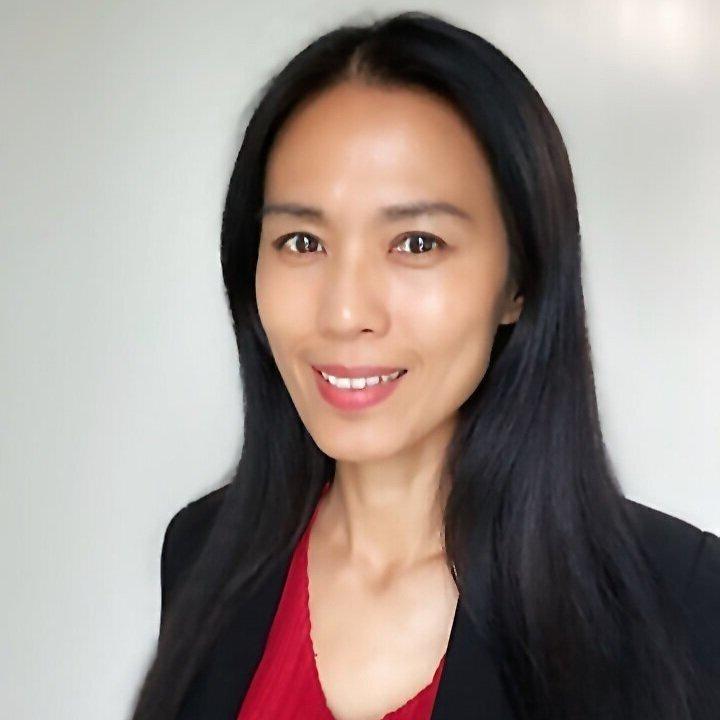
Most people who see me today see someone in a plain T-shirt and jeans, sitting with families in some of New York's lowest-income neighborhoods. Almost none of them know what came before that — that I spent years as a corporate executive at some of the biggest companies in the world. I don't say that to boast. I say it because the distance between those two lives is the whole story.
A Life Winner, By Most Definitions
I graduated from National Taiwan University, went on to study in Chicago, and eventually found my way into Silicon Valley. From there I moved into leadership roles at HP and Oracle — Asia-Pacific support head, executive communication lead. By any conventional measure, I was what people call a "life winner": hard work meeting good fortune, one promotion after another.
I want to be honest that even at the top schools, surrounded by people who all looked successful on paper, I often felt like the underdog. What got me through wasn't some natural brilliance. It was a principle my schooling instilled in me early: don't compete with other people, compete with your own potential. Focus on getting better, not on beating someone else. That mindset carried me through workplace politics, cultural barriers, and assignments nobody else wanted. I had supportive bosses along the way, but mostly I just kept showing up and doing the work.
Dream Job or Dream Life
By the time I was approaching forty, I was near the top of my field, and I found myself facing a question I hadn't let myself ask directly before: did I want my dream job, or my dream life? The honest answer was that climbing further up the corporate ladder wasn't going to give me the life I wanted. It took real reflection to admit that to myself, because the corporate path was safe, predictable, and objectively successful by every external measure.
Walking away from it wasn't easy, and it wasn't just my own doubt I had to deal with it. My family and friends were genuinely worried. They saw financial risk; the loss of comfort and stability I'd spent years building. I understood their concern. But I'd reached a point where I couldn't keep chasing a version of success that didn't match what I valued.
Manila
The moment that changed everything happened in 2018, on a visit to the slums of Manila. I had traveled a great deal in my life by that point, and I thought I understood hardship in the world in some abstract sense. Nothing prepared me for what I saw there — children living in garbage dumps, children living in cemetery, simply because there was nowhere else for them to be.
I'd built a fairly wide worldview over the years, and this still humbled me completely. Something in me shifted permanently that day. I couldn't go back to complacency after that. I wanted to take whatever resources and energy I had and put them directly toward serving children who had nothing.
Two Lives, No Conflict
After I left Oracle, I didn't abandon my professional skills entirely — I worked as a corporate trainer and life coach across China, leading sessions in luxury hotels for brands like Marriott, the same kind of high-profile work I'd always done. But alongside that, I was building an entirely different life: grassroots fundraising and hands-on service for children living in poverty.
People sometimes assume that kind of split must feel like a conflict, two identities pulling against each other. It never did for me. I was grateful for both worlds. But over time, it became clear which one mattered most to me.
When Purpose Replaces Work
Eventually I stopped thinking of what I do now as "work" at all. It's my life's purpose, and once life and mission become the same thing, the whole idea of work-life balance stops making sense — there's no longer two separate things to balance. That doesn't mean it's easy. There are real setbacks, real hard days. I've simply come to see them as part of the path I chose, not evidence that I chose wrong.
I know most people won't choose this path, and I don't say that with judgment — meaningful work asks for real sacrifice and real courage, and that's not a small thing to ask of anyone. When I committed fully to Metro World Child's mission, I made a deliberate choice to maintain my own financial independence through side businesses, so I would never be a burden on the charity itself, only a contributing partner to it. That mattered to me — the truest value in a life, I believe, comes from contributing to something larger than yourself, not from how much comfort you can accumulate.
The Man Who Showed Me What Purpose Looks Like
I met Pastor Bill Wilson during that same 2018 trip, and his story is a large part of why my own life changed direction. He was abandoned by his alcoholic mother at twelve years old, left utterly alone, until a compassionate Christian stranger helped get him to a children's summer camp — a single act of kindness that redirected the entire arc of his life. He holds a doctorate today, and he still personally boards buses to go pick up at-risk children himself. That's not a photo opportunity for him. That's just who he is.
Bill has survived three plane crashes, violence, injury, and a lifetime of hardship most people would use as a reason to stop. He hasn't stopped. He lives two lives at once — a respected public figure with advanced degrees, and a frontline worker in war zones and some of the most impoverished neighborhoods in the world. The thing that wears on him most isn't the danger. It's the rare moment when he can't help someone who needs it — like a war-injured child he once encountered and couldn't save from that situation. He carries a simple mantra through those moments: my purpose drives my actions and decisions. Watching him live that out, in his seventies, still pursuing a medical degree, still refusing to give up — that told me everything I needed to know about what a purpose-driven life looks like in practice.
Brooklyn, During the Worst of It
My own frontline work took me into Brooklyn's Project Building, a high-crime, high-poverty area, right through the peak of the COVID-19 pandemic when New York was being hit as hard as anywhere in the world. I remember one bus ride with a troubled child where all I could offer him was a simple sentence: you are valued and loved. I still think that moment mattered more than anything more elaborate I could have said.
We did weekly home visits during that period, and I saw poverty up close in a way statistics never fully capture — homes with nothing in them, not even basic furniture, families sitting in a kind of quiet despair. We shifted our programs on the fly, from regular Sunday school to emergency food distribution, because that's what the moment demanded. Over the course of the pandemic, our team distributed more than 4.5 million pounds of food to over 700,000 people. Our approach was simple: where there is need, we will be there.
What It Costs, and What It Gives Back
I won't pretend the emotional weight of this work is light. Both Bill and I caught COVID-19 ourselves during that period, on top of the constant exposure to other people's trauma and despair. Bill lives that double lives every day — dignified in one setting, working among the most vulnerable in the next — and what breaks him is having to say "I can't help you" to someone who needs it. His purpose is what keeps him upright through that.
I've learned that even small gestures — handing someone a Thanksgiving dinner, a Christmas gift, when they're feeling completely forgotten by the world — can matter more than we realize. This work changed me. It opened an emotional honesty in me I didn't have access to before.
Planting Seeds, Even When You Can't See Them Grow
I won't claim every child we've worked with has escaped a hard fate — that wouldn't be honest. But I've come to believe the work is about planting seeds of hope, not guaranteeing outcomes you can see right away. I met a former Sunday school attendee, now out of prison, who told me the program shaped his desire to build a better life for himself. That's the kind of light this work is meant to spark in dark places — you don't always get to see it catch.
When people ask me what I sacrificed to get here, I genuinely reject the framing. I haven't lost anything. I've gained far more than I gave up.
What I'd Say to Anyone Weighing a Change
Clarity about your own values makes the hardest decisions simpler, even when they don't look simple from the outside. Some people will prioritize comfort, financial security, travel, family, spiritual fulfillment — there's no single right answer, only the honest one for you. But I want people to know that no matter your age, no matter what you've already built in a previous career, it is never too late to redefine your purpose and live differently. Past achievement doesn't lock you into a future you no longer want. That choice stays in your hands for as long as you're willing to make it.
I especially want to say this to the global Chinese community: wherever you are, whatever you've already accomplished, there's room to bring that same heartfelt service to the people around you. Real change — in a life, in a community — starts with a single spark of intentional love. That's all this ever was for me. A spark, followed by a decision to keep following it.