7 of 250 stories
From Hardship to Hope and Legacy: The Journey of Han Xiu
1,286 reads
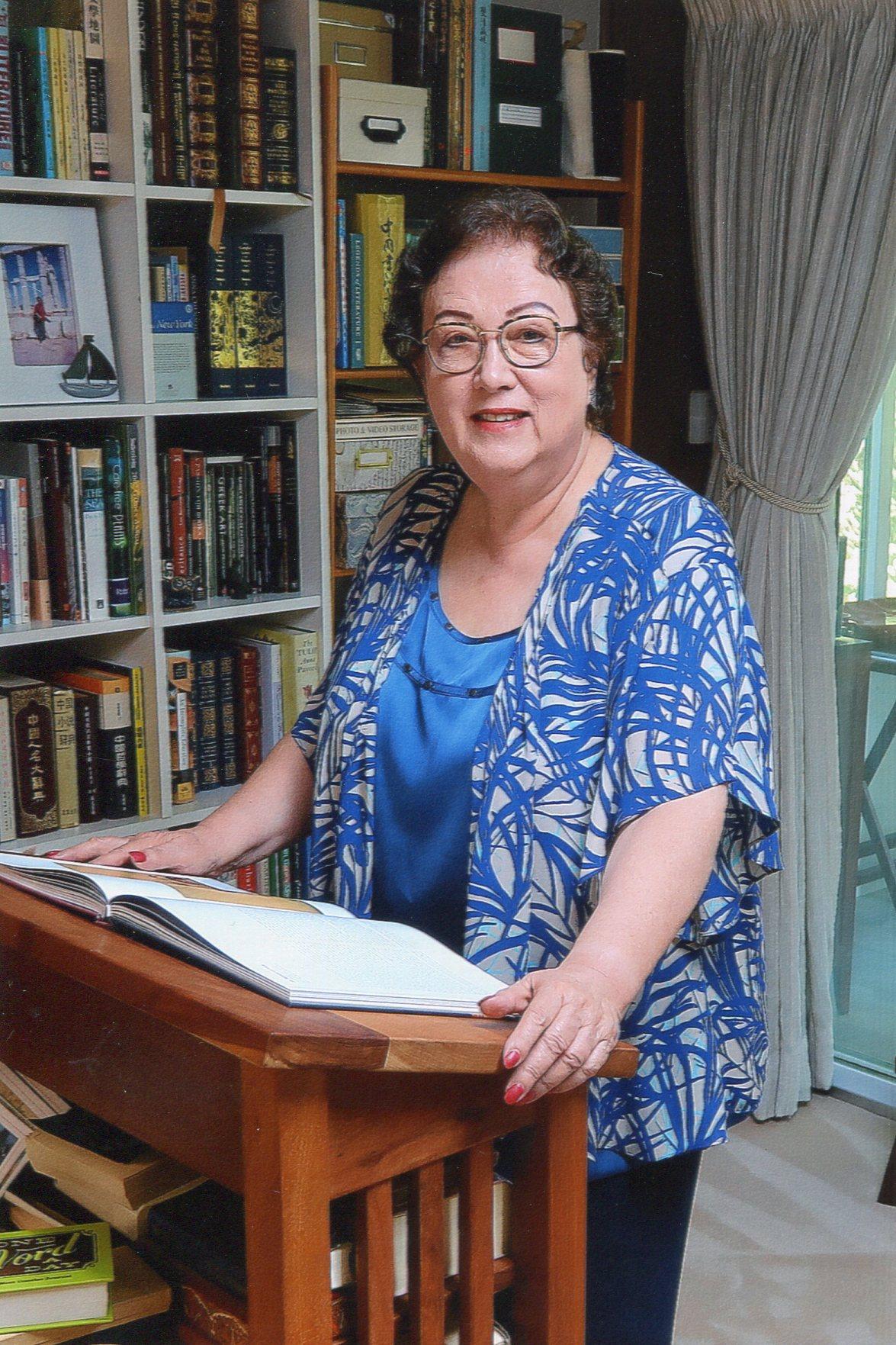
I was born in Manhattan in 1946, and within days of my birth, my mother made a decision that would shape everything that came after: she entrusted my care to a Japanese couple, former internees from the American camps, who cared for me with real tenderness during a moment in history that offered very few safe places for anyone. About a year later, that same couple carried me with them back to China — a strange, almost unthinkable choice in the chaos of that era. I have no memory of those first years myself. What I have instead are the stories, and decades later, an emotional reunion with the couple's son, John, that filled in a piece of my own history I'd never been able to access on my own.
My Grandmother's Lesson
I grew up in China during a period thick with anti-American sentiment, which made my own American birth a complicated thread running under everything else in my life. It was my grandmother who gave me the framework that let me hold all of it together. She taught me, early and repeatedly, that external differences do not signify internal differences — that the categories the world insists on sorting people into rarely tell you anything true about who they are. She was a formidable woman in her own right, independent, involved in banking and government work before and during the war, and she carried herself with a wisdom that shaped my entire worldview. That single lesson of hers has outlasted every political system I've lived under.
My grandmother connected me, in those early years, to some remarkable people. I remember Mei Lanfang — "Mei Boss," as I called him — who personally taught me eye exercises to strengthen my weaker eye, a practice I kept up for the rest of my life and one that left me with genuinely good vision even in old age. I also came to know the writer Lao She, whose extraordinary artistic standards were matched by real generosity toward struggling artists around him. Both men would later suffer terribly under political persecution during the Cultural Revolution — Lao She's story ended in public denunciation, violence, and tragedy. Watching what happened to people I had personally known and admired taught me early just how dangerous it could be to have talent, principle, or an inconvenient family history in that era.
Denied, and Sent Away
I excelled academically as a child, especially in mathematics and the sciences, and I had my heart set on Tsinghua University — I wanted to study something connected to freedom and exploration, shipbuilding among my ideas. But my father's political status made me a target before I ever got the chance. I was denied university admission because of accusations tied to him. Teachers pressured me to denounce him, to distance myself, to trade my family's honor for my own advancement. I refused. I stayed loyal to my father and to my own principles, and the cost of that loyalty was being sent to the countryside in Xinjiang as part of the "Down to the Countryside" movement, where I would remain for nearly a decade, through the worst years of the Cultural Revolution.
Xinjiang
Those years in Xinjiang were physically brutal in ways that are hard to summarize briefly. I worked on the China-Pakistan road project, where many young workers died under dangerous conditions, and part of my responsibility became locating and identifying the deceased so they could be given proper burial according to the Islamic customs of the local Uyghur community. I still remember the depth of faith and hospitality I witnessed in those burial rituals — the way belief seemed to genuinely lighten the unbearable weight of loss for the people performing them. It taught me something about the power of faith that no bureaucratic system, no political ideology, could touch or replace.
Nearly all of my comrades from that military corps in Xinjiang have since passed away — a quiet, heavy testament to just how harsh those conditions really were. I built whatever resilience I have, physical and mental, in that decade: daily exercise, endurance through hard labor, and a determination that hardened into the foundation for everything I would do later with my life, including my eventual turn toward continuous learning and writing.
Through all of it, I made a choice that has stayed with me since: I would not let hatred take root in me. I watched what bitterness did to people around me, and I decided early that forgiveness, however difficult, was the only way to come out the other side of that decade still recognizably myself.
Reclaiming an Identity
After nearly ten years, I was ordered back to Beijing, where I worked in a garment factory under harsh conditions, holding onto one quiet fact that the political chaos around me couldn't erase: I had been born an American citizen, and I still had the birth certificate and passport to prove it.
I made repeated visits to the U.S. Liaison Office in Beijing, guarded by armed officials, trying to get someone — anyone — to recognize my citizenship and help me retrieve valid documents. On one of those visits, an alert American diplomat named Jerry Ogden recognized my expired but genuine U.S. passport for what it was, and intervened directly with Chinese officials to get me processed. That moment cracked open months of interrogation that followed — accusations of espionage, of anti-communist activity, the full weight of a government trying to decide whether I was worth the trouble of releasing. Through all of it, my grandmother never wavered in her support, holding onto an unshakable faith in my eventual freedom even when I struggled to hold onto it myself.
I wrote letters to high-ranking officials — Hua Guofeng, Huang Hua — pleading my case directly. Most of what came back was bureaucratic and cold. But the larger current of history was moving in my favor: as U.S.-China relations began to thaw, my odds improved. With crucial support from American diplomatic officials, including Teng Zulong and David Ding, I finally secured the travel documentation I needed. I remember the tension of that final journey — a covert route through Beijing and the border regions, crossing at Luohu Bridge into Hong Kong, waiting under consular protection before finally boarding a flight to the United States in 1978.
There's one image from that period I still carry vividly: standing with my birth certificate and passport in hand, at gunpoint, and simply refusing to let go of either the documents or my own right to exist freely. That moment is, in many ways, the truest single symbol of everything that decade cost me and everything I refused to surrender.
Rebuilt From Nothing
When I arrived in America, my health had been devastated by the years behind me. Doctors doubted, quite openly, that I would survive. It took a month of simply being properly nourished — including, memorably, meals at McDonald's — before my condition began to turn around. I've never stopped being grateful for the sheer physical protection and opportunity this country gave me in that fragile window. One of the first things I did once I was stable was repay the U.S. government for my travel expenses, promptly and in full. That felt important to me — a way of honoring the debt, not just financially but as a statement of the kind of person I intended to be in my new life.
I eventually found my way to a man named Dr. Swift, someone I had apparently called "Daddy" as an infant without any memory of it — a connection that resurfaced decades later when the State Department and Defense Department reached out to him about my return, unaware of the bond we'd once shared. He became the director at the Foreign Service Institute, where I began my first American job teaching Chinese in 1978.
My Father, at a Distance
I made a deliberate choice, once I was settled in America, not to reconnect further with surviving family back home — not out of coldness, but because I refused to become a burden to them, and I wanted to build something entirely my own. My father is a more complicated thread in this story. He served as a military officer along the "Himalayan Lifeline" during the Second World War, transporting essential supplies across the China-Burma border to support the Chinese government — I later found maps and artifacts related to that very mission in a WWII museum in Louisiana, a strange and moving discovery decades after the fact.
The most tender image I have of him is a worn photograph: my father gazing at me through glass as an infant, the only time he ever laid eyes on me before his death. I've visited his gravesite since, and those visits carry an intimate, unspoken dialogue between us that words can't quite capture. Years later, living in Taipei in the early 1980s, in former U.S. military housing, I discovered he had lived in Taiwan too, during the tense pre-Vietnam War period — stories surfaced about his loyal German Shepherd named Sergeant, about the plain simplicity of his daily life there. I walked the same trails he once walked on Yangming Mountain and felt a spiritual closeness to him that no photograph could have given me. People who had worked alongside him described a good-natured man underneath the harsh military roles history had assigned him. That, too, became part of the legacy I carry.
A Bible, and a Note Inside It
One of the objects that has shaped my life and my writing most is a 1940 edition of the Bible, gifted originally by Gladys and Dr. Swift, tied to Pastor Hubbard, an influential missionary in China who received my family upon our arrival in Shanghai in 1948. Pastor Hubbard and his family were later interned in a camp in Sichuan during the tensions surrounding the Korean War — a piece of history that reaches directly into my own family's story. Decades later, I discovered a note tucked inside that Bible, written by Pastor Hubbard himself, and finding it triggered a whole new depth of study in me, particularly around the Book of Revelation, which has become a recurring thread in my scholarly and creative work.
Faith Across Cultures
My relationship to faith has never stayed inside a single tradition. In Xinjiang, I witnessed the depth of Uyghur Islamic burial customs firsthand. Later, traveling through Greece, I found myself fascinated by the coexistence of modern Eastern Orthodox Christianity alongside the classical pagan mythology still etched into the landscape and the art — priestesses depicted by artists like Michelangelo, gods and saints occupying the same cultural memory. That fascination became the seed for my book Apollo Dialogues, in which I imagine conversations with divine figures across time and tradition, Apollo and Jesus both present in the same dialogue. Writing those conversations gave me a genuine, recurring sense of warmth and happiness — proof, to me, that personal faith and interfaith dialogue aren't opposites, but companions.
Much of my scholarly writing has focused on the intersection of Christian art and the Renaissance — I've written seven books on great Western and German Renaissance artists, paying particular attention to religious masterpieces like Caravaggio's The Arrest of Christ and Raphael's Madonna and Child. I've spent real time with the way the Book of Revelation inspired artists like El Greco and the German master Dürer, who created seventeen intricate illustrations for an edition of Revelation that wove text and image together into something genuinely sophisticated, theologically and artistically both. His rendering of the Four Horsemen — Death on his pale horse, Famine weighing prices on his scale, War fully armed, Pestilence with his bow — still strikes me as one of the most searing visual meditations on human suffering ever put to paper. I've tried, in my own writing, to honor that same historical and theological seriousness rather than imposing modern frameworks onto artists who were working within their own world's logic.
Fifty Books, and a Recognition I Didn't Expect
I began writing intensively in 1983, and I've now published more than fifty books, working with respected publishers like Lianjing and Sanmin. Among them, the English translation of The Superfluous Man brought a new wave of recognition my way. In 2020, in the middle of the pandemic, I received a national social contribution award from the President of the United States — recognition, I was told, not only for loyalty and patriotism but for the body of literary work I'd built over decades. I remember small, human details from that period as vividly as the formal recognition itself — sharing ginger tea and conversation with a White House aide during some of the hardest, loneliest months of the pandemic. The award mattered to me, but so did that simple companionship.
What Chronic Pain Taught Me
In recent years, I've lived with real, debilitating physical pain — a condition I've come to compare, in my own mind, to a historical figure named Dora, who endured malaria for eight years. That shared image of prolonged suffering became, oddly, a spiritual and creative bond for me, something I've channeled directly into my writing rather than let sideline it. My editors have been patient and thoughtful collaborators through this stretch, and I credit that partnership with my ability to keep working at all. Doctors who examine me are often puzzled by how someone this physically impaired remains so mentally vibrant. I don't entirely have an explanation for that myself, beyond the plain fact that I've never stopped being curious about the world.
That curiosity has never really slowed down. I learned English from scratch after arriving in America — I'd previously been forbidden from learning it at all — starting, almost comically, mid-flight on the journey over, relying on visual cues and official documents to piece together my first words. I took formal classes in Arlington afterward and practiced relentlessly, even using early Apple computers to keep improving. At fifty, I decided to learn Greek. Learning, for me, has never had an expiration date.
What I Want to Leave Behind
At seventy-five, I still find myself defined less by the specific hardships I've experienced and there have been many, from Xinjiang to Tiananmen to decades of political suspicion simply for being who I was — than by what I chose to do with them. I've disavowed hatred as something ultimately destructive, even toward the people and systems that caused me real harm. My grandmother's wisdom about enduring with flexibility, about strength that comes from wanting less rather than more, still guides how I try to move through the world.
I've spent my life at the intersection of art, history, literature, and faith, because I believe those are the tools that let human beings understand each other across the categories that keep trying to separate us — nationality, religion, political era, all of it. My grandmother once found a quiet, brilliant way to survive the most dangerous years of political suspicion by focusing her energy on the restoration of ancient books, using traditional Chinese literary knowledge and craftsmanship as both a practical shield and a spiritual anchor. I think of my own writing as an extension of that same instinct: taking what's fragile and nearly lost, and putting it back together carefully enough that it survives to reach someone else.
If people remember anything from my story, I'd want it to be this: the label the world assigns you — American, Chinese, refugee, citizen, suspect — was never the whole truth of who I was. The whole truth was always somewhere underneath that, in the stubborn, curious, forgiving person who kept learning, kept writing, and kept believing that kindness was worth practicing even in the hardest years I lived through.