8 of 250 stories
The Piano Journey of Dr. Gao Mingyi
1,091 reads
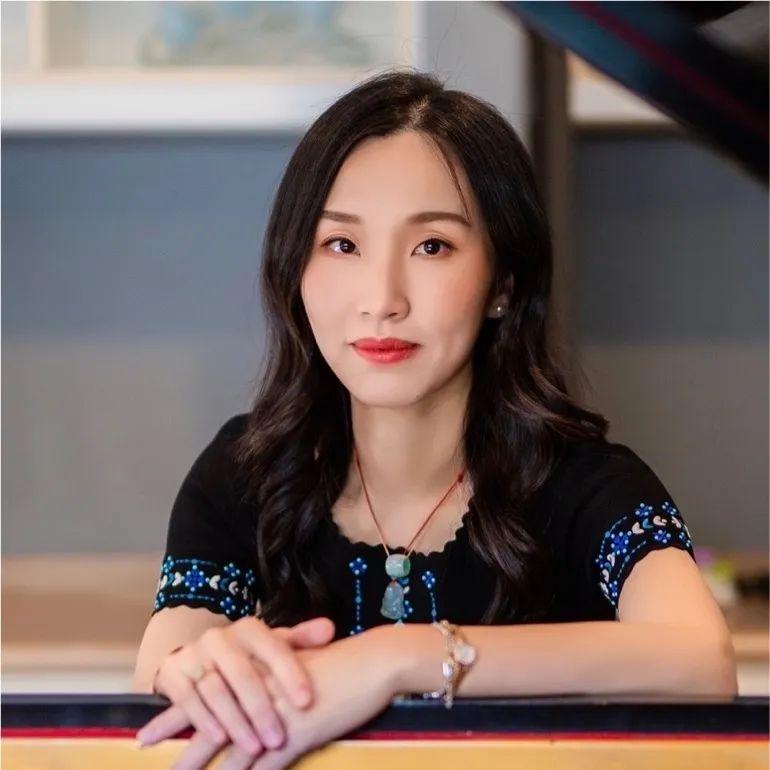
I sat down at a piano for the first time at age six, and I'll be honest about how that happened: it wasn't my idea. It was my mother's insistence, not childhood eagerness, that put me on the bench in the first place. Those early practice sessions felt forced, the way any discipline imposed from outside usually does to a six-year-old. But somewhere in the repetition, something shifted. Music stopped being an obligation and became a genuine emotional outlet — a way of expressing feelings I didn't yet have words for, a conduit into the broader human experience. My mother's real hope, I understand now, was never about piano technique. She wanted music to give me cultural and personal freedom. It took me years to understand what she meant by that. I understand it completely now.
From Regional Schools to the World Stage
My path moved from regional music schools in China to the Shanghai Conservatory, one of the country's most demanding institutions, and eventually to the Eastman School of Music in the United States, where I found myself surrounded by top-tier talent from every corner of the globe. That environment humbled me in the best possible way. I remember feeling, again, like I was standing on the shoulders of giants — surrounded by people whose gratitude and admiration for the craft matched their skill. That environment didn't diminish my motivation; it deepened it.
Somewhere in that training, my relationship with music itself changed. I stopped treating a score as a set of notes to execute correctly and started treating it as a living story — shaped by the historical moment it came from, the philosophy behind it, the emotional truth the composer was reaching for. That shift is what turned music, for me, into something I could commit to for a lifetime rather than a skill I'd eventually set aside.
Public Recitals, and a Doctorate
I gave my first public recitals early, while still developing the fundamentals, and I went on to complete doctoral-level artistic and literary study in the field. My real dream has always been the stage — performance, in its purest form. But over the last decade, my focus has shifted heavily toward teaching, and I've come to see that shift not as a departure from my ambitions but as its own complete artistic path.
I recently had the honor of being inducted into the Steinway & Sons Teacher Hall of Fame in New York — a recognition Steinway offers, alongside its 160-year legacy of building the world's finest pianos, to educators and performers who've met an exceptionally high bar. What made the honor especially meaningful to me is that my own teacher had received that same recognition before me. It's a rigorous selection process, and standing in that lineage means more to me than almost any individual performance credit could.
What Performing Teaches Me About Teaching
I've come to believe firmly in a principle that shapes how I think about this whole profession: good players aren't always good teachers, and good teachers aren't always great performers. The two skills are related, but they're not the same skill wearing different clothes. What I've found in my own life, though, is that performing and teaching can genuinely reinforce each other. Challenges I encounter on stage — a passage that resists me, a piece that reveals something new each time I play it — enrich the way I teach. And just as often, it runs the other direction: insights from my own students, watching how they solve a technical problem I've struggled with myself, have helped me push past hurdles in my own playing. Teaching, done well, isn't a one-way transfer of knowledge. It's dynamic, and it keeps me growing as a performer even as I spend fewer hours on stage than I once dreamed I would.
What Actually Gets a Student Unstuck
The bottlenecks I see most often in students are universal — reading music fluently, finger dexterity, rhythm that holds steady under pressure. None of those get solved by a shortcut. They get solved through quantitative, patient practice, paired with real emotional support from parents, which matters more than people often assume. Performance itself brings its own separate demands — travel, time zone adjustment, stage nerves — that require ongoing self-awareness and the kind of tuning that only comes from lived experience, not instruction alone.
I recognize the value of the rigorous basic-skills training that's traditional in Chinese piano pedagogy — the discipline behind it produces real results. But I've become a strong believer in flexibility and personalized teaching that respects each student's actual hand size, natural strengths, and coordination. Technical exercises, in my teaching, are never separated from musical expression; a scale or an etude should always connect back to something like a Mozart sonata or a Scarlatti sonatina, not exist as an abstract drill divorced from the music it's meant to serve. Mechanical, joyless practice produces mechanical, joyless playing. I try to build technical precision and emotional performance — including posture and real stage presence — together, from the very beginning.
Two Cultures, Two Philosophies
I've noticed a real, consistent difference in how Chinese and American families approach piano education. Many Chinese parents encourage piano enthusiastically, often shaped by cultural norms, social comparison, or the academic advantages that come with competition wins. American families, by contrast, tend to center a child's personal interest and enjoyment first, supporting music only when it aligns with what the child wants.
I don't think either approach is simply right or wrong. What I do believe is that not every child needs to learn piano professionally, and that authentic interest must be part of the equation somewhere, because talent and dedication vary enormously from child to child. Music can be a genuinely precious source of freedom and emotional release for the students who are drawn to it — which is exactly what it became for me, eventually. But it shouldn't become an imposed pressure, or just another line on a résumé. Part of my job, as I see it, is helping parents understand their own child's particular potential and motivation, rather than applying a single template to every student who sits down at the bench.
What Still Moves Me
I still feel real, uncomplicated joy in performance — sharing artistry with an audience, watching their recognition and their smiles land in real time. But increasingly, I find just as much fulfillment watching my own students win international and national awards. Their happiness, in those moments, feels like the clearest possible reflection of whether my teaching has worked. That combination — the rigorous, mostly invisible practice behind the scenes, and the visible joy of a performance finally coming together — is what keeps me doing this work, year after year.
My mother put me on that piano bench because she wanted to give me freedom, long before I understood what that word meant. Everything I've built since then — the conservatory training, the doctorate, the Steinway recognition, the students I've taught — has been my way of finally understanding what she saw in that instrument before I ever could.