43 of 250 stories
Carrying Memory Forward
8 reads
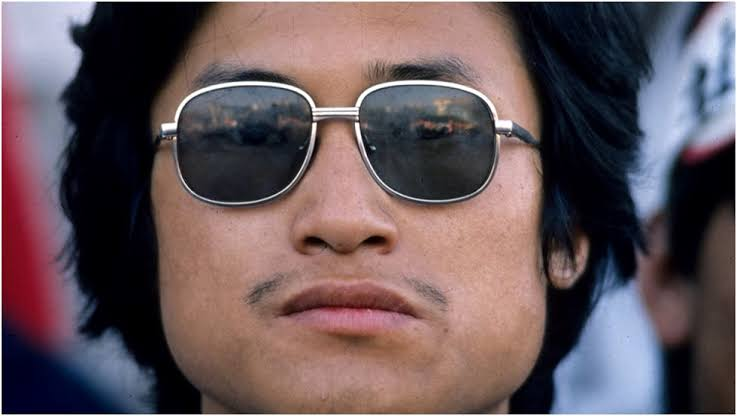
My name is Li Lu.
When people speak about my life, they often begin with 1989.
I understand why. The Tiananmen movement changed everything for me. It changed the direction of my life, the way I understood China, and the responsibility I felt toward history.
But my story did not begin in Tiananmen Square.
I grew up in Tangshan during a period when ordinary people lived through tremendous political and social upheaval. I saw fear, hardship, and the consequences of political power in everyday life.
Those experiences stayed with me.
Long before I understood the language of democracy, I had already begun asking questions about fairness, dignity, and the kind of society people should be able to live in.
Finding Myself in History
I did not grow up planning to become a political activist.
In 1989, circumstances changed quickly. Like many young people, I became part of something much larger than myself.
The movement was full of idealism, confusion, courage, disagreement, and hope. None of us completely understood where events would lead.
Then came the crackdown.
There are moments in life after which you can never return to the person you were before.
For me, that was one of them.
I survived.
Others did not.
For years, that fact carried a psychological weight that is difficult to explain.
Survival can create gratitude, but it can also create guilt. You ask yourself why you are still here when others are not. You remember people who stood beside you and wonder what their lives might have become.
That sense of responsibility never completely disappeared.
Learning to Keep Moving
My way of dealing with pain has often been to keep moving.
I work.
I study.
I make myself busy.
Part of that is simply my personality. But part of it is also how I learned to survive emotionally.
When the past becomes too heavy, purposeful work can give the present structure.
Over time, I learned not to measure myself only through other people's opinions.
Public judgment changes constantly.
Some people may see you as a hero. Others may criticize you. Neither image can become the foundation of your identity.
What matters more is whether you can live with yourself.
I have tried to place conscience above reputation.
When things become noisy outside, I return inward.
Reflection, solitude, and meditation have helped me ask a simpler question:
Am I living according to what I believe is right?
Starting Again Through Education
Coming to the United States gave me another kind of beginning.
I continued my education at Columbia University and immersed myself in subjects that helped me understand political and economic systems more deeply.
I had lived through a democracy movement, but experience alone was not enough.
I wanted to understand the intellectual history behind ideas such as liberty, law, rights, markets, and constitutional government.
So I studied.
Western political philosophy gave me a broader historical perspective. It helped me understand that political systems are not created by slogans alone. They emerge through institutions, traditions, law, economic development, and long periods of struggle.
That education changed me.
It made my thinking less romantic and more practical.
I remained committed to democratic ideals, but I also became more interested in how societies actually change.
Memory Does Not Have to Become Hatred
I have never believed that the violence of 1989 can be justified.
There were alternatives.
Peaceful political solutions were possible, and the use of force against civilians remains something I cannot accept.
At the same time, years of reflection have made my view of China more complicated.
A political system is not identical to every person working within it.
There are people inside the Chinese Communist Party who are capable, thoughtful, and genuinely concerned about the country's future.
Recognizing that complexity does not mean abandoning principles.
It means understanding that meaningful change may eventually require working with people who come from very different positions.
I believe China's political future will continue to evolve.
I also believe change should be peaceful, pragmatic, and built upon institutions rather than vengeance.
What 1989 Left Behind
People sometimes ask whether the movement failed.
I do not think history is so simple.
Political change rarely happens in a straight line.
The demands raised in 1989—greater openness, accountability, reform, freedom, and dignity—did not simply disappear after the Square was cleared.
China continued to change.
Economic reforms deepened. Society became more connected to the outside world. People's expectations changed.
I believe the sacrifices of 1989 became part of that larger historical process.
That does not erase the tragedy.
But it means the tragedy was not meaningless.
Building a Life Beyond Protest
One of the lessons I learned after leaving China was that political commitment cannot mean abandoning the rest of life.
People sometimes imagine that someone involved in a democracy movement must remain permanently in opposition, living only for politics.
I don't believe that.
If overseas Chinese want to contribute meaningfully to China's future, we must first understand the societies in which we live.
We should succeed professionally.
We should understand law, finance, economics, technology, culture, and institutions.
We should build real competence.
Personal success does not necessarily contradict political principle.
It can strengthen our ability to contribute.
That became one reason I focused seriously on business and investment.
I wanted to understand economic systems from the inside, not merely comment on them from a distance.
Love in the Middle of History
My memories of 1989 are not only political.
Even during moments of enormous uncertainty, people were still human.
We fell in love.
We formed friendships.
We joked.
We were frightened.
There was even a kind of symbolic marriage during the movement, created in the strange emotional intensity of those days.
Those memories remind me that history is never made only of movements and governments.
It is made of individual lives.
Years later, finding companionship and happiness far from China helped me understand something else: moving forward is not betrayal.
You can remember the past without refusing the present.
Success Is Not the Same as Forgetting
As my life changed, some people may have wondered whether building a career meant that I had moved away from the ideals of my youth.
I don't see it that way.
The methods changed.
The responsibility did not.
When I was young, political action felt immediate. You protested. You organized. You spoke.
As I grew older, I became more interested in building knowledge, institutions, economic strength, and practical influence.
A society needs passion.
But it also needs competence.
It needs lawyers, economists, entrepreneurs, scholars, public servants, and people who understand how complex systems actually work.
I want my contribution to be useful, not merely symbolic.
Living With Hope
After everything I experienced, people sometimes expect me to be pessimistic.
I am not.
History moves slowly.
Sometimes painfully slowly.
There are setbacks that can last years or decades.
But I continue to believe that human beings want dignity, opportunity, fairness, and a meaningful voice in their own lives.
Those desires do not disappear easily.
I also believe that those of us living outside China should remain connected to the country rather than treating it as something distant or abstract.
Cultural exchange matters.
Economic exchange matters.
Human relationships matter.
Change becomes more possible when people understand one another.
The Life Ahead
I still carry 1989 with me.
I probably always will.
There are memories that do not fade and responsibilities that cannot simply be put down.
But I do not want my life to be defined only by tragedy.
I want to keep learning.
I want to build meaningful work.
I want to understand the world more deeply and contribute where I can.
I have learned that ideals are important, but ideals become much more powerful when joined with patience, knowledge, discipline, and practical ability.
When I was young, I thought history might change quickly.
Now I understand that real change often requires generations.
That realization has not made me give up.
It has made me more patient.
I survived a moment that changed my life.
The question since then has been what to do with that survival.
My answer is to keep working.
To keep learning.
To remain faithful to my conscience.
And to carry memory forward without allowing it to imprison the future.