19 of 250 stories
China, Japan, Taiwan, New York: A Journey of Wu Qingyun
1,466 reads
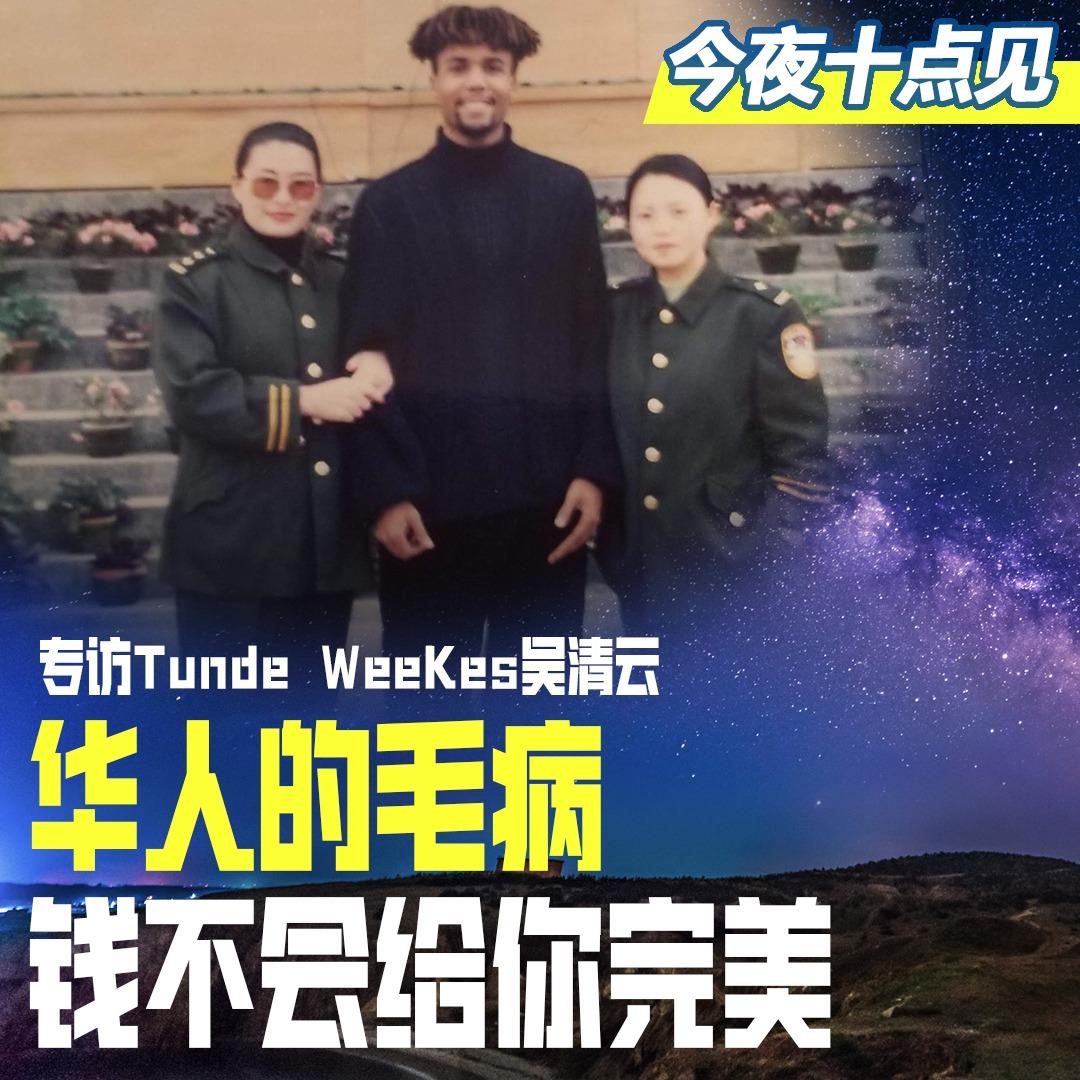
People are often surprised when they hear me speak Chinese fluently, because nothing about my background — Caribbean childhood, university in Seattle — points toward that outcome on paper. I've spent a good part of my adult life as a cultural bridge of sorts, moving between Chinese-speaking communities and the broader American world, first as a teacher and performer across Asia, and now as a social worker here in New York.
Wuhan, and My First Chinese Song
My path into Chinese language and culture started almost by accident, right after I graduated from Seattle University. I took an opportunity to teach English at a police high school in Wuhan, and that experience became my first real exposure to Asian culture. I arrived with almost no Chinese at all — I was the only foreign teacher for over a hundred students, which turned out to be exactly the kind of immersive pressure that forces language learning to happen quickly, whether you're ready or not.
The thing that pulled me in emotionally was music. The first Chinese song I ever learned was "遨包相会," and something about the sweetness and uniqueness of Chinese music, compared to what I'd grown up with, caught me completely. My Caribbean background had already given me a natural affinity for performance — I'd sung in a university choir before ever setting foot in China — and performing in Wuhan became a way of overcoming my own shyness while connecting genuinely with my students and the wider community around me. Singing and hosting events became skills that endeared me to people there in a way that pure language study alone never could have.
Wuhan gave me plenty of culture shock too — the drinking culture, with its heavy toasting rituals, took real adjustment for a foreigner unfamiliar with the rules. But I was also struck by the sheer scale and history of places like the Forbidden City and the Summer Palace, monuments I hadn't fully imagined until I stood in front of them. What made the culture shock bearable, and even enjoyable, was the hospitality and warmth of the people around me, which more than closed whatever gap existed at first.
Leaving China, and What Came After
My time in China ended sooner than I expected, under tense circumstances. During the NATO bombing of the Chinese embassy in Yugoslavia in 1999, anti-American sentiment spiked sharply around me, and I was alone at that police school when it happened. I felt genuinely scared and uncertain about staying. That fear pushed me to leave China and move to Japan instead — a decision shaped less by career planning than by simple safety.
Japan gave me a fascinating contrast to compare against everything I'd just experienced. Chinese people, in my experience, tend to be warm, outgoing, and relaxed about punctuality and social rules. Japanese people, by contrast, were friendly but more reserved and shyer, extremely punctual, and deeply committed to public cleanliness. I noticed something counterintuitive too — Japanese society seemed more open internally, especially around gender and interpersonal relationships, despite its conservative surface, while Chinese culture struck me as more outwardly expressive but more conservative underneath.
Taiwan, and a Climate That Felt Like Home
After Japan, I moved to Taiwan, partly because its warm climate reminded me of my Caribbean childhood, and partly because of its cultural vibrancy. I taught at a well-known kindergarten chain there and quickly grew fond of the island's inclusive society, its food, and its lively night markets. Taiwan struck me as a genuine blend of Chinese tradition and Japanese influence, welcoming to foreigners in a way that made integration easier than it had been elsewhere. Trips to the south, near Kenting and Pingtung, gave me the same warmth and atmosphere I remembered from home.
Looking back at China, Japan, and Taiwan side by side, I see three genuinely distinct cultures: China enormous and rapidly evolving, carrying millennia of history; Japan uniquely traditional yet progressive in its arts and entertainment; Taiwan smaller in scale but culturally influential, especially through its music and food. I don't think I could honestly pick a favorite among them — each gave me something the others didn't, and I still think about revisiting all three after twenty years away, just to see what's changed.
Building a Life in New York's Chinese Communities
Eventually I settled back in the United States, and I made a deliberate choice to stay immersed in Chinese-language environments here too — spending real time in Chinatown, Flushing, and Brighton Beach, three of New York's major Chinese-speaking communities. That continued immersion mattered enormously for retaining and growing my language skills, and it's turned out to be instrumental in my career, letting me build trust with Asian clients specifically because I'm an American who genuinely speaks their language and understands their world.
I've noticed, through that same lens, how many Chinese immigrants live concentrated inside these ethnic neighborhoods, with services available entirely in Chinese, which can genuinely restrict opportunities to learn English or integrate more broadly. I understand the excuses people give for not learning a new language as adults — being "too old," afraid of making mistakes — but I see it as a real cultural difference worth naming honestly. Understanding and adapting to the culture around you, especially learning English and engaging outside your own community, matters for long-term integration in ways that staying inside a familiar, safe enclave simply can't provide.
Nearly a Decade in Social Work
My professional focus for close to ten years now has been social work, starting in New York's Lower East Side, a notably low-income, multicultural neighborhood. My earliest role was as a case manager with University Settlement Society in the aftermath of Hurricane Sandy, helping residents secure emergency needs like food and water. From there, I moved into eviction prevention work, helping tenants in Chinatown and the Lower East Side who faced landlord pressure to leave for profit-driven redevelopment.
After three years in that role, I shifted to work as a care coordinator focused on mental health among children and adolescents — engaging not just the young people themselves but their families, schools, and counselors, supporting kids dealing with emotional and behavioral difficulties including autism and ADHD. Having worked previously as a teacher, that shift felt like a natural continuation of a belief I've held for a long time: children represent the future, and the work of supporting them properly is worth whatever difficulty comes with it.
What This Work Actually Costs
Social work is genuinely complex, and systemic issues often limit what any single intervention can accomplish. I regularly encounter family environments shaped by substance abuse or domestic violence that make real progress difficult, sometimes impossible, no matter how much effort I put in. I've had to learn to accept the limits of my own impact — cases where a family closes off or refuses help entirely, like a mother I worked with who actively supported her child's marijuana use rather than addressing it. When that happens, I've had to learn to move on without treating it as personal failure. That mindset is essential for preventing burnout and staying motivated in this field over the long run.
Part of what sustains that resilience for me is a spiritual and cultural foundation built early — my father's practice of yoga rooted in Indian tradition, my mother's Catholic background, and the diverse cultural exposure I had growing up across Asia. All of that broadened my perspective and strengthened my ability to engage empathetically with clients from wildly different backgrounds than my own. I hold onto the concept of "yuanfen" — 缘分, fate or predestined connection — as a way of finding peace when a case simply isn't ready to progress yet. Sometimes the right timing for change hasn't arrived, and I've learned to sit with that rather than force it.
I balance the emotional weight of this work with real passions outside it — singing, hosting cultural events, massage therapy, and traveling. Those aren't distractions from work. They're what keeps me able to keep doing it.
Mental Health Stigma in Asian Communities
A significant amount of my work involves Asian and Chinese immigrant families directly, and I've seen firsthand how much mental health stigma limits access to real support in these communities. Many families avoid counseling services out of concern about "losing face," or because cultural norms frame a child's misbehavior as disrespect rather than a sign of something underlying that needs attention. I think discussing these cultural barriers openly, rather than working around them quietly, is necessary if we want to improve access to support for Asian families here.
I've also noticed a broader pattern in Chinese American communities: a strong emphasis on taking care of one's own family, sometimes at the expense of broader social involvement or local volunteering. There are real exceptions — Buddhist community groups, for instance, that engage actively in charity work — but I think there's room to encourage a deeper sense of collective community responsibility beyond the immediate family unit.
On Asian Hate
I feel strongly, and without hesitation, that the rise in Asian hate crimes in this country is disgusting and unacceptable, rooted in failures of family education, school education, and outright political manipulation. Violence against elders and families affects me on a deeply personal level. I recognize the complexity in these dynamics too — many perpetrators come from other minority communities themselves, which makes the whole situation more painful, not less.
I've faced unfair treatment myself over the years, and I've tried to treat those moments as opportunities for education and dialogue rather than simply grievance. Intercultural understanding and honest conversation are, I believe, the real tools for breaking down stereotypes on both sides. I've taken an active stance too, participating in protests supporting Asian American rights, because I believe community voice and empowerment matter as much as individual patience.
I recognize the common criticisms leveled at some immigrant behaviors — speaking loudly in public, certain habits around cleanliness or driving — but none of that justifies discrimination or violence in response. What it points to instead is an opportunity for learning and cultural adaptation. I encourage immigrants to push themselves to learn American norms, culture, and language as part of genuine integration, without asking anyone to sacrifice their dignity or identity in the process.
What's Changed in the Community
I've watched the profile of Chinese immigrants in America shift substantially over the years. Where earlier generations often arrived with limited resources, many newer immigrants arrive wealthier, with more visible spending power and luxury goods. That shift is natural, and financial success is a positive thing, but I don't think money replaces cultural understanding or personal dignity, and I try to hold that view without judgment toward anyone.
Media portrayals like the "Crazy Rich Asians" franchise raise real cultural visibility, which matters, but they also feed stereotypes and political misinterpretations — the idea that wealthy Asians are only here for money, for instance. I try to view that kind of representation through a nuanced lens: acknowledging both its value in raising awareness and its real impact on how the broader public perceives our communities.
What I Still Believe
I approach my future the way I've approached most of my life so far — balancing meaningful work with joy, organizing weddings and community events alongside my social work, staying open-hearted toward travel and new experience. My fluency in Mandarin and whatever warmth I bring to a room have made me something of a fixture for young Chinese Americans looking for an event host, which still surprises me a little, given where I started.
If there's a single thread running through everything — the years in Wuhan, Japan, and Taiwan, the decade of social work in New York, the conversations about hate and stigma and integration — it's this: understanding across cultures isn't abstract. It happens in specific rooms, between specific people, usually through language, music, or the simple decision to sit with someone else's difficulty instead of walking past it. That's been my whole career, in one sentence.