18 of 250 stories
A Journey of Love, Loss, and Renewal
909 reads
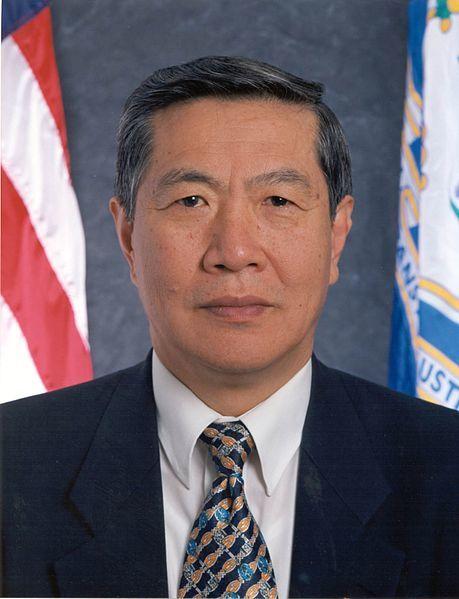
In memory of Dr. Li Changyu — forensic scientist, educator, and beloved figure to the global Chinese community — told in his own voice, drawn from his final recorded reflections alongside his wife, Angel.
People in the Chinese community around the world came to know me as the "Detective God" — a nickname that always sat a little strangely with me, because underneath the reputation for turning the impossible into possible, I was simply a man who believed deeply in combining scientific rigor with real emotional attention to the people a case actually touched. That combination — the analytical and heartfelt — turned out to define far more of my life than just my professional work. It shaped my marriages, my losses, and whatever I managed to give back to the world along the way.
Forty Years with Margaret
Margaret and I shared nearly forty years of marriage. It started, the way most young love does, as physical attraction, and it evolved over decades into something closer to spiritual companionship — the kind of bond where you stop needing to explain yourself to the person beside you, because they already understand. Her health declined slowly over the last decade of her life, and that decline touched me every bit as much physically as it did emotionally. We traveled together internationally even as her health waned, taking care of each other in whatever ways the circumstances of a given day allowed.
Before she passed, Margaret told me not to be alone. She encouraged me directly to find companionship again after she was gone. That instruction weighed me heavily in the aftermath — grief and permission sitting uncomfortably together in the same sentence. I considered, in that period, stepping back from the world entirely, something like a spiritual retreat. What kept me moving forward instead was the encouragement of good friends, and the pull of work that still felt meaningful to me even in grief.
What I Built in Her Memory
The loneliness after Margaret's death was profound, and I found real solace in continuing pieces of her legacy rather than simply mourning its end. I established several scholarships in her memory — including ones for basketball players and for students with average academic performance, the kind of students’ traditional awards tend to overlook entirely. I built those scholarships around a value I wanted to honor in her specifically: perseverance over perfection. Margaret had a hardworking spirit that never depended on being the most naturally gifted person in the room, and I saw that same spirit echoed in my own mother's sacrifices growing up. Rewarding persistence, rather than polish, felt like the truest tribute I could build for her.
Angel
I met Angel unexpectedly, and I understand why our relationship drew skepticism at first — my own history, my public reputation, the natural societal pressure that comes with any well-known figure starting a new chapter of his personal life. None of that skepticism matched what grew between us over three years of real, mutual care. Angel had already built her own success as a businesswoman and a lyricist before she ever met me, and she brought that same independence and depth into our life together, never trading it away for whatever "celebrity" trappings came attached to my name.
She's told our story herself, more than once, better than I probably could: that whatever light she carried into the relationship on her own, what actually moved her most was the consistency of small, genuine gestures — flowers, brought to her despite my own allergies, simple attentiveness to details most people would miss. She lived humbly with me in New York, without much in the way of material comfort, and what she said convinced her of my sincerity was never the reputation. It was the daily evidence of care.
It was Angel, in fact, who proposed to me — a detail I think says everything about her decisiveness and about the maturity we both brought into that decision, understanding as we did how brief life actually is, and how much companionship and daily kindness are worth protecting once you've found them.
No Halos at Home
Angel and I have talked, in the conversations recorded toward the end of my life, about how completely any public "halo" disappears the moment you walk back through your own front door. What's left, once the door closes, is the actual reality of living together — sharing life's mundane moments, its small chores, its quiet routines. That plainness was never a disappointment to either of us. It was the point.
We kept a wall of photographs of Margaret in our home, not as a shadow over our marriage but as a form of continuity and respect — a way of honoring what she meant to my life rather than pretending that chapter simply ended when a new one began. Angel has faced real difficulty in that position — being compared to Margaret by outsiders, sometimes even called by her name, carrying skepticism about her place in a story that predated her. She's met that difficulty with real grace, honoring Margaret's greatness while still asserting her own strengths and her own contributions to our shared life. I've admired that in her more than almost anything else.
What I Believed About Truth
Given my own background — born on the Chinese mainland, shaped by a scientific and legal career built on evidence rather than assumption — people sometimes asked where I stood on the political divides that split so many families and communities in the diaspora. My answer was always the same: neutrality, and a commitment to fact-based perspective over ideology. My training taught me to let evidence lead, not personal loyalty or tribal instinct, and I tried to carry that same discipline into how I spoke publicly about the world, especially as media integrity eroded around us over the decades and misinformation became a genuine hazard for younger generations trying to make sense of things.
What Actually Mattered, In the End
Looking back over a career that included, among other things, being the first Asian American to hold my particular departmental role since the year 2000, and honors from museums around the world, I came to believe those titles mattered far less than the foundation of a loving family and whatever opportunity I had to actually contribute something to other people. Angel and I gave what we could during the hardest stretches of the COVID-19 pandemic, because I believed then, as I believe now, that giving back is what enriches a life and a society, far more than any accolade ever could.
Angel put it more simply than I ever managed to, in her own words toward the end of our conversations: that marriage, stripped of every "halo," comes down to preparing a meal, making tea, and honoring the small, unglamorous acts that build a home together. I think that's as true a summary of what I learned across two marriages, one great loss, and one late, real renewal, as anything I could add to it myself.
If there's a single lesson I'd want to leave behind, it's this: rigor and evidence matter enormously in a life devoted to solving what looks unsolvable. But what makes a life worth solving for, in the end, isn't the cases closed or the honors received. It's the people who stayed close enough to notice the small things — the flowers despite the allergy, the extra day added to a trip just to see a place together, the photograph kept on the wall out of love rather than obligation. That's the part of life that lasts.