61 of 250 stories
Zack Zeng — The Man Who Went Back
10 reads
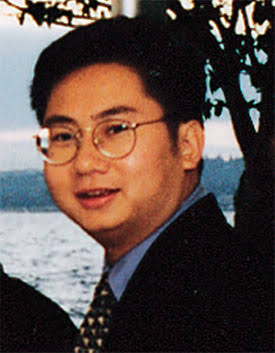
By the time Zack Zeng reached safety on the morning of September 11, 2001, he had already done what most people would have done.
He had gotten out.
The streets of lower Manhattan were filling with smoke, dust, sirens, and people moving away from the World Trade Center. The city around him was becoming something no one yet fully understood.
Zack worked for the Bank of New York, only a few blocks from the towers. He was not a firefighter. He was not a police officer. He was not on duty with an ambulance crew.
He was a banker.
He could have kept walking.
Instead, he turned around.
He went back into his office, gathered first-aid kits and whatever medical supplies he could find, and told his coworkers that he was going toward the World Trade Center.
He knew how to help.
Years earlier, while studying at the University of Rochester, Zack had trained and served as a volunteer emergency medical technician with Brighton Volunteer Ambulance. The skills he had learned there had become part of him. On September 11, when thousands of people were trying to escape danger, those skills gave him a reason to move in the opposite direction.
Zack Zeng had been born in Guangzhou, China, on September 30, 1972.
He came to the United States with his family in 1988, still a teenager. Like many young immigrants, he had to build a life between worlds: carrying memories of one country while learning how to belong in another.
He eventually attended the University of Rochester, where he studied business and earned both undergraduate and graduate degrees. After graduating in 1998, he moved to New York and joined the Bank of New York, working in its American depositary receipts business.
On paper, his life looked like the familiar trajectory of an ambitious immigrant young professional.
China.
America.
Education.
New York.
Finance.
A career beginning to take shape.
He was not yet thirty.
But alongside that professional life was another part of Zack.
At Rochester, he had volunteered as an EMT.
Emergency medical work teaches a particular way of seeing the world. When most people encounter an accident, they see chaos. A trained responder begins looking for what can be done.
Who is hurt?
Who can breathe?
Who needs help first?
What supplies are available?
What can I do right now?
That training would matter more than anyone could have imagined.
On the morning of September 11, the first airplane struck the North Tower of the World Trade Center at 8:46 a.m.
Zack was near lower Manhattan on his way to work.
His office at the Bank of New York was close enough to the World Trade Center that employees would eventually be ordered to evacuate as conditions worsened.
He could see that something enormous had happened.
And at some point, Zack made a decision.
He would not simply leave.
He returned to his office.
He collected medical supplies.
Then he headed toward the wounded.
There is no dramatic speech preserved from that moment.
No declaration about heroism.
No evidence that Zack thought of himself as doing anything extraordinary.
One account recalls that he called his mother to tell her that he was all right, but that he had to go help people.
That may be the most revealing detail in the entire story.
He was safe enough to call home.
His mother could hear his voice.
He could have stayed where he was.
But there were injured people nearby, and Zack knew how to help them.
So he went.
Later that morning, television footage captured an image of him near the disaster site.
He was not wearing a firefighter’s uniform.
He was not dressed like a paramedic.
He was still wearing the clothes of a young banker who had gone to work that morning.
Business clothes.
Medical gloves.
Kneeling beside an injured person.
It is an almost perfect image of who Zack was in those final hours: one life layered over another.
The banker and the EMT.
The immigrant professional and the volunteer.
A man who had gone to work expecting an ordinary Tuesday and found himself responding to a catastrophe.
His supervisor, Peggy Farrell, later said that what Zack did not surprise those who knew him. She remembered him as someone who automatically volunteered to help others—a completely selfless person.
That matters.
Because Zack’s final decision was not disconnected from the rest of his life.
Acts of courage often look sudden from the outside.
But character is rarely created in the instant when it is tested.
Long before September 11, Zack had chosen to learn emergency medicine even though it was not his career.
He had chosen to volunteer.
He had chosen to make himself useful when someone else was hurt.
On September 11, the circumstances changed.
The instinct did not.
He went where help was needed.
At 9:59 a.m., the South Tower collapsed.
At 10:28 a.m., the North Tower followed.
Zack Zeng did not return.
His name is now one of thousands inscribed at the National September 11 Memorial, where “Zhe Zeng” appears among those who died at the World Trade Center.
But his story did not disappear with him.
In 2004, his name was added to the New York State EMS Memorial in Albany, honoring emergency medical workers who died in service.
And in Manhattan’s Chinatown, the city gave his name to part of Bayard Street.
Zhe “Zack” Zeng Way.
According to Brighton Volunteer Ambulance, it became the first New York City street named for an Asian American. The street borders a park where Zack had once met friends.
There is something fitting about that.
A street is not a monument you visit only on anniversaries.
People walk through it.
Children pass beneath its sign.
Friends meet nearby.
Life continues around it.
And above them is a name.
Zack Zeng.
For Chinese Americans, his story carries another layer of meaning.
The history of Chinese immigrants in America contains countless stories of people trying to establish belonging: learning a new language, entering universities, building careers, raising families, contributing quietly to communities that did not always recognize them.
Zack’s life followed part of that familiar path.
He came from Guangzhou.
He studied in America.
He built a career in New York.
But on September 11, the question of whether he belonged to America was irrelevant.
When people around him were injured, he did not ask who they were.
He did not ask where they came from.
He simply understood that he had skills they needed.
And he went to help.
This is why his story should not be reduced to the sentence:
“Zack Zeng died on September 11.”
That tells us where his life ended.
It does not tell us who he was.
A more complete sentence would be:
There are moments when history divides people almost physically.
One direction leads away from danger.
The other leads toward it.
Most of us hope never to discover what we would do standing at that divide.
Zack discovered it at twenty-eight years old.
He gathered first-aid supplies.
He put on medical gloves.
And he walked back.
He did not know whether anyone would remember his name.
He did not know that a street in Chinatown would someday carry it.
He did not know that an emergency medical memorial would preserve it.
He simply saw people who needed help.
And because he knew how to help them, he believed that he should.
His name was Zhe “Zack” Zeng.
曾喆.
A son of Guangzhou.
An immigrant to America.
A student.
A banker.
A volunteer EMT.
And on one terrible morning in New York, a young man who had already escaped—and chose to go back.
His name deserves to be remembered.