41 of 250 stories
Becoming Whole
21 reads
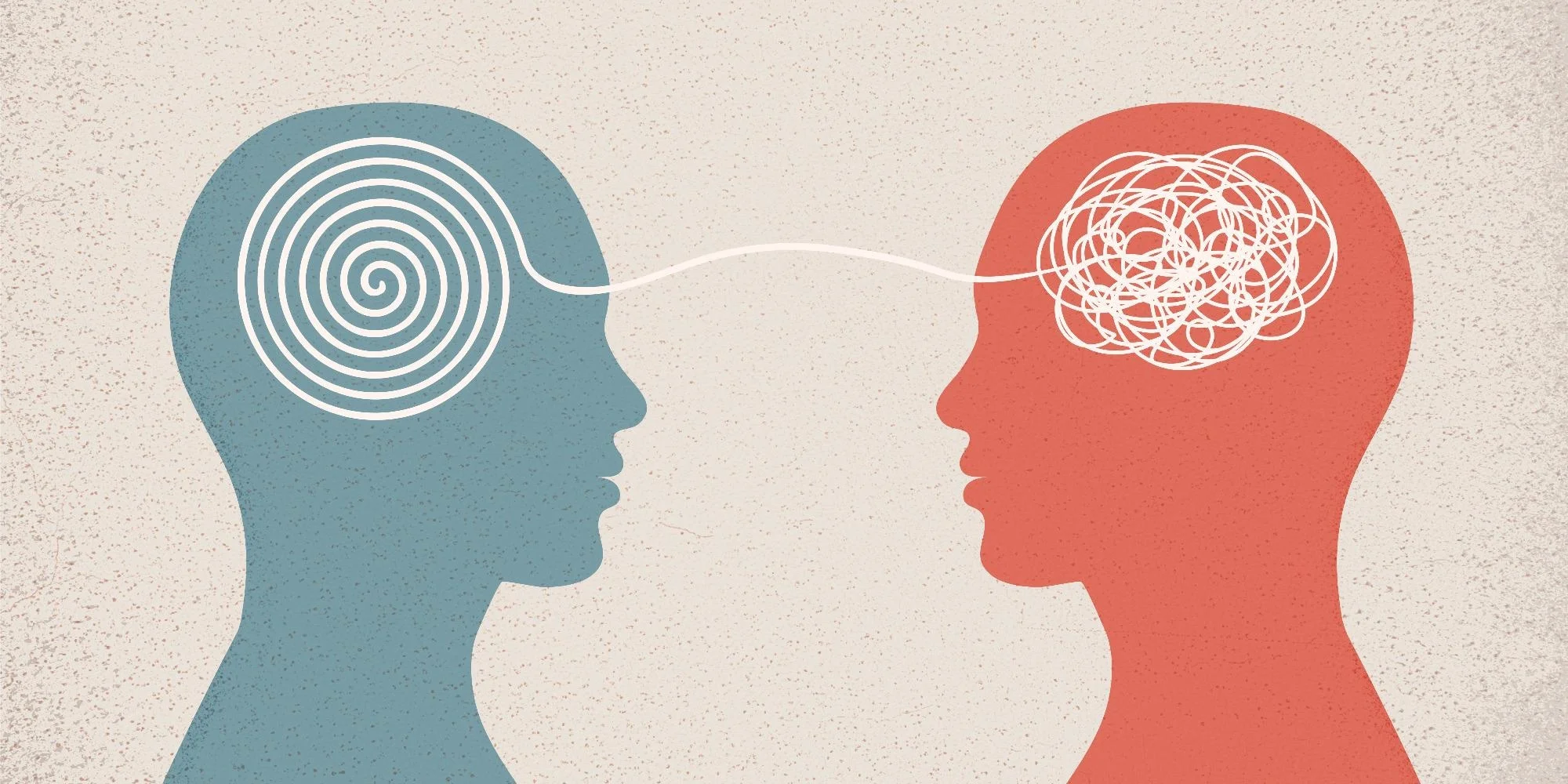
I became a psychiatrist because I have always been curious about people.
Even when I was young, I noticed something that puzzled me: people were not always what they appeared to be. Children seemed relatively natural, but as we grew older, we learned to put on masks. We learned what other people expected from us, what we were supposed to say, and which parts of ourselves we should hide.
I wanted to understand why.
Perhaps that curiosity came partly from my own struggle to understand myself.
Learning to Accept Where I Came From
I grew up in rural Taiwan, surrounded by traditional family values. As I entered a more urban and achievement-oriented world, I became conscious of the differences between where I came from and where I wanted to go.
For a period of my youth, I did not really like myself.
Part of me wanted to escape my background and become the person society seemed to admire. Only later did I understand that becoming whole did not require rejecting the person I had been.
It required accepting him.
I sometimes describe a person as carrying three streams of energy: one from the father, one from the mother, and one belonging to the self. These streams do not always flow in the same direction. Our parents may have very different personalities and values, and we inherit something from both while also trying to become ourselves.
Much of our inner conflict begins there.
Healing, therefore, is not always about eliminating one side. Sometimes it means learning to hold these different parts together.
I had to learn that with my own parents.
When I was younger, there were things my mother did out of love that could embarrass me. As I grew older, I began to see those same actions differently. What I once judged through the eyes of society, I could finally recognize simply as a mother's love.
She loved me in the way she knew how.
Accepting that became part of accepting myself.
A Therapist Must Meet Himself First
When people imagine psychotherapy, they often think the therapist is the healthy person and the patient is the person with problems.
It is not that simple.
Therapists have wounds too. We have childhood experiences, prejudices, fears, emotional reactions, and blind spots. When a client sits in front of me, something in that person's story may touch something unresolved inside me.
In psychology, we talk about countertransference—the feelings that arise in the therapist through the therapeutic relationship.
If I do not understand my own feelings, how can I know whether I am responding to the person sitting in front of me or to something from my own past?
That is why I believe a therapist must also do his own inner work.
Sometimes the most helpful thing I can do is admit honestly what I am feeling. I do not need to pretend to be a perfect doctor who understands everything.
Healing requires authenticity.
The therapy room should be one of the few places where a person can gradually put down the masks and say, "This is who I really am."
And the therapist must be capable of meeting that honesty with honesty.
Peeling the Onion
People sometimes describe therapy as peeling an onion.
Layer after layer comes away until we reach something hidden underneath.
That sounds painful—and sometimes it is. Old wounds return. Memories we tried to bury become visible. We may discover parts of ourselves we don't particularly like.
But I don't think this process has to be understood only as suffering.
There can be joy in it.
Every layer we remove gives us another opportunity to understand ourselves. Darkness is not permanent. Pain is not permanent.
Even depression can sometimes force us to stop.
We live in a culture that constantly tells us to work harder, accomplish more, and recover quickly. Then the body and mind suddenly say: No. You cannot continue this way.
Perhaps instead of immediately asking, "How do I get back to being productive?" we can sometimes ask, "What is this period asking me to understand?"
Rest has value.
Imperfection has value.
We don't always have to hurry toward becoming "better."
Sometimes healing begins when we allow ourselves to be where we are.
Between Science and Spirituality
My own path was not without crisis.
I was trained in medicine, a world built upon scientific reasoning and evidence. At the same time, I encountered the spiritual teachings of Seth, which presented a very different understanding of consciousness and human existence.
For a while, these two worlds seemed impossible to reconcile.
Was I a physician or a spiritual seeker? Did I have to choose?
Eventually, I realized that this conflict resembled the other conflicts inside me. Instead of destroying one side in order to preserve the other, perhaps I could allow them to coexist.
Medicine gave me one way of understanding human suffering.
Spirituality gave me another.
Today I may still appear unconventional to some people in traditional medicine. I can accept that. My purpose is not to fit perfectly inside someone else's category.
My purpose is to help.
You Cannot Save Someone by Becoming Their Savior
The same principle shapes how I think about leadership.
When people see you as a teacher, therapist, or spiritual guide, there is a danger in being placed on a pedestal. Power, status, and money can gradually make us lose contact with ourselves.
I do not want people simply to become followers.
If someone listens to me and concludes that I possess all the answers, then I have not really helped that person.
The goal should be the opposite.
I want people to discover their own inner voice.
There is loneliness in that path because eventually each of us must confront ourselves alone. No teacher can do that work for us.
But solitude does not have to mean abandonment.
It can become a place where we finally hear ourselves clearly.
Sitting Beside Death
My work has also brought me close to people facing death.
I have worked with cancer patients and people experiencing profound grief. These encounters taught me that the goal of life cannot simply be to accumulate as many years as possible.
How we live matters.
Quality matters.
Meaning matters.
Death is part of life, and refusing to acknowledge it does not make it disappear.
I have seen how grief, guilt, and self-blame can remain inside people long after a tragedy. Sometimes the mind continues punishing itself even when there is nothing left to repair.
Acceptance does not mean that what happened was good.
It means we stop demanding that the past become different.
Only then can we begin to release it.
Becoming Your Own Companion
After years of listening to other people's pain, I have come back to something very simple.
People enter our lives and leave. Parents eventually leave us. Children grow up. Relationships change. Even the people who love us most cannot accompany us through every moment of our inner lives.
But wherever you go, you are there.
So why spend your entire life fighting yourself?
Learn to become your own supporter.
Learn to say: I am imperfect, and I can still love myself. I have darkness, and I also have light. I carry my father's influence, my mother's influence, my childhood, my wounds, my accomplishments, my rational mind, and my spiritual questions.
They are all part of me.
For many years, I thought understanding people meant discovering why we are so different.
Now I think healing has taught me another question:
Can we accept ourselves as we actually are?
Not the person our parents wanted us to become.
Not the person society rewards.
Not the perfect person we imagine we should be.
The person who is here now.
When we stop fighting that person, something begins to change.
Perhaps that is where healing really starts.