40 of 250 stories
Between Imagination and Reality
7 reads
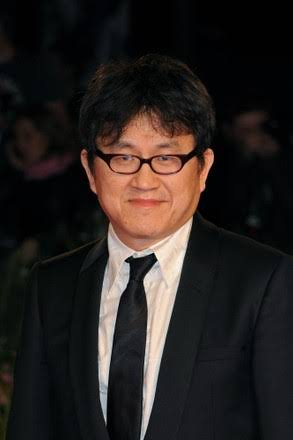
My name is Su Chao-Pin. I did not study film, and I did not grow up believing I would become a director.
I came from a modest family in Taiwan. My father drove a taxi, and I was the first person in my family to attend a prestigious university. I studied engineering at National Chiao Tung University and began my working life in a technical field.
From the outside, engineering seemed like the sensible path. But somewhere inside me, there was another world taking shape.
As a child, I loved Japanese manga. Those stories taught me to imagine things beyond ordinary reality—strange events, impossible worlds, and characters facing extraordinary circumstances. At the same time, growing up in a working-class family kept me connected to everyday people and their struggles.
Those two influences eventually came together in my films: fantasy and humanity.
Becoming a Filmmaker by Accident
People sometimes ask how an engineer with no formal film education became a screenwriter and director.
I usually say that luck played an important role.
Opportunity matters. Many talented people never receive the opportunity they need. I happened to meet people who were willing to read my work and give me a chance.
But luck alone is not enough.
When the opportunity came, I had already been writing, observing, imagining, and trying to understand what made a story emotionally true.
My first screenplay, Love of the Turntable, grew from the world I knew. It was connected to the experiences of ordinary working people and to my own family background. That screenplay became the doorway through which I entered filmmaking.
I did not begin with a grand strategy. I simply discovered that film allowed me to combine many things I cared about: storytelling, emotion, visual imagination, and close observation of people.
Being good at engineering and loving film were not necessarily contradictions. Engineering taught me structure, logic, and precision. Storytelling taught me empathy.
I needed both.
Writing Is the Foundation
Even after becoming a director, I continued to think of myself as a writer.
Writing is difficult. There are long periods of frustration when nothing works, followed by brief moments when a character or scene suddenly becomes alive. That emotional cycle can be exhausting, but it is also deeply satisfying.
For me, the screenplay is the foundation of everything that follows.
My scripts are usually very detailed. I want the production team to understand the rhythm of a scene, the emotional direction of a character, and the visual purpose behind what we are filming.
That detail creates trust.
Producers know what they are investing in. Technical teams can plan more efficiently. Actors understand the world they are entering.
But a detailed screenplay does not mean an actor has no freedom.
Listening to Actors
Directing actors is not about forcing them to obey every instruction.
I prefer conversation.
An actor may discover something about a character that I did not fully understand when I wrote the script. If I listen carefully, that discovery can deepen the film.
When I worked with Michelle Yeoh on Reign of Assassins, we spent considerable time discussing her character’s motivations and emotional life. Those conversations helped the role become more complete.
A director must have a clear vision, but clarity should not become arrogance.
The best collaboration happens when everyone is moving toward the same story while still contributing something personal.
Actors need room to breathe.
Protecting the Heart of a Film
Filmmaking is an art, but it is also an industry.
Every production involves money, schedules, markets, investors, and expectations. A director cannot pretend those realities do not exist.
The challenge is learning where to compromise and where not to compromise.
Sometimes the scale of a scene must change. Sometimes a production plan must be adjusted. Sometimes a story must become more accessible to an audience.
I can adapt many things.
What I try not to surrender is the emotional center of the story.
That is the part that gives a film its identity.
Compared with the more industrial model of Hollywood, I prefer to remain closely involved throughout the process—from writing and filming to editing and post-production. For me, that continuity helps protect the film’s coherence.
A movie can easily become fragmented when too many decisions are separated from the original intention.
Success Does Not Make the Work Easier
As the productions became larger and the attention increased, the pressure also increased.
Films such as The Eye and Reign of Assassins brought international recognition, but recognition does not remove uncertainty. Sometimes a film is warmly received in one market and criticized in another. Sometimes the response is very different from what you expected.
That can be painful, but it can also be useful.
Every film teaches you something.
Awards are encouraging. Festival recognition is meaningful. They tell you that someone has understood or valued the work.
But awards can also become a distraction if you begin creating only to receive them.
The reason to make films must remain deeper than praise.
Remaining the Same Person
The entertainment industry can change people.
As a director becomes more successful, more people begin accommodating him. If he is not careful, he may begin to believe he deserves special treatment. He may become spoiled without realizing it.
I have tried to resist that.
A film set depends on collaboration. Arrogance may create obedience, but it does not create trust.
I also try not to become one person in public and another in private.
The industry often encourages divided identities: the public image, the professional image, and the private self. Maintaining too many versions of yourself is exhausting.
I would rather remain coherent.
That does not mean revealing everything. It means trying to make sure that the values I express publicly are not completely different from the way I live.
Stories Begin With People
Much of my inspiration still comes from ordinary conversations.
People tell stories about their families, their work, their fears, and the strange things that have happened to them. Those details often contain more truth than something invented entirely in isolation.
Even when a film includes ghosts, assassins, or extraordinary events, the emotions must remain recognizable.
That is the balance I continue trying to find: reality and cinematic beauty, logic and imagination, structure and emotion.
I do not think I have perfected it.
Each film is simply another attempt.
The Goodness of People
One thinker who has influenced me is Bertrand Russell.
I admire his humor and his belief in the basic goodness of people. The world can be disappointing, and the film industry can be harsh, but I do not want cynicism to become my entire worldview.
Compassion matters.
It matters when working with actors. It matters when evaluating another writer’s project. It matters even when you have to say no.
I have rejected many scripts and projects. Sometimes I feel sympathy for the people behind them because I know how difficult it is to create something and ask others to believe in it.
But honesty is also a form of respect.
Accepting work you do not believe in helps no one.
Advice to New Filmmakers
Young people often ask whether they should enter the film industry.
Passion is essential, but passion alone does not guarantee that someone is suited to the work.
You have to listen carefully to feedback. If many experienced people repeatedly tell you that your strengths may lie elsewhere, you should not dismiss them automatically.
That does not mean giving up at the first criticism.
It means developing honest self-awareness.
Some people are truly suited to filmmaking and must persist through years of difficulty. Others may find greater fulfillment in another profession. There is no shame in that.
Film demands enormous emotional labor, uncertainty, discipline, and sacrifice. You should enter it because you cannot imagine abandoning the work—not because you are attracted only to fame.
Returning to Imagination
Even after years of making films, I still feel connected to the child who read manga and imagined impossible worlds.
One of the projects I want to pursue is an action science-fiction story involving aliens. In some ways, that means returning to my earliest imaginative roots, but with the skills and experience I have gained as an adult.
Perhaps that is what artistic growth really is.
You do not abandon the person you once were.
You learn how to express that person more clearly.
I began as an engineer. I became a screenwriter and director through a mixture of luck, persistence, and opportunity. Along the way, I learned how to work with actors, manage large productions, face criticism, and negotiate with the market.
But the central question has remained the same:
How can I tell a story that feels both imaginative and true?
I do not expect that question to disappear.
It is the reason I keep writing.
It is the reason I keep making films.