17 of 250 stories
A Personal Journey of Balance and Understanding
894 reads
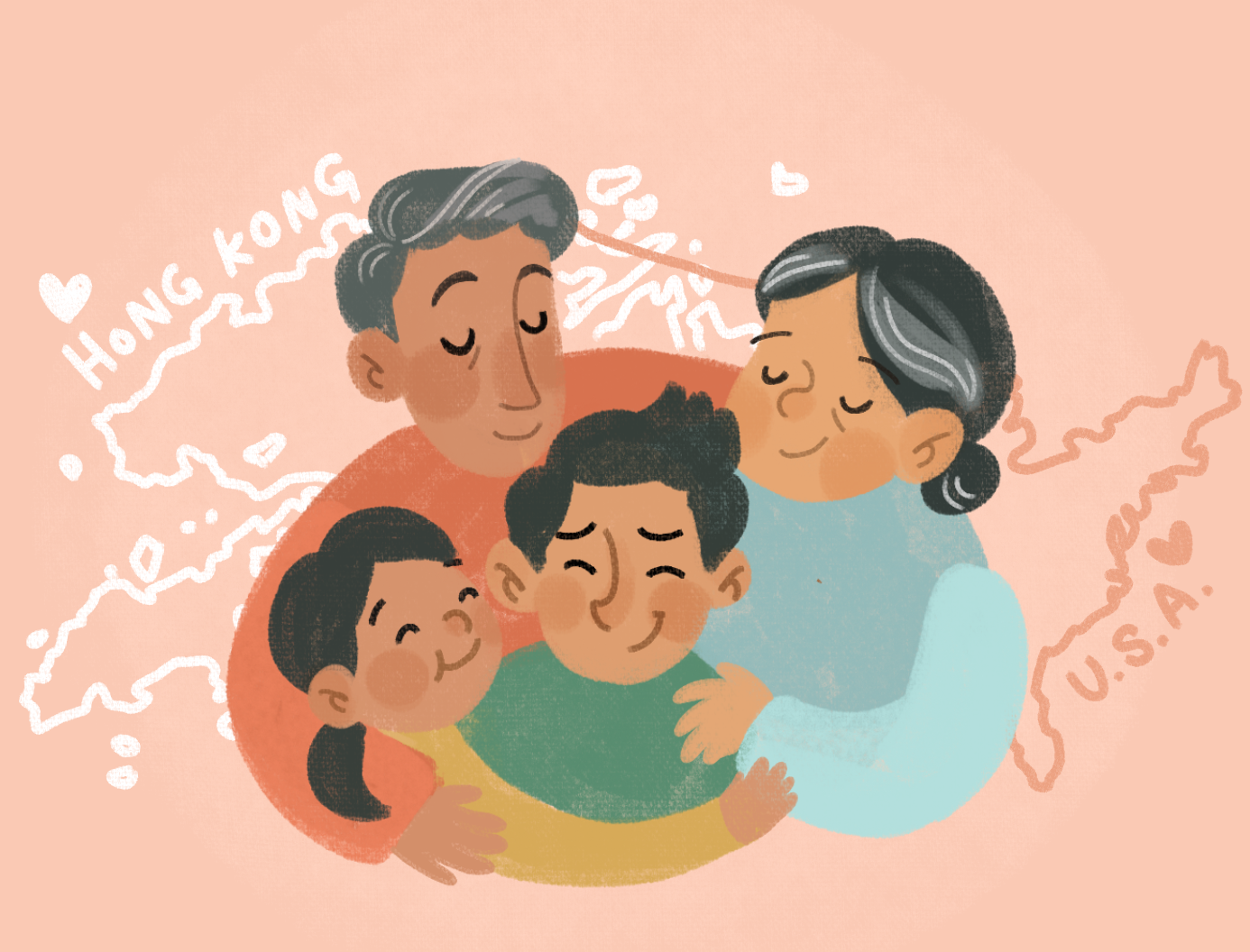
I'm a second-generation Chinese American, and for most of my adult life, I've been working through what it actually means to choose a path different from the one my parents pictured for me. I want to say clearly, up front, that this isn't a simple story of rebellion or resolution. It's still a live, ongoing negotiation, one I don't think ever fully finished.
Every Choice Costs Something
I've come to believe that every real-life decision involves trade-offs, and that inner conflict is part of choosing anything meaningful — even without a single parent or cultural expectation weighing in. That baseline discomfort is just what it feels like to be a person making decisions that matter. But when you add parental and societal expectations on top of that, the process becomes something else entirely. It's not just fear of disappointing your parents. It's the accumulated weight of societal benchmarks, peer comparison, a whole invisible scoreboard that never quite goes away, even once you think you've stopped playing.
Two Value Systems, Under One Roof
Growing up, I lived inside the collision between Chinese collectivist values, which put family and social expectation first, and the American individualism I absorbed simply by growing up here, which centers a person's own desires and choices. My parents held onto the traditional view they'd carried with them, largely unchanged, while I was busy adapting to an entirely different cultural context around me every day. That gap didn't resolve with time. If anything, it became more visible the older I got and the more clearly, I understood my own values as separate from theirs.
A lot of that traditional view came down to visible, external markers of success — career stability, income, the right kind of family role — treated as the fixed definition of a "good" outcome. When my own life didn't map cleanly onto that picture, it triggered a recurring pattern of comparison and judgment from my parents, measured against a mental image of success that had very little room in it for who I was.
Command, Not Curiosity
One of the hardest parts of this whole dynamic has been the difficulty of reaching real parental understanding. My parents were operating under real survival pressures as immigrants, and I don't think they always had the emotional bandwidth left over to inquire deeply into what I wanted or felt. What I experienced more often was command rather than genuine listening — instruction instead of inquiry. That created a disconnection and a frustration that built up slowly, over many years, rather than in any single dramatic moment.
I've come to believe that empathy, curiosity, and active listening are the actual skills that make any relationship — parent-child or otherwise — function honestly. Without a real effort to understand what someone else is thinking and feeling, and without a willingness to suspend judgment long enough to hear them, you can't build the kind of trust that lets two people be honest with each other. That's true in families. It's just as true in the coaching work I do now, helping other people navigate exactly this same territory.
What Sacrifice Asks of You
There's a particular emotional bind that I think a lot of children of immigrants recognize feeling bound by your parents' sacrifices in a way that can start to feel like a limit on your own freedom to simply be yourself. Honoring what your parents gave up on for you and living authentically as your own person can start to feel like a contradiction, even though I don't actually believe they have to be. My own answer to that bind has been to advocate for mutual respect — you can genuinely respect your parents and everything they sacrificed, while still refusing to let that respect become a cage around your own life.
The Breaking Point
The clearest, hardest example of all of this in my own life involved my relationship with my father over the person I chose to love. My boyfriend was Black, and my father was deeply opposed to that relationship. I tolerated the tension between us for years, absorbing it quietly rather than confronting it head-on, until eventually we reached a real breaking point — one that played out, of all places, over text message. What followed was years of minimal contact between us.
I won't pretend that period didn't hurt. It did, deeply. But over time, I found a version of balance by accepting my father's limitations as they were, rather than continuing to hope he'd become someone he wasn't ready to be. I redefined our relationship into something closer to friendship than the traditional parent-child dynamic I'd grown up expecting. That redefinition wasn't a defeat. It was the only honest shape our relationship could take, given where each of us stood.
Trust as the Actual Foundation
Reflecting on all of this, I keep coming back to trust as the real foundation underneath any relationship, parent-child bonds very much included. Without maturity, mutual trust, honest communication just isn't likely to happen, and unresolved conflict tends to calcify into emotional distance or fully closed doors. Both people must be willing to engage and adapt. I don't think perfect understanding between parent and child is something you ever fully reach — I certainly haven't reached it with my father. But I do believe the relationship can still improve, incrementally, through real effort on both sides, even short of that perfect understanding.
A Pendulum, not a Fixed Point
Balancing love for my parents against meeting or resisting their expectations has never been a one-time decision I made and then moved past. It's an ongoing, dynamic process, more like a pendulum than a fixed resolution — swinging one way as life circumstances shift, then swinging back as priorities change again. What's helped me most through that ongoing motion is getting real clarity about my own core values and my own vision for my life. That clarity is what lets me make better decisions and hold healthier boundaries, even while the pendulum keeps moving.
What I'd Say to Parents, and to Their Children
If I could say one thing to parents in this position, it would be this: cultivate empathy, curiosity, and active listening, and try to see your children beyond the conventional metrics of success you may have inherited yourselves. Recognize how much weight your expectations carry in your child's emotional life, even when you don't intend for them to carry that much.
And if I could say one thing to the children living this same tension I have — you can hold real respect for your parents' sacrifices while still asserting who you actually are, even when that requires difficult choices, even when it means redefining a relationship into something different than the one you started with. Both generations are working across a real gap, shaped by culture and circumstances, and neither one fully chose. None of that makes the misunderstanding anyone's fault exactly. But naming that gap honestly is where any real trust and communication have to start — the ongoing, humble, unglamorous work of actually trying to understand each other, one conversation at a time.