16 of 250 stories
The Life, Art, and Poetic Journey of Yan Li
1,665 reads
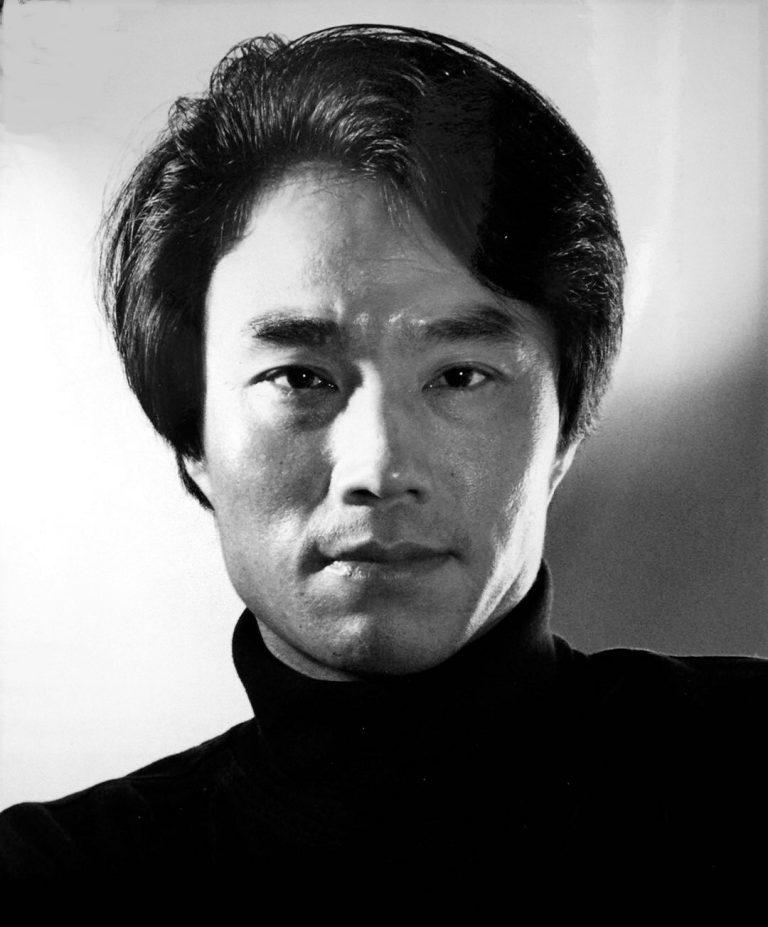
In memory of Yan Li — poet, painter, and philosopher — told in his own voice, drawn from his final recorded reflections.
I was born in Beijing in 1954, and for the first years of my life, I lived with my grandfather — a renowned traditional Chinese medicine doctor and an art collector, a man who gave me a strict but culturally rich upbringing. It was in his house that I first fell in love with calligraphy and painting, long before I understood that love would become the shape of my entire life.
What My Grandfather Left Me
When the Cultural Revolution came, my family was targeted, and my grandfather was isolated and persecuted for who he was and what he'd collected. He took his own life. I was thirteen or fourteen years old. I don't think there's a clean way to describe what that did to a boy that age, and I won't pretend the wound is ever fully closed.
But my grandfather left me something before all of that happened — a piece of philosophy that outlived every object the Revolution destroyed. When his paintings and books were burned, he told me simply: once burned, it's no problem. He meant that knowledge and spirit exist beyond physical loss, that what mattered most in what he'd given me could never actually be taken. He also told me something else I carried for the rest of my life: though our appearances differ, inside we are the same. That single idea became the root of almost everything I later tried to say through poetry and painting — a belief in human commonality that let me look past cultural and political boundaries and still find a person looking back.
Wild Youth
After my family was targeted, I returned to Beijing alone at fourteen, into a chaotic period with no formal schooling and nothing much to read. I lived through what I've called my wild youth — untethered, unsupervised, finding my own way through a world that had stopped offering guidance. Eventually my mother intervened and moved me to a workers' and peasants' school, a kind of training camp built around hard physical labor. I planted rice. I chopped wood. I hunted birds to survive. It was a brutal education in resourcefulness, and it revealed a survival instinct in me I hadn't known I had.
Even in the middle of all that, I began writing poetry in secret, keeping my early writings with real care despite everything around me that could have easily crushed the impulse. Whatever aesthetic sensibility my early family life had planted in me survived that period intact. I've come to believe that early education and family values, when they're rooted in real kindness and real beauty, are strong enough to outlast almost anything history throws at a person.
Patchwork
Since the 1980s, one image has run through my paintings more than any other: patchwork. It started as a visual idea, but it grew into a whole philosophy for me — a way of thinking about repairing wounds and fractures, both personal and societal. Tearing something down is easy. Anyone can do it in a moment of anger. Repairing it — mending what's broken — takes wisdom and deliberate effort that destruction never requires. I came to see that patching as the only real way to break cycles of violence and revenge, whether inside a single family or across a conflict as old and painful as the ones still unresolved in the Middle East. My sense of home, by the end of my life, had grown past any single nation. I came to believe the Earth itself is the one home all humanity actually shares, and that stewardship of it — of each other — is the most urgent repair work left to do.
What the Pandemic Put into My Hands
During the isolation of the pandemic years, I found myself painting some of the most emotionally direct work of my life. I called one piece "The Sound of Blooming Flowers” an attempt to capture the subtle beauty and imagined music of something as quiet as a flower opening. Another, "Heaven's Question," tried to hold humanity's prayers amid disaster and uncertainty, a search for meaning inside suffering that doesn't offer easy answers. I used images of piano keys, fractured vinyl records, faces half-swallowed by darkness — ways of showing how people get caught in various nets at once: the pandemic, the internet, the divisions we build between each other without always meaning to.
My Mother
During that same period, I lost my mother. She was ninety-four. Travel restrictions meant I couldn't return to be with her at the end, and I've had to make my peace with that grief on my own terms. I wrote a poem to her instead — the only way I had left to reach her. It became less an elegy than a meditation on rebirth, continuity, a spiritual connection that I believe genuinely continues past death rather than ending with it.
I've never feared death itself. I think of it as a natural equality with life, not something to dread. What I reserve my real sorrow for is the avoidable tragedy — injustice, violence, the losses that didn't have to happen. My mother's death was neither of those things. It was simply life completing itself, and I tried to write about it with the same composure I hope to carry into my own.
What I Told a Grieving Son
One of the most meaningful moments of my later life came through a conversation with someone whose brother had died in the September 11th attacks. He told me my poetry had given him unexpected consolation during the hardest stretch of his grief — the search for his brother's remains, the genetic testing, the long wait, and finally the release that came with confirmation. One image from a poem of mine — water splashing, a way of imagining entry into peace after death — stayed with him through all of it.
I don't think of myself, in moments like that, as simply a poet or a painter. I think poetry, at its best, becomes something closer to philosophy living out loud — a way of turning private suffering into something someone else can actually use to survive their own. That exchange meant as much to me as anything I ever painted.
What I Believed About People, and About Myself
I never accepted the common immigrant narrative of exile or permanent rootlessness. I believed habits, attitudes, and cultural aesthetics can evolve with real openness — that adapting to a new food, a new language, is a way of breaking old patterns and widening what a person can feel. Underneath all that surface difference, I held onto my grandfather's belief: we are the same inside. Embracing change was never a loss of identity to me. It was how identity grew.
I grew increasingly troubled, in my later years, by the tribalism I saw taking hold everywhere — rigid group identities suppressing individual conscience and honest dialogue. I believed the real foundation for any collective progress had to start with what I called personal civilization: individual cultivation, self-discipline, the willingness to reflect rather than simply align. Without people embodying that inner work themselves, any communal claim to civility struck me as hollow. I tried to extend that same principle into family life too — pushing for reconciliation and closure inside our closest circles, believing that unresolved fractures at home only deepen the larger fractures in the world outside it.
Why I Kept Making Things
I never measured my life by fame or money. I rejected materialism as a primary goal, because I came to believe that spiritual fulfillment and the creative process itself mattered more than any wealth I might have accumulated instead. I watched the art market turn so much creative work into decoration, into commodity, into financial instruments and I understood that dynamic, even as I refused to let it define what I made. True innovation, I always believed, is a small and often overlooked fraction of what gets produced and sold. I judged the worth of art and poetry by whether it could endure across three to five generations, not by whether it sold well the week it was made.
My own discipline never wavered, whether I was dancing for hours or shaping a single line of a poem with real intention. I had a method I used for years: imagining a specific listener, a real friend, sitting in the room while I wrote — a way of testing whether what I was saying was true and landed, rather than just sounding good to myself in isolation.
I found real joy, too, in the cultural life I built around myself in the 1980s and the years before — poetry readings, folk music, a whole intellectual and artistic circle that included some of the most vibrant poets and artists of that era in China. There was punk energy in me during those years, a real passion for dance, an energetic release from everything that had been repressed in me earlier in life. That youthful zest never fully left. I carried a version of it inside me for the rest of my years.
On Aging
Late in my life, I wrote a poem simply called "Aging” a reflection on the inevitable decline that comes with time, even while youthful energy and passion keep insisting on staying alive inside you. I came to see the natural slowing of age not as a loss, but as an opportunity to refine and deepen whatever creative work still remained in front of me.
I measured my own success, in the end, by satisfaction and integrity rather than by fame or fortune. I found the deepest reward simply in the flow of creation itself — the process, not the outcome — and I tried, every day I still had, to stay in that flow a little longer.
If there's a single thing I'd want to carry forward from everything I made — the poems, the paintings, the patchwork philosophy stitched through decades of work — it's this: appearances differ, circumstances differ, histories differ. But underneath all of that, we are the same. Repairing is always harder than destruction, and always worth doing anyway. And creativity, pursued honestly and without fear, is one of the few things capable of turning even the deepest wounds into something someone else can survive by.