24 of 250 stories
The Journey of Translating a Pandemic Memoir
1,460 reads
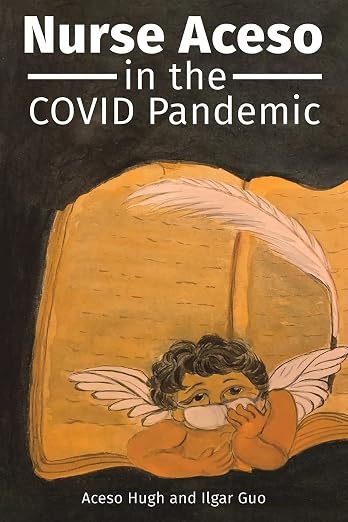
I'm a translator and a longtime lover of literature, and I never expected my own small role in the pandemic to involve helping a nurse's private diary entries reach readers across the English-speaking world. But that's exactly what happened after I came across Hu Xiaotian's writing in a social media group.
What Stopped Me When I First Read Her Words
I remember being genuinely moved the moment I encountered her essays. There was nothing performative about them — just an honest, detailed record of what frontline nursing during COVID-19 looked like from the inside. I recognized almost immediately how valuable it would be to give English-speaking readers that same insider's view of what American hospitals were going through, told by someone who had lived every page of it directly.
Translation as Adaptation, Not Just Language
Working with Hu to select and translate the most impactful essays wasn't a matter of literal, word-for-word translation. It required real adaptation — removing culturally specific references that wouldn't land the same way for a broader international audience and being deliberate about avoiding anything that might tip the book toward politicization rather than the universal human story we both wanted it to tell. That balance took real care. I wanted the emotional truth of her experience to survive the translation completely intact, even as some of the specific cultural texture had to shift to make sense for readers who hadn't lived inside that same context.
Choosing to Go Small and International
We ultimately chose a small independent UK-based publisher with international distribution, aiming to reach readers across the U.S., Canada, Australia, Germany, and beyond. My goal, more than commercial success, was what I think of as globalizing the book I wanted a reader in any of those countries to recognize something true about their own pandemic experience inside Hu's very specific, very personal account of hers.
What This Collaboration Meant to Me
Hu had originally written fifty or sixty essays, and only a portion of them made it into the final published book — a hard but necessary constraint of what a manuscript can hold. I think of the finished book less as a comprehensive record and more as a careful, faithful sample of something much larger and more sustained: months of unglamorous, exhausting, deeply human work that most of the world only ever saw from the outside, through statistics and headlines.
It felt like an act of stewardship — taking something raw and true, written under enormous pressure, and helping it find a wider audience without losing what made it honest in the first place. Two women, largely unknown to the wider world, brought together first by a shared crisis and then by a shared belief that this story deserved to travel farther than the WeChat group where it started. I'm proud to have been part of getting it there.