21 of 250 stories
The Enduring Spirit and Legacy of Artist Liu Yong
782 reads
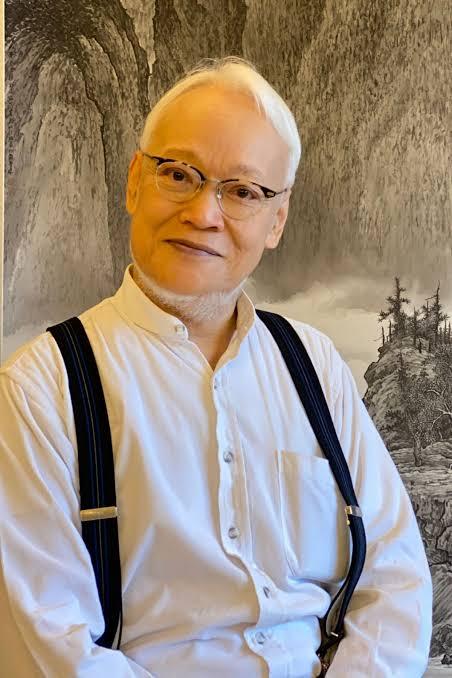
I'm seventy-two now, and if you ask me, my life feels like it's just beginning. That might sound strange coming from someone who's spent decades writing books, painting, hosting, and giving away most of what I've earned. But I've never been interested in immortality in the grand sense. What I care about is creating something of real value every single day — what I think of as creating eternity daily, one ordinary day at a time.
Where the Urgency Comes From
People sometimes ask where my discipline comes from, why do I keep working this hard at an age when most people are winding down. The honest answer traces back to loss. I lost my biological parents by the time I was three, and my foster father when I was nine. My home burned down at one point too. Those early losses instilled in me a real, physical awareness of life's impermanence — not as something to fear, but as something to respect. I carry what I'd call a heart ready to face death every day. That's not morbid to me. It's what pushes me to resolve unfinished business and live meaningfully instead of postponing what matters.
I still remember my father peeling and feeding me pomelos — a small, tender memory that's stayed vivid decades later, and one that shows up again in my paintings, sometimes even placing both my parents into scenes from tragic moments they weren't alive to witness. I think that's just how memory and artwork are together for me. I paint the people I love back into the moments that needed them, even when reality didn't allow it.
I've come to see pressure and struggle almost like gravity — something that keeps a person grounded rather than something purely to escape. Rather than let tragedy collapse into despair, I've tried to find beauty inside it, turning personal pain into something more poetic and tender that other people can recognize in their own lives.
Painting as the Deepest Layer
I'm known publicly for my hosting and my writing, but painting has always felt like the deepest expression of my life's emotions and experience. Each piece carries a story and a level of detail meant to let a viewer step outside ordinary reality for a moment, even if just briefly. During a year-long stay in Taiwan, through pandemic restrictions, I stayed prolific — four new books, including children's tales and illustrated stories. All the royalties from that work went to charity, which is simply how I think about the purpose of what I do. It was never about personal financial gain.
My early years in publishing were considerably harder than people might assume. Traditional publishers rejected a lot of what I made, especially during my university years, so I self-published extensively instead. That path eventually led to selling my books in prestigious American bookstores, even though I operated at a financial loss for years before that changed. I've never compromised my artistic vision or style for the sake of commercial success, even when self-reliance was the harder, slower road. My subjects have ranged widely — Chinese painting symbols, nature, insect behavior — reflecting a curiosity that's never confined itself to one lane, and some of that work has even been translated into Korean.
Why I Give Things Away
I've watched, over the years, how often valuable belongings get discarded or lost after their owners pass away, and that observation shaped a real conviction in me: I'd rather donate my collections and unpublished works to institutions and schools while I'm still alive to see them used well. I've donated pieces signed by Zhang Daqian, manuscripts by Fu Xinyun, works to places like the Zhejiang Art Museum, and Taiwanese artists' work to mainland Chinese museums specifically to help foster cultural understanding across the Taiwan Strait. I think of art as something that should connect people to their heritage regardless of the political lines drawn between them.
I don't really think of what I do as "donation" in the selfless sense people sometimes imagine. I think of it more as gratitude — thankfulness toward the people and institutions that make it possible for me to give in the first place. That distinction matters to me. It keeps the whole practice honest rather than self-congratulatory.
None of this would be possible without my wife and children's support — their consensus and their willingness to go along with decisions that, on paper, mean giving away things that could have simply stayed in the family. My decision to start donating meaningfully was somewhat spontaneous, sparked by watching others do the same and moved by the sincere respect and hospitality I received from museum staff when I first started. That moved me more than I expected it to.
I've turned high speaking fees toward causes like the Bodhi Heart Foundation's school-building efforts in mainland China, and I've donated book proceeds to help South Asia tsunami victims, understanding fully that ensuring funds reach the people who need them is genuinely difficult. I still think the effort is worth making. I remember accompanying a young girl from Guizhou to Beijing for an eye operation — a small, specific act, but one that convinced me to help even a single person matters enormously. I believe everyone's small contributions add up to something much larger than any individual gesture, and that giving is just a grateful heart responding to what life has already given it.
I'm not naive about charity organizations — I know corruption exists, and I think oversight matters. But I don't think cynicism should be allowed to stop charitable action altogether. I'd rather encourage vigilance and still maintain a fundamentally positive outlook, because that combination is what sustains goodwill in a society over time.
What I Want My Children to Understand
I've tried to involve my children directly in this philanthropic life, not just as observers of my checkbook but as participants themselves. My son went on a cultural tour of mainland China and later volunteered at a Taiwanese institute caring for children with cerebral palsy — an experience that affected him deeply. My daughter has seen firsthand the rural school environments I've contributed to. I believe real charity requires personal engagement, not just financial support from a comfortable distance.
As parents, my wife and I have tried to lead with high expectations paired with real encouragement, rather than control. My son struggled early on in speech competitions before eventually becoming a champion and finding his own independent path toward music and film — something that grew out of the art and music education he had at home, largely under his mother's guidance. My daughter has her own fierce independence — she backpacked solo across Europe and made a spontaneous decision to work in Beijing after graduating. I've tried to give my children support and resources without rigidly directing their choices, letting them build their own resilience along the way.
Maintaining our Chinese cultural roots and language mattered enormously to me as we raised children abroad. I made a point of practicing Chinese with them daily, and I think that effort shows up clearly in their own writing and identity today, published both in mainland China and Taiwan.
My Wife, and What a Long Marriage Actually Looks Like
My wife has been the stabilizing, critical partner of my entire life and career — reviewing my writing, managing our family's affairs, and standing beside me through health issues and the ordinary logistics of running a household. I like to compare what we've built to mixed doubles in tennis: a real partnership, each of us covering ground the other can't, working together rather than simply dividing tasks. I think of her, quite simply, as my jewel.
Our daughter's wedding was simple and private, attended only by close family and friends — a reflection of a philosophy I hold onto deliberately: minimalism and gratitude over extravagance. I've found that meaningfulness rarely requires excess. It usually requires the opposite.
I also believe genuine charity must start at home. Generosity that neglects one's own family isn't virtue — it can cause harm. I've thought a lot about the difference between Western and Asian attitudes toward inheritance and filial expectation, and I've landed on a view that a parent's possessions are theirs to manage as they see fit, not something inherently owed to their children. That view doesn't come from coldness. It comes from wanting my children's sense of dignity to rest on their own effort, not on an assumed inheritance.
What Success Hasn't Taught Me to Feel
Even with the recognition my books have received, my paintings took much longer to gain real appreciation, and I still feel humility — even self-doubt — about my own craft. I keep learning through practice, including replicating master artworks, because I don't think mastery is ever something you finish acquiring. I credit a long list of what I call "noble people" in my life — family, patrons, and even people who opposed me at various points — for the serendipitous opportunities that shaped my path. I've come to believe in a positive outlook and real openness to connection matters more than any single talent I might have started with.
Facing the End Without Fear
I have asthma now, and other markers of an aging body I can't ignore. I speak about my own mortality candidly, and I've made a kind of peace with it — always prepared to say goodbye, without letting that preparation curdle into fear. I don't want a memorial museum built around me, and I've never been especially interested in monuments to my own achievement. What I want instead is transparency about the ongoing efforts I'm still capable of making, documented simply through public records on my own website, and the discipline to keep doing whatever good remains realistically within my reach.
If there's a single thread that runs under everything — the paintings, the books, the donations, the way I've tried to raise my children — it’s gratitude answered with action. Not grand gestures for their own sake, but a daily, unglamorous commitment to using whatever time and capacity I have left as well as I possibly can. That's the only legacy I've ever really wanted.