29 of 250 stories
Insights on Positive Psychology
771 reads
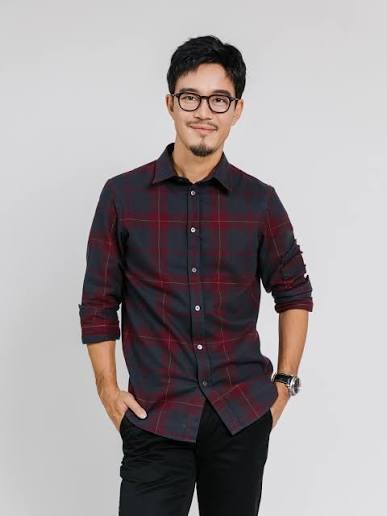
I was first interviewed by this same host over twenty years ago, back when my career was still finding its shape. Since then, I've moved through music, education, advertising, media, and psychology, and I've come back to Taiwan, married, and become a parent along the way. If there's one thing that long, winding path has taught me, it's that a meaningful life rarely moves in a straight line, and I've stopped expecting mine to.
Stepping Away, and Coming Back
After graduating from school, I spent close to a decade away from active psychology work, moving instead through advertising and media. Some of that shift was shaped by 9/11 and by my own experience as a counselor during that period — the weight of that work asked something out of me I wasn't sure I could keep giving indefinitely. What eventually pulled me back to psychology, years later, was social media reconnecting me with readers I hadn't heard from in a long time. That reconnection reminded me how much I still had to offer, and how much the field itself had changed while I'd been away.
The biggest shift I've watched over the last ten to twenty years has been the move from a purely pathology-focused psychology — centered on what's broken and how to fix it — toward positive psychology, which is the science-based study of what constitutes a good and meaningful life. What draws me to that shift is how it transcends culture, generation, and era. The questions Aristotle and Confucius were asking about what makes a life meaningful are the same questions positive psychology is now answering with real data, not just philosophy.
Psychology Doesn't Need to Be Complicated
I try hard to make the case that psychology, especially positive psychology, is rooted in everyday life and genuinely accessible to everyone, not just people who can afford therapy or read academic journals. Something as simple as writing down three good things that happened each day can measurably improve someone's mood and sense of peace. I encourage people to trust the science behind methods like that, and more importantly, to apply them consistently — the science only works if you use it.
A Mentor, not a Master
I'm careful to draw a distinction between being a "master" and being a mentor, especially given the public role I've taken on. A master, in the way people often imagine it, is infallible — someone whose authority rests on never being wrong. A mentor, which is what I try to be, embraces intellectual humility, admits mistakes openly, and keeps updating what they know rather than defending a fixed position. I'm not perfect, and I don't pretend to be. I try to get slightly better each day despite my own setbacks, and I think that honesty is what lets me resonate with people, more than any credential could.
What the Pandemic Took from Us
Watching the pandemic unfold over such a long stretch, I noticed something specific happening beneath the obvious anxiety: people were losing their basic sense of reality and security — genuinely fundamental human needs — because of the sheer unpredictability of it all. Lockdowns, travel restrictions, delayed events like the Olympics, constant distressing news exposure — all of it created a pervasive sense of unpredictability and isolation, even in people who were never directly affected by the illness itself. Families confined together for long stretches often experienced real, escalating tension as a direct result.
Cabin Fever, and How to Actually Handle It
I've come to call the specific irritability and paranoia that comes from extended time in limited spaces "cabin fever" . I watched it show up in my own family's experience in Taiwan, and in what I observed happening across North America too. For dual-working parents juggling remote work and childcare simultaneously, that stress compounds fast.
My advice for coping with it starts with taking a step back — creating real space for tolerance, recognizing openly that this is an extraordinary circumstance, and accepting more disorder at home temporarily than you normally would. I also recommend using a pre-agreed code word or signal — literally saying "cabin fever" out loud — as a way to pause a conflict before it escalates, giving everyone room to cool down before returning to the actual issue later, with more compassion and more productive communication than the heat of the moment allows.
Closer in Body, Farther in Spirit
One of the strange paradoxes of the pandemic was that it brought families physically closer together while somehow making them feel more emotionally distant. I've pushed hard, in my own family and in my work, for reinforcing rituals that counter that drift — eating meals together without phones, sharing chores, carving out structured quality time that doesn't just happen by accident. For teenagers specifically, I think it's important to anticipate their genuine need for personal space while still insisting on sustained parental involvement; those two things aren't in conflict, even though they can feel that way in the moment.
To deepen that kind of communication, I designed a set of question cards called "I Want to Hear You Say” roughly a hundred questions meant to prompt family members to share feelings, perspectives, and values that don't usually surface in ordinary daily conversation. Those exchanges have a real effect: they reduce the sense of generational gap and build mutual understanding in a way that small talk around the dinner table just doesn't reach on its own.
Rediscovering What's Nearby
With travel restricted, I found real value in appreciating local natural surroundings — Taipei's mountain trails and parks, in my own case, biking and walking through them regularly. The scientific research on nature's mental health benefits is solid, but honestly, I don't think we need the studies to know it intuitively; rejuvenation is something you feel directly, without needing proof first. The pandemic reminded my own family to rediscover and cherish the outdoor spaces that were always accessible to us, even when the wider world had closed off.
Sharing This Work Publicly
I stay active sharing what I've learned through digital platforms — two free podcasts, one in Chinese called "How to Life Study" and one in English called "Between Here and There," both aimed at listeners looking for self-help and philosophical insight they can use. I'd describe myself as something of an ambivert — introverted by nature but genuinely energized by intimate conversations that explore life philosophy and practical, "how-to" wisdom rather than staying abstract.
Even with the audience I've built, I try hard not to let anyone mistake me for some flawless authority. I keep coming back to the same simple guiding phrase for my own life: just be a little better every day. Setbacks are part of that process, not a contradiction of it. If there's one thing I'd want people to take from everything I've shared — the podcasts, the question cards, the pandemic reflections — it's that a meaningful life doesn't require perfection.