33 of 250 stories
Holding the Stage: The Story of Sheu Fangyi
603 reads
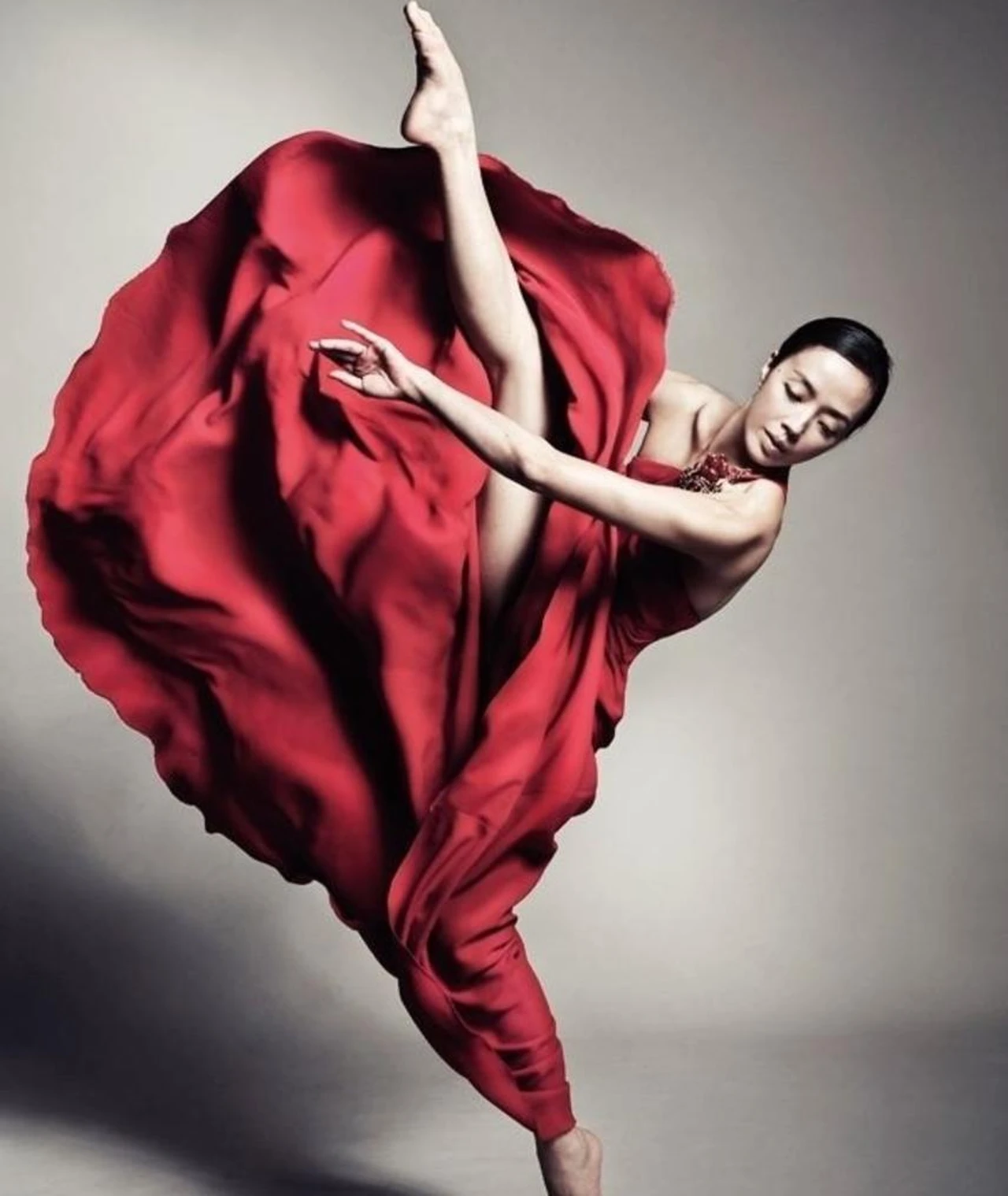
I didn't start out as someone people expected much from. Growing up in Yilan, in a family that worked hard and asked for little, I wasn't the confident child, and I certainly wasn't the gifted one in the studio — my ballet scores were low, and there was nothing in my early years that pointed toward an international stage. What I had instead was stubbornness. I kept going when the results didn't justify it yet, through training at National Taiwan University of the Arts and then further study in the United States, until, in 2005, Dance Magazine put me on its cover as one of the top 25 dancers in the world. I still think about that moment as strange — a girl from Yilan, on a cover like that.
For a long time, dancing and being myself felt like two separate acts. I was a shy child who wanted to disappear rather than be seen, and yet I chose a profession that demands the opposite. The real work of my career hasn't been technique — that came with years and repetition — it's been learning to let my true self and my stage self become the same person. When I'm on stage, it's another life, another passion that I don't find in everyday life. That fusion took years to earn. I had to accept myself before I could ask an audience to trust what they were seeing.
There have been harsh critiques along the way, and cultural biases I've had to move through rather than around. But I learned that self-worth cannot be defined by a single review or by applause — it has to be built from being honest with who I am, night after night, whether or not anyone is watching closely enough to notice the difference.
Loneliness has been the quiet companion of this career. For years it was the thing I feared most — the isolation of a life spent training, touring, and performing while everyone else's life moved at a different rhythm. But somewhere along the way, that fear turned into fuel. Loneliness was once my biggest fear; now it is my greatest strength. It taught me how to sit with myself, and that sitting became the discipline that carried me through everything else.
Being a principal dancer means holding two responsibilities that can pull against each other — staying at the top of your own craft while genuinely wanting the dancers coming up behind you to succeed. I've had to learn how to teach and stage work without competitiveness creeping in, because the moment jealousy enters a room like that, it poisons the very thing you're trying to build. I want to create a stage for younger performers to shine. That's become as much my responsibility now as my own performance is.
None of this has been a solo journey, even though dance can feel like one. Bura and I have supported each other since university — him as a choreographer from an indigenous community in Taitung, me as a dancer from Yilan, two very different backgrounds that somehow found the same language. He carries a pressure I understand intimately: meeting my standards as a choreographer while also being my partner in life. We're different — I drive forward with intensity, he moves through the world more at ease — and that difference has caused friction between us more than once. But we've chosen, again and again, to let that friction become growth instead of conflict. Trust and open communication are the only reason that's possible. To continue holding hands in life and dance after twenty years would be a blessing from the heavens, and I mean that plainly, not poetically.
My family never fully understood what I do. Dance wasn't part of their world, and I don't think they've ever quite grasped what happens on those stages. But their support was never conditional on understanding — it came from the same hardworking, unpretentious values that raised me in Yilan, and those values are still the foundation under every disciplined choice I make as an artist.
I know my years as a peak performer aren't infinite. Bodies age out of that kind of intensity, and I've stopped treating that fact as a loss waiting to happen. I see it now as a transition — a chance to become someone who nurtures the next generation of dancers rather than someone who has to keep proving herself in the spotlight. Bura feels the same pull toward his roots, toward a simpler life close to where he came from, if the performing chapter of our lives ever closes. Whatever comes next, I think we'll stay close to dance, and close to each other, just in a different shape than the one we're in now.