32 of 250 stories
Between Two Shores: Scott Chen's Story
456 reads
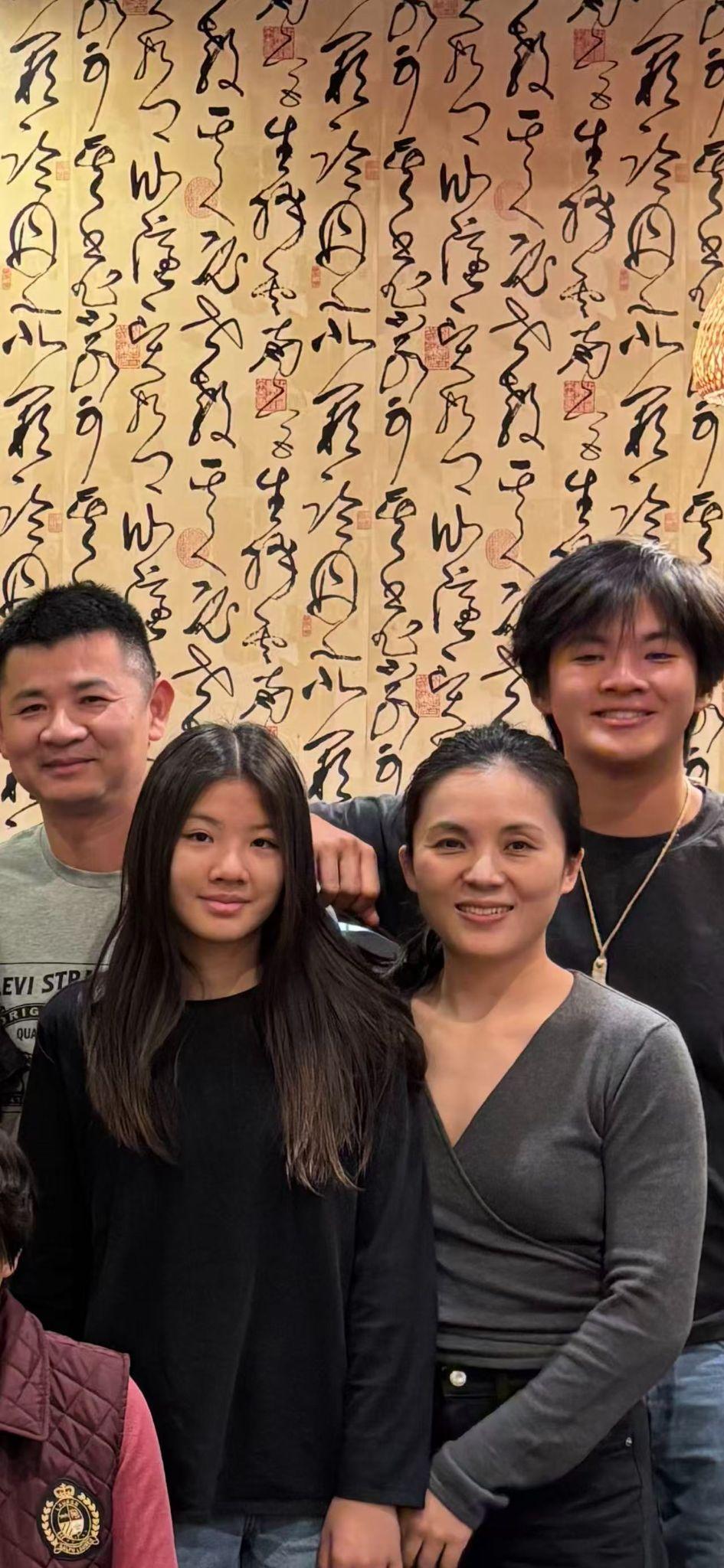
My parents were competitive archers back in Fujian, but they never pushed that world onto me. I found my own — basketball first, and then sailing, which came into my life almost by accident when I was twelve or thirteen. I remember being afraid of it at first. There was a storm once, out on the water, that shook me badly. But fear has a strange way of turning into something else if you stay with it long enough. I grew to love sailing — the discipline of it, the way a team moves together, six hours or a full day at a time, reading the wind instead of fighting it. Once, a team I was part of sailed almost all the way to Taiwan. I wasn't with them on the boat that day — I was on the supply boat, watching from a distance — but I remember the pride of it like it was mine too.
Our family immigrated to the United States in the summer of 2022. We landed on July 4th. I don't think we planned it that way, but there was something fitting about arriving on America's birthday, stepping into a country celebrating itself while we were quietly starting over. One of my clearest early memories isn't some big milestone — it's ordering food at In-N-Out by myself. That was mine. Nobody helped me. It felt like proof that I could actually live here, not just survive here.
Back in China, even in a place I didn't grow up rooted in a public school system, there was a closeness to neighborhood life — people who knew each other, doors that felt open. I haven't found that same intimacy here, and I think part of it is the language. Words carry more than meaning; they carry belonging. I picked up most of my English not from a classroom but from just living — probably 70 or 80 percent of it came from real conversations, mistakes, and repetition, not textbooks.
Figuring out who I am has been its own kind of navigation. I'm not fully Chinese anymore, not in the eyes of people back home — they see the distance in me now. And I'm not fully American either; people here can tell, somehow, that I come from somewhere else. For a while, that in-between space felt like a contradiction, like I was failing at both identities instead of holding two. But I've come to see it differently. If you don't see yourself as an outsider, most people won't see you as one either. That's not a slogan I read somewhere — it's something I had to learn the hard way, by being lonely first and then choosing, again and again, to show up anyway. In a school with very few Chinese students, I didn't have the option to hide in a familiar group. I had to build confidence, or I had to sit alone. I chose confidence.
I still find it hard to name exactly which parts of my heritage I carry day to day. I don't talk about Chinese culture much, if I'm honest. But I think what matters more than talking about it is the confidence to stand in both worlds without apologizing for either one.
I like physics and chemistry, even though chemistry isn't exactly popular among people my age. I don't think I'll study them in college, but I like knowing I'm good at something most people shrug off. I haven't been back to China since we left — visa complications have kept that door closed for now — but I hope to walk through it again soon. We started out in Diamond Bar and later moved to Irvine, chasing better schools and a community that felt more alive. Halloween has become my favorite holiday here. I miss Spring Festival, though — not just the holiday itself, but the community that used to hold it up. Without that community around you, a celebration can start to feel thin.
What people don't always see, looking at a family like mine from the outside, is how sudden and unstable it all was. We didn't come with the resources some immigrant families have. There was no smooth "American dream" script waiting for us — there was uncertainty, a language none of us fully owned yet, and a lot of leaning on relatives just to get our footing. But learning only lasts so long. Independence had to come fast. Somewhere in that scramble, I became the one who handled things — bills, repairs, the practical machinery of a household — because I could navigate English in ways my parents were still learning to. It wasn't a role I asked for. It just became mine.
My mother didn't start working until our second year here, and she carried a lot in that gap — the pressure of a new job, a new culture, and a family still finding its balance. What held us together wasn't money. It was love, support, and a refusal to blame each other when things got hard. My mother says now that material comfort means very little without emotional balance and faith underneath it. She's talked about how immigrant parents are often taught to sacrifice everything for their children, but she pushes back on that model — she believes parents have to keep thriving as people, not just providers, or the whole family eventually runs on empty.
Looking back at China versus here, the biggest difference isn't the buildings or the language — it's how easy it used to be to find help. Community there did a lot of the work that curiosity and independence have to do here. We had to learn to ask for things, to solve problems ourselves, to stop waiting for a network that didn't exist yet in the same way.
If I could tell other immigrant families anything, I'd say what my mother says: stay curious, take responsibility, be brave enough to leave your comfort zone, and don't let go of who you were before you got here. We didn't become less of a family by going through this. If anything, we became more of one — not because it was easy, but because we chose cooperation over blame, every single time it would have been easier not to.