12 of 250 stories
Creativity, Cultural Identity, and the Literary Journey of Rebecca F. Kuang
1,052 reads
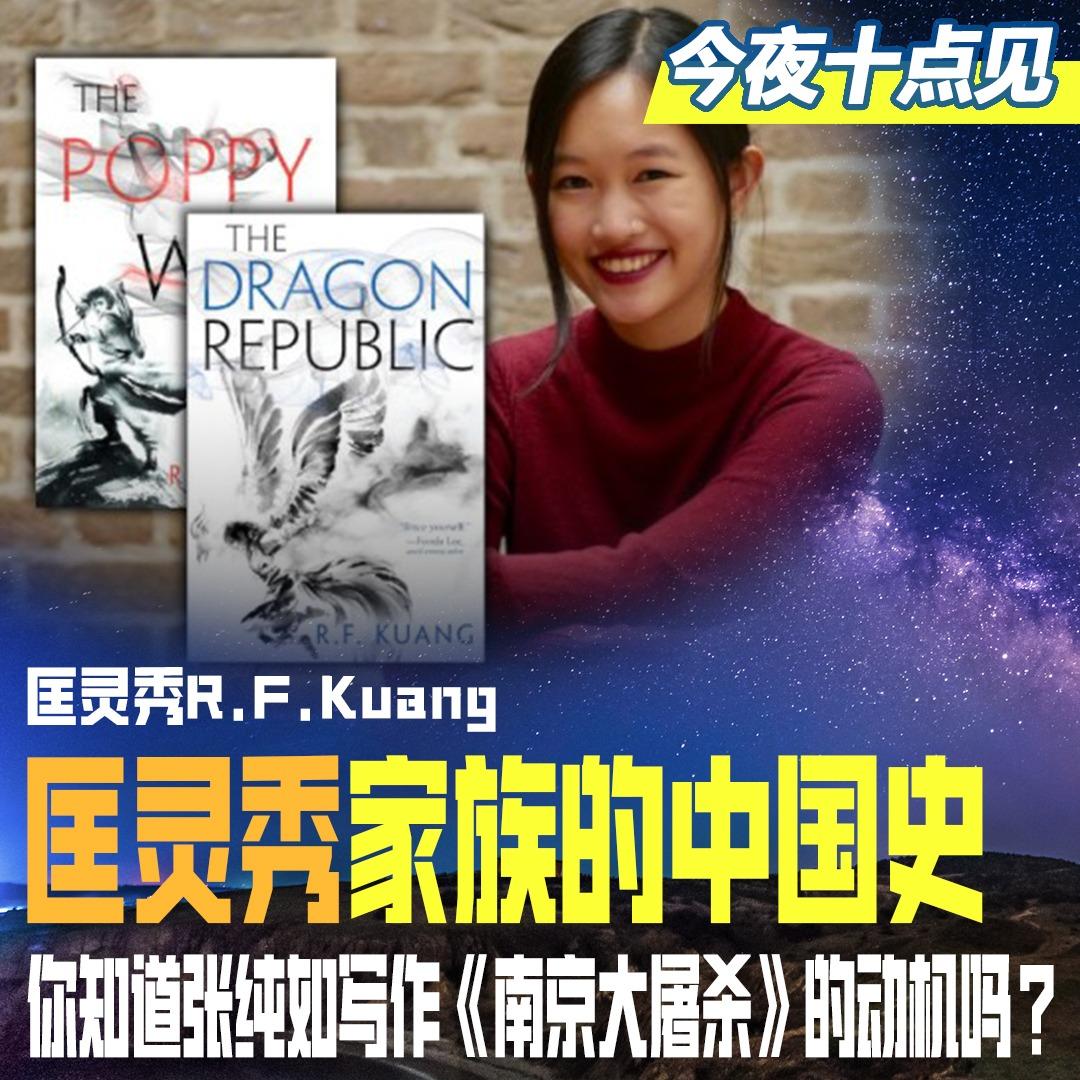
I grew up in the United States and learned Chinese later in life, which means English is still the language I feel most at home expressing myself in, even as so much of my work reaches back toward Chinese history and identity. That gap — between the language I think in and the history I write about — has shaped almost everything about how I work.
Learning to Compete
My independence and my competitive streak started early, in high school, when I chose to attend a prestigious private school built around debate. That choice came with the usual friction any immigrant household might recognize — my parents had their own expectations, piano practice I resented at the time among them — but underneath that friction was real support. They carried the concerns most immigrant parents carry about financial security and stable careers, and they let me pursue this anyway. My father was my first real fan, genuinely enthusiastic after reading my early work, and that early belief mattered more to my confidence than I think he ever realized.
Those high school years were relentless. I was sleeping maybe five hours a night, splitting my energy between intense debate practice and schoolwork I still needed to excel at. My mother pushed back at that pace, insisting I actually rest, and we had real conflicts over it. Looking back, I think she was right more often than I wanted to admit at the time. I've always drawn a clear line for myself, though: learning was work. Writing never work. Writing has been my passion and my daily source of joy since before I could have explained why, and that distinction is what carried me through the exhaustion of those years.
What My Books Are Actually About
I wrote my first novel at nineteen, and its characters draw their power from intense emotions, anger, hatred, grief. People sometimes ask if that reflects some personal pain of mine, and I understand why they'd ask. But I'm a genuinely happy person. The emotional intensity in my books isn't autobiographical in that direct sense — it comes from historical trauma and cultural memory, particularly around modern Chinese history, not from my own hardship.
A transformative year I spent in China deepened that connection enormously. That was where I first engaged seriously with the language, the culture, and historical narratives like the Nanjing Massacre — not as an abstract subject, but as something I needed to sit with directly. That immersion gave me something like a personal and academic mission: reconciling Chinese history with the Western upbringing I'd had, even while other people perceived me ambiguously because of that mixed identity. Out of that tension came a real commitment to portraying nuanced, historically grounded Chinese cultural contexts in my fiction, rather than flattened or simplified versions of that history.
My debut novel grew directly out of a desire to bring Western readers' attention to the Nanjing War, a chapter of Chinese history that doesn't get much space in Western consciousness. I built it by braiding twentieth-century historical events together with the settings and sensibility of Song Dynasty China, drawing on classical works like Demi-Gods and Semi-Devils. That blend came out of genuine academic research — courses in Chinese drama and literature, both in high school and later — not just imagination working in isolation.
Iris Chang, and the Debt I'm Trying to Repay
My upcoming fifth book grows out of research into Asian American racialization and diaspora struggles, drawing on ideas like racial melancholia and prosthetic memory — the process by which a group comes to carry traumatic histories they didn't personally live through, but that still shape who they become. Iris Chang's work, especially on the Nanjing Massacre and on Chinese American contributions to this country's history, has guided me enormously in that project. She wrote the neglect of Chinese American history out of the historical record through scholarship. I'm trying to do something adjacent through fiction. Different tools, I think, aimed at the same gap.
I recognize a pattern in a lot of first-generation Chinese Americans, me included — an early reluctance to engage with Chinese language and culture at all, almost as a survival mechanism in predominantly white spaces growing up. But that reluctance often gives way, later, to a real hunger for cultural connection, especially once college opens Chinese language and history courses that weren't available before. I've watched popular media do some of that same work — Shang-Chi sparked real cultural curiosity in diaspora audiences by incorporating Chinese language and heritage authentically, pulling people toward wuxia and kung fu traditions they might not have explored otherwise. I have real respect for what that film accomplished, even while I recognize the limitations the Marvel formula placed on it. I remain hopeful there's more room coming for Asian-led productions that don't have to carry quite so much cultural weight alone. My own novel, The Poppy War, is in the process of being adapted for television, though that's still working through the process of finding the right showrunner.
Debate Taught Me What Writing Needed
One thing debate taught me directly, and that I've carried straight into my fiction, is that logic alone doesn't win an argument — emotional appeal and genuine delivery are just as critical to real persuasion. That's exactly what I try to build into my writing: enough emotional resonance and passion that a reader connects with the narrative and the ideas underneath it, not just the plot mechanics carrying them there.
My trilogy is, at its heart, a tribute to my grandparents, who endured the Second Sino-Japanese War, the Cultural Revolution, and the Great Leap Forward. That family history gave me more than subject matter — it gave me a real, weighty sense of indebtedness, a feeling that I belong to a lucky generation benefiting directly from sacrifices I didn't have to make myself. I started that trilogy as a teenager and finished it at twenty-four, and I think of those early books now as training wheels. They have real imperfections. But the process of writing them publicly, in real time, taught me things about craft and about my own growth that I couldn't have learned any other way. I'm past them now, in the way an actor eventually moves from child roles into more serious adult ones — grateful for what they gave me but not interested in staying there.
What Publishing Actually Looked Like
My entry into publishing came together relatively smoothly and at a good time, but I want to be honest that my debut wasn't an instant bestseller — the marketing support behind it was fairly limited at first. What built its readership was word of mouth, which revealed something important: a genuine, underserved appetite for Chinese American stories, especially inside the fantasy genre specifically. I'd encourage any aspiring Chinese American author to hold onto that fact when the early numbers don't look like validation yet. The demand is real and growing, even when the industry's visible support lags it.
I still hold a rigorous internal standard for my own improvement, and I think of whatever early acclaim I've had as only the first stage of a much longer career. I deliberately keep some distance from my earliest work, treating it honestly as the product of a less mature version of myself, because I'd rather keep pushing toward more sophisticated writing than rest inside whatever I've already accomplished.
What I'd Tell Other Immigrant Parents
I feel real gratitude for my parents' sacrifices, and for the fact that they ultimately encouraged a passion — competitive debate, then writing — that didn't look like the safe, traditional path they might have originally pictured for me. If I could say anything to other immigrant parents, it would be this: stay open to non-traditional paths for your children. Careers in art and literature are legitimate and meaningful, not consolation prizes next to medicine or law or engineering. And I'd add that reading literature from your parents' own generation can do real work in bridging the cultural gap between you — it's helped me understand my own parents more than most direct conversations ever could.
Where This Is All Heading
Alongside my creative work, I'm completing a PhD in East Asian Languages and Literatures at Yale, and I hope eventually to teach as a professor — Chinese and American literature both. My academic work focuses on the relationship between contemporary Chinese and diaspora literature, and the role translation plays in that relationship, and I want that work to support the same kind of cultural exploration for students who share something like my own background.
If there's a single thread running underneath the novels, the research, and the teaching I'm working toward, it's this: cultural identity for diaspora Chinese Americans is rarely simple. It often starts with a kind of reflexive rejection and moves, slowly, toward reclamation and something closer to celebration. I'm trying, in whatever form the work takes — fiction, scholarship, eventually a classroom — to make that path a little less lonely for the people walking it after me.