37 of 250 stories
A Life Between Song and Farewell
10 reads
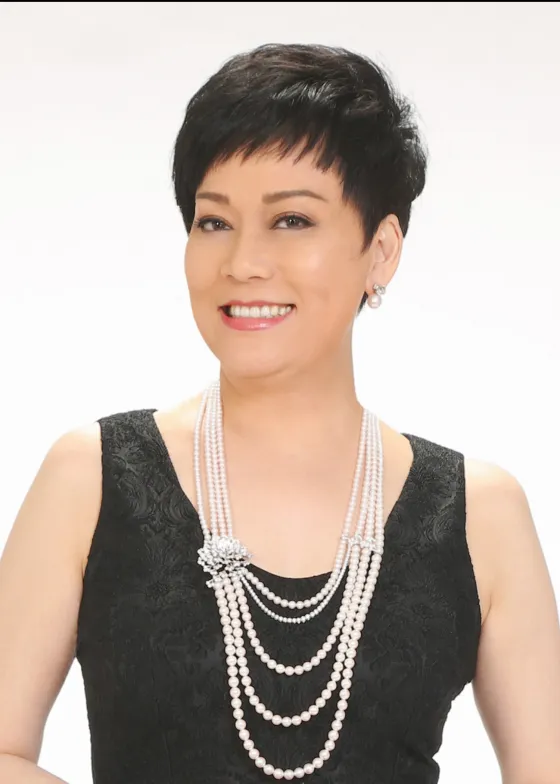
My name is Amy Chen. For more than twenty years, I have worked with people at one of the most difficult moments of their lives—the moment when they have to say goodbye to someone they love.
Today, I am the founder and president of the Chinese End-of-Life Care Foundation in the United States. People who meet me through my work may find it difficult to imagine that I once stood on a very different kind of stage. Before funeral homes, memorial services, grieving families, and conversations about death became part of my everyday life, I was a singer.
Sometimes I think my life has traveled between two opposite ends of human experience. I once sang for people in moments of celebration. Now, I help families through moments of farewell.
But perhaps the distance between those two worlds is not as great as it seems. Both have taught me something about human emotion, and both have taught me to listen.
Growing Up With Responsibility
I grew up in Hong Kong in a family that did not have much money. When you grow up poor, you learn certain things very early. You learn that life is not always going to give you what you want. You learn that every dollar matters. Most importantly, you learn that you have responsibilities.
For me, family responsibility was never an abstract idea. It was simply part of life.
Those early experiences shaped me more deeply than I understood at the time. They made me independent and determined, but they also gave me a strong sense of duty. Once I accepted responsibility for something—or someone—I felt I had to see it through.
Music became one of the unexpected doors in my life. I discovered that I could sing, and while I was still young, opportunities began to appear. My family did not necessarily imagine that entertainment would become my path, and there were disagreements about what I should do. But I was young, stubborn, and willing to take chances.
In 1971, I was given an opportunity to perform in the Philippines. My parents opposed the idea, but I went.
Looking back, I can see the young woman I was then: adventurous, determined, perhaps a little rebellious, and convinced that I needed to discover the world for myself.
For a time, singing became part of my identity.
I could never have imagined where life would eventually take me.
Entering a World I Never Expected
My path eventually led me to New York and, in 1985, into the funeral industry.
It was not a profession I had dreamed about as a girl.
For many Chinese people, especially in those days, death was something you did not casually discuss. Working around the deceased carried its own stigma. The funeral business was also largely dominated by men. As a woman entering that world, I had to prove that I belonged there.
There were people who resisted me. There were people who underestimated me. And there were moments when managing employees and navigating personalities was more difficult than dealing with the technical side of the business itself.
But I stayed.
The longer I worked in the profession, the more I understood that funeral service is not really about death alone.
It is about the living.
A family that walks through our door may be experiencing one of the worst days of their lives. They may be shocked, angry, confused, exhausted, or overwhelmed with guilt. Sometimes family members disagree with one another. Sometimes old conflicts suddenly reappear. Sometimes people do not know what to say or what decision to make.
At those moments, I cannot simply behave like a businessperson.
I have to listen.
In many ways, I have had to become a psychologist without carrying that title. I need to understand what people are feeling, even when they cannot explain it themselves. I need to know when to speak and when to remain quiet.
You cannot pretend to care in this profession. Families can feel whether your concern is sincere.
Caring Without Being Consumed
There is another lesson I had to learn: compassion needs boundaries.
If I carried every family's grief home with me, I would eventually be unable to do this work. Yet if I became completely detached, I would lose the very quality that makes this work meaningful.
So over the years, I learned to stand somewhere between those two places.
I can feel another person's pain without allowing that pain to destroy me. I can cry with a family and still be strong enough to guide them through what comes next.
That balance took years to understand.
The work has also shown me sides of human nature that are not always beautiful. Death does not automatically make people generous or honest. I have seen disagreements over money. I have seen deception. I have seen families argue when they should have been comforting one another.
Experiences like these can make a person cynical.
But they have also made me more determined to distinguish between those who take advantage of kindness and those who genuinely need help. I do not want disappointment in some people to prevent me from helping others.
Integrity matters especially in this profession because grieving people are vulnerable. They place tremendous trust in us.
That trust must never be treated casually.
What the Final Farewell Reveals
After witnessing so many funerals, I began to think differently about success.
During life, we measure ourselves constantly. How much money do we have? What position have we reached? How successful is our business? How many people know our name?
But at the end, those measurements suddenly seem much smaller.
I have watched people arrive at their final farewell with wealth and status. I have also seen people who possessed very little. And I have come to believe that there is another kind of accounting that happens at the end of a person's life.
Who comes to say goodbye?
Who cries for you?
Who remembers your kindness?
Who still carries your love?
To me, that is a kind of final judgment—not a judgment based on money or fame, but on the relationships we created while we were alive.
Working with death every day has therefore taught me a great deal about living.
When Death Became Personal
For all my professional experience, however, nothing could make me immune to losing someone I loved.
The death of my mother changed my understanding of grief.
It is one thing to guide another family through loss. It is another thing entirely when the person who has died belongs to your own family.
Suddenly, all the knowledge I had accumulated professionally became personal.
My mother's death reminded me that no amount of experience can remove the pain of saying goodbye. Knowledge can help us make decisions. Preparation can make the process less chaotic. But love creates its own grief.
That experience deepened my empathy for the families I serve.
When someone is standing in front of me after losing a parent, a spouse, or another loved one, I understand that behind every arrangement we discuss is a relationship that can never be replaced.
Creating a Foundation for Those With No One
Over time, another question began to trouble me.
What happens to people who have nobody?
Some elderly people reach the end of their lives without close family nearby. Others do not have enough money for a dignified funeral. Some immigrants have spent years building lives in America but arrive at their final days with very few resources or people to advocate for them.
I could not simply look away from them.
That conviction led to the creation of the Chinese End-of-Life Care Foundation.
For me, dignity should not depend on how much money someone has or how many relatives stand beside them. A person who dies alone is still a person. Their life still mattered. They still deserve respect.
This is where business and service must be separated in my mind. A business has to survive financially. Employees must be paid. Services have costs. But there are moments when money cannot be the only consideration.
Sometimes we simply have to ask: What is the right thing to do?
That question has guided much of my life.
I Am Not Afraid of Death—But I Am Afraid of Leaving Things Undone
People sometimes assume that because I work around death, I must no longer be afraid of it.
That is not completely true.
I have a gentle fear of death. But what worries me is not so much the moment of dying itself.
I worry about unfinished things.
Have I taken care of what I need to take care of? Have I said what I need to say? Have I made arrangements so that the people I love will not be left confused? Have I fulfilled my responsibilities?
That is why I believe people should prepare.
Write a will. Think about your final arrangements. Tell your family what you want. Do not assume there will always be another day to discuss these things.
In Chinese culture, death has traditionally been something many families hesitate to talk about. People worry that speaking about death will somehow invite bad luck.
But death does not disappear simply because we refuse to discuss it.
Preparing for death does not mean that we have stopped loving life. I believe it can mean exactly the opposite. When we understand that our time is limited, we may become more careful about how we use it.
The Meaning of My Journey
When I look back at my life, sometimes even I am surprised by the road I traveled.
I was a girl growing up with very little in Hong Kong. I became a singer. I traveled. I entered an industry I had never imagined joining. I worked in a world dominated by men and learned to stand my ground. I comforted families. I experienced betrayal and disappointment. I lost my own mother. I created a foundation to help people who might otherwise leave this world without anyone to care for them.
Every stage changed me.
The girl who sang and the woman who cares for grieving families may appear to be two different people, but they are both parts of me.
Music taught me about emotion.
Poverty taught me responsibility.
Business taught me strength.
Death taught me humility.
And the families I have served taught me compassion.
After spending so many years around life's final chapter, I have learned that we cannot control everything that happens to us. There is fate. There is circumstance. There are things we desperately want that never happen, and there are roads we never intended to travel that eventually become our life's work.
What we can control is how we respond.
I want to live in such a way that when my own final day comes, I will not spend it regretting everything I failed to do.
I want the people I leave behind to remember that I cared.
Because after all the ceremonies are finished, after the flowers are gone, and after everything we accumulated during our lives has been left behind, what remains is remarkably simple.
It is the way we treated people.
It is the love we gave.