1 of 250 stories
The Inspirational Life Journey of Zhang Xianghua
1,149 reads
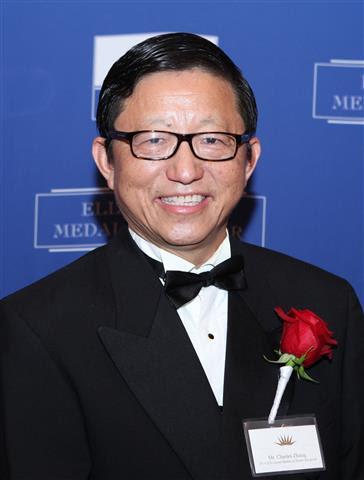
I was born into a family that, for a little while, had everything — and then, almost overnight, had nothing.
My father, Zhang Baocheng, was a pioneer. He built one of China's first coffee brands, CPC Coffee, at a time when that kind of ambition was rare and remarkable. But history has its own plans. After 1949, everything my father had built became a liability instead of an achievement. In 1957, he was sent away for labor reform. He would be gone for twenty years.
That left my mother alone with nine children and a label our family couldn't shake — what people back then called "black five categories," the children of the politically suspect. I grew up watching my mother do the impossible. She held our family together through the Great Leap Forward, through the Cultural Revolution, through famine and chaos that would have broken most people. She never had the luxury of despair. She just kept going, every single day, for nine children. If I know anything about resilience, I learned it first from her.
Seven Years on Chongming Island
When I was sixteen, I was sent to Chongming Island as part of the "Up to the Mountains and Down to the Countryside" movement. I spent seven years there, doing agricultural labor — planting rice seedlings in freezing water, digging canals, working through bitter winters with almost nothing to keep us warm.
It was hard in a way that's difficult to explain to people who haven't lived it. But I don't look back on those years with bitterness. I look back on them with gratitude. Those seven years forged something in me — a strong will, a stubbornness that refused to break, a quiet confidence that came from proving to myself, day after day, that I could endure. The one thing that kept my spirit alive during that time was music. I played the clarinet whenever I could, and in those notes, I found a kind of hope I couldn't find anywhere else.
Twenty Dollars and a Dream
My path to America opened because of history bigger than mine. President Nixon's visit to China in 1972, and the formal diplomatic ties established in 1979, cracked open a door that had been sealed shut my whole life. Through family connections and my music, I managed to secure a visa in 1980 to study music in the United States.
I arrived with twenty dollars in my pocket. That's it. Twenty dollars, and a language I barely spoke, and a culture I didn't understand.
I expected hardship from that. What I didn't expect was where some of the cruelest moments would come from. I faced discrimination not only from some Americans, but also from established Chinese American communities who looked down on immigrants from Mainland China. I still remember one interview — I was rejected and insulted by a man who, like me, was from Shanghai. That one stung more than the others. But instead of letting it break me, I let it fuel me. I told myself: I will prove what I'm capable of.
Building Something of My Own
I started in restaurant work, and I was good at it — steady tips, real income. But I could feel the ceiling above me. Working for someone else was never going to be enough.
In 1983, I took a leap. I borrowed most of the $20,000 I needed from family and became a co-owner of a restaurant. The first months were brutal — low revenue, high expenses, and staff problems I didn't yet know how to solve. I lived frugally and worked relentlessly, and by the seventh month, we broke even. By 1989, I had expanded to five restaurants, every one of them profitable.
That's when I started thinking like a builder, not just an owner. Managing multiple restaurants serving complex Chinese cuisine was its own kind of chaos, so I brought in ideas from American-style management — English communication codes so kitchen staff could understand orders across language barriers, and a menu simplified from over a hundred dishes down to about thirty standardized items, with unified sauces and streamlined kitchen operations. Later locations added open kitchens customers could see into, and strict hygiene standards for every chef.
By 1993, I had built a centralized kitchen, using specialized machinery imported from Chicago and Canada, so every location could serve the same quality with the same consistency. That system let us grow fast. By the end of the 1980s, we had grown to roughly eighty restaurants.
Faith, and the Woman Who Changed Everything
Somewhere in those early entrepreneurial years, everything else in my life started shifting too. A colleague introduced me to a Taiwanese Christian woman named Tsui-Ling — and, through that same friendship, introduced me to the Christian faith itself. I was skeptical at first. I went to church meetings mostly out of curiosity. But by late 1984, I had embraced the gospel for myself.
Tsui-Ling and I built a life together that has now spanned more than thirty-six years — a marriage, children, grandchildren. Business success gave me a great deal. But my faith and my family gave me everything that mattered.
Selling the Chain, and Starting Again
In 2001, TGIF came to negotiate an acquisition of my restaurant company. We sold it for $50 million. Most people would call that the finish line. For me, it was just a new chapter — I stayed on as CEO, grew the chain to 144 locations, and didn't step back until 2003, when I retired at forty years old.
People often ask how I learned to delegate, to let go of control after building something from nothing. Honestly, it was hiring the right person — I brought in an executive from In-N-Out Burger to serve as my second-in-command and CFO, and he helped me professionalize everything about how the company ran. Those years were relentless — board meetings, travel, retreats — but they sharpened my leadership in ways the restaurant floor never could have.
Retirement didn't suit me for long. I found a new challenge: introducing aseptic beverage packaging technology to the U.S. market, using advanced FDA-approved machines imported from Europe. I was an outsider to that entire industry. I remember one critical machine breakdown where I personally worked alongside repair technicians just to understand the equipment I now own. That business grew, and in 2012 it was acquired by a publicly listed company. My original investment more than doubled.
What the Stroke Taught Me
In my fifties, at a point when I still felt young and full of energy, I had a stroke. It affected my speech. I spent fifteen days in the hospital, and months in rehabilitation after that.
I leaned on faith and prayer through that recovery — and on discipline, nutrition, and exercise. Slowly, I got my voice back. But something else came back stronger too: my sense of purpose. That experience deepened my commitment to giving back. Today I support four schools, several music groups including symphonies and youth choirs, and I serve on the board of the Nixon Presidential Library — a small, strange, full-circle connection to the president whose visit to China opened the door that brought me here in the first place.
What I Want My Community, and My Country, to Know
I believe Chinese Americans are stronger when we act like a bundle of chopsticks instead of scattered individual sticks — together, we don't break. I've experienced discrimination directly, and I've also had to look honestly at my own unconscious biases. The way through, I believe, is hard work, love for community, and genuine respect for American culture — even in small things, like learning the local customs for something as simple as trash disposal. Integration doesn't mean forgetting where you came from. It means honoring both places at once.
I also think often about the relationship between China and the United States. Governments argue the way parents sometimes do. But I believe the people — the children, in that metaphor — don't have to inherit that conflict. We can choose friendship. We can choose to build bridges instead of walls.
The Nest We Built
After everything — the wealth, acquisitions, the recognition — my answer to what matters most hasn't changed. Family is my highest value. My wife and I built a home together, a nest, and watching our children and grandchildren thrive in it, with both happiness and a sense of responsibility, means more to me than any business milestone ever did.
My Christian faith has been the thread running through all of it — not just something I believe, but something I try to live, day by day, decision by decision. It's what carried me through labor camps I never spoke of to my own children until I was ready, through a stroke that could have silenced me, through every version of starting over.
If there's one thing I'd want someone reading this to take with them, it's this: hardship doesn't have to become bitterness. It can become the very thing that builds you.